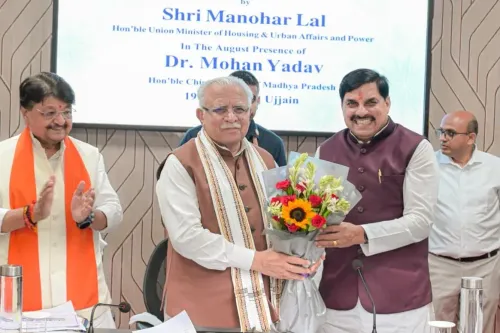
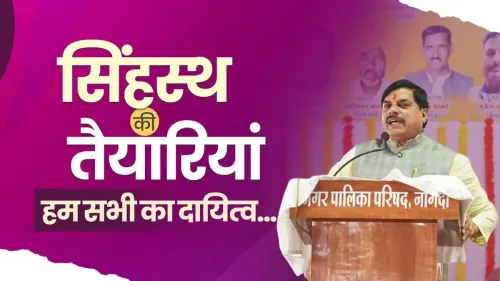
CM Mohan Yadav, Khattar Review Simhastha-2028 Prep in Ujjain
Synopsis
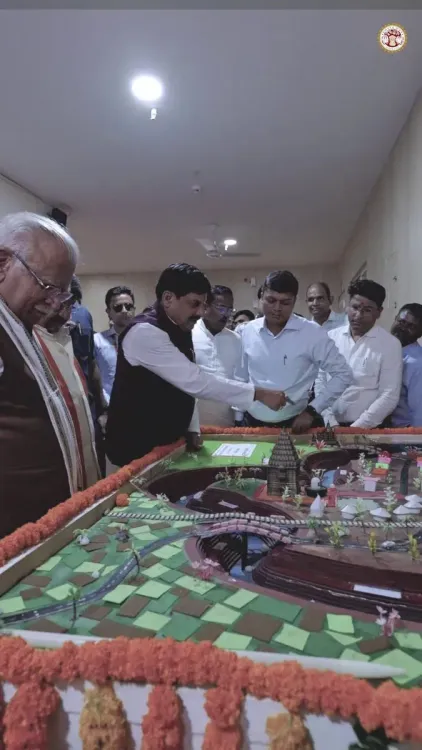
Chief Minister Dr. Mohan Yadav and Union Minister Manohar Lal Khattar jointly reviewed infrastructure and development projects in Ujjain on 20 June 2026, as the state accelerates preparations for the Simhastha Kumbh Mela in 2028, expected to attract millions of pilgrims.
Key Takeaways
Mohan Yadav and Union Minister Manohar Lal Khattar conducted a joint review of Simhastha-2028 infrastructure projects in Ujjain on 20 June 2026 .
Simhastha is the Kumbh Mela held in Ujjain every 12 years ; the next edition is in 2028 .
The Madhya Pradesh Urban Development Department is the nodal state agency for on-ground implementation.
Central schemes including AMRUT have funded Ujjain's urban infrastructure since 2015 and are expected to support Simhastha-linked works.
The 2016 Simhastha set a baseline with major investments in ghats, roads, and sanitation that current planning builds upon.
Funding timelines and budget allocations for 2026-27 and 2027-28 will be key markers of progress.
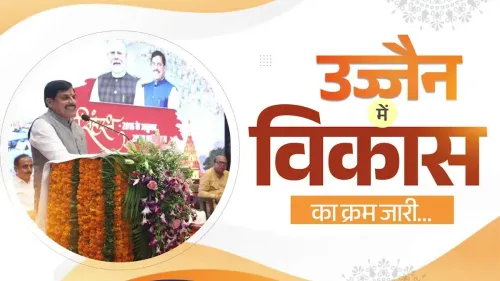
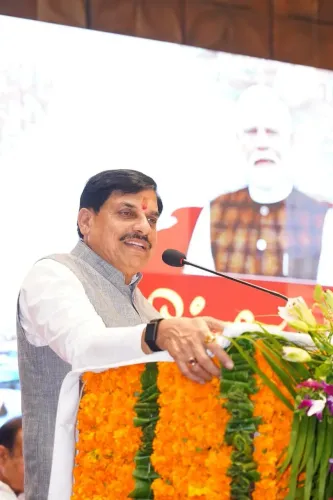
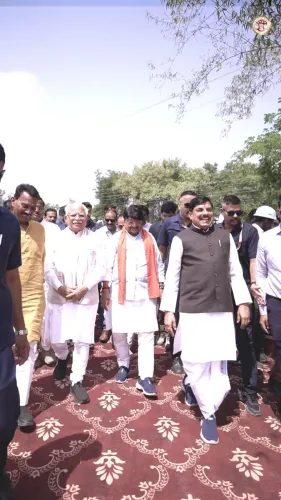
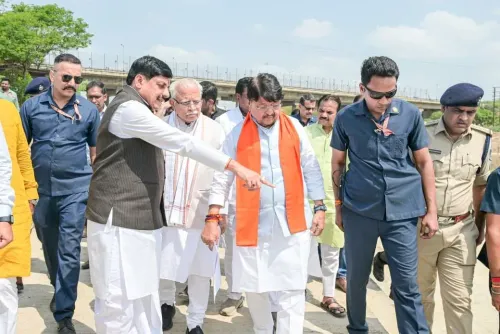
The Chief Minister's Office of Madhya Pradesh announced on Friday, 20 June 2026 that Chief Minister Dr. Mohan Yadav and Union Minister Manohar Lal Khattar jointly reviewed development works and projects in Ujjain aimed at preparing the city for Simhastha-2028, the upcoming Kumbh Mela expected to draw millions of pilgrims.
Context
The post states that 'सिंहस्थ-2028 की तैयारियों को लेकर विकास कार्यों एवं परियोजनाओं की समीक्षा की' — translated: 'a review of development works and projects was conducted regarding preparations for Simhastha-2028.' The joint review signals active coordination between the Madhya Pradesh state government and the Union Ministry of Housing and Urban Affairs, which Khattar heads, underscoring the central government's stake in the event's infrastructure readiness.
Ujjain, home to the revered Mahakaleshwar Jyotirlinga, hosts the Simhastha Kumbh Mela every 12 years. The next edition in 2028 is among the most significant religious gatherings on India's calendar and demands large-scale civic and infrastructure upgrades well in advance.
Policy Backdrop
Preparations for Simhastha follow a well-established template. Ahead of the 2016 Simhastha in Ujjain, the state invested heavily in ghats, roads, sanitation facilities, and temporary accommodation to manage the pilgrim surge. Those efforts set a baseline that planners are now expected to build upon for 2028.
The Madhya Pradesh Urban Development Department — tagged in the official post — is the nodal state agency driving on-ground implementation. At the central level, schemes such as AMRUT (Atal Mission for Rejuvenation and Urban Transformation) have channelled funds into Ujjain's water supply, sewerage, and urban mobility networks since 2015, and the AMRUT 2.0 framework is expected to remain a key financing vehicle for Simhastha-linked works.
This centre-state coordination model mirrors the approach used for the Prayagraj and Haridwar Kumbh Melas, where joint review mechanisms helped align timelines, funding releases, and crowd-management systems across multiple ministries and state departments.
Stakeholders and Impact
The primary beneficiaries of the infrastructure push are the millions of pilgrims expected to converge on Ujjain in 2028, who depend on safe ghats, reliable water and sanitation, and efficient transport links. Local residents of Ujjain stand to gain from lasting civic upgrades — improved roads, drainage, and public spaces — that outlast the event itself.
For the Madhya Pradesh government, a well-executed Simhastha carries significant political and economic weight: it boosts tourism revenue, showcases state governance capacity, and elevates Ujjain's profile as a heritage and pilgrimage destination.
What's Next
Attention will now turn to the pace of project execution, disbursement of central funds under any special Simhastha package, and whether the reviewed works receive dedicated budget allocations in the 2026-27 and 2027-28 state budgets. Parliamentary mentions or central budget line items specifically earmarked for Simhastha-2028 will be a key indicator of how firmly the event is embedded in national infrastructure planning.
With 2028 roughly two years away, the June 2026 review marks a critical checkpoint: enough time remains to course-correct, but the window for major construction is narrowing fast.
Point of View
The Madhya Pradesh government is positioning itself to access central funds and technical support well ahead of the event — a strategy that proved effective during the Prayagraj Kumbh preparations. The review also serves as an accountability mechanism: with roughly two years to go, publicly visible oversight creates pressure on executing agencies to meet milestones. For CM Yadav, a successful Simhastha would be a defining governance moment in his tenure.
NationPress
18 Sept 2026
Frequently Asked Questions
What is Simhastha 2028?
Simhastha 2028 is the Kumbh Mela to be held in Ujjain, Madhya Pradesh, in 2028. It is a major Hindu pilgrimage event that takes place every 12 years in Ujjain, attracting millions of devotees from across India and the world.
Why did Manohar Lal Khattar visit Ujjain for Simhastha review?
As Union Minister of Housing and Urban Affairs, Manohar Lal Khattar's ministry oversees central urban infrastructure schemes like AMRUT that fund city development projects. His presence at the Ujjain review reflects the central government's role in co-funding and coordinating Simhastha-2028 infrastructure upgrades.
What infrastructure work is planned for Simhastha 2028 in Ujjain?
While specific project details from the 20 June 2026 review have not been officially disclosed, preparations are expected to cover ghats, roads, water supply, sewerage, sanitation, and crowd-management systems, building on the large-scale investments made for the 2016 Simhastha.
When was the last Simhastha Kumbh Mela held in Ujjain?
The last Simhastha Kumbh Mela in Ujjain was held in 2016. That edition prompted significant state investment in civic and pilgrimage infrastructure across the city.
Which department is handling Simhastha 2028 preparations in Madhya Pradesh?
The Madhya Pradesh Urban Development Department is the primary state agency responsible for implementing development works and projects for Simhastha-2028, as indicated in the official government post.