Khattar joins traders' meet in Amritsar, marks 12 yrs of Modi govt
Synopsis
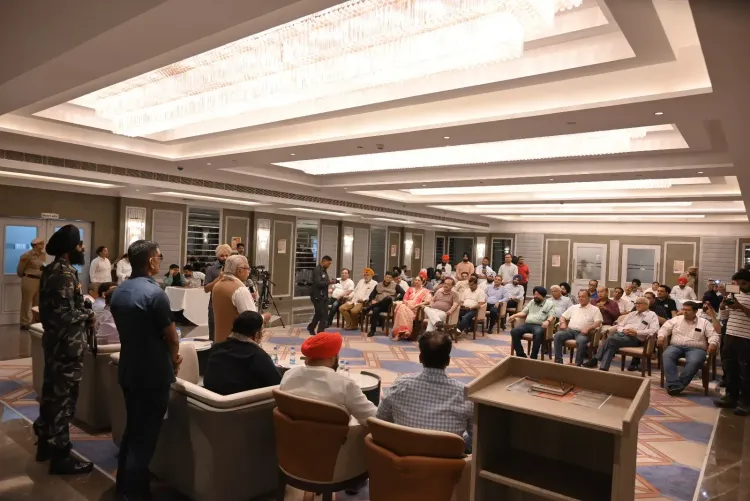
Union Power Minister Manohar Lal Khattar attended a traders' conference in Amritsar on 13 June 2026 under a special BJP outreach campaign marking 12 years of the Modi government, discussing GST reform, digital transactions, logistics upgrades and MSME empowerment with trade and industry representatives.
Key Takeaways
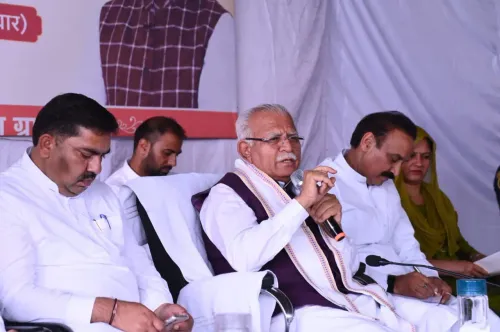
Union Power Minister Manohar Lal Khattar attended a vyapari varg sammelan (traders' conference) in Amritsar on 13 June 2026 .
The event was part of a special public-outreach campaign marking 12 years of the Narendra Modi-led central government .
Discussions covered tax simplification ( GST ), digital transactions, logistics and infrastructure, and MSME empowerment.
Key reform milestones cited include GST (July 2017), Digital India (July 2015), Make in India (September 2014), and Udyam Registration (July 2020).
The outreach series is expected to continue across states, with findings potentially informing future GST Council and Union Budget decisions.
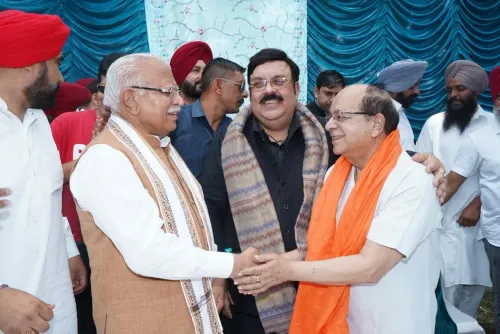
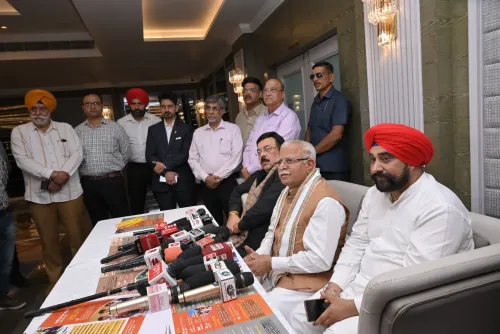
Union Power Minister Manohar Lal Khattar attended a traders' conference (vyapari varg sammelan) in Amritsar on Saturday, 13 June 2026, as part of a special public-outreach campaign organised to mark the completion of 12 years of the Narendra Modi-led central government. The event brought together representatives from trade and industry to discuss the government's economic reform agenda over the past decade.
Context
Khattar, posting in Hindi on X, said he 'participated in the traders' conference held in Amritsar under the special public-contact campaign organised to mark the successful completion of 12 years of the central government under the leadership of respected Prime Minister Shri Narendra Modi.' The outreach campaign is part of a broader BJP effort to communicate governance milestones directly to business associations across states, timed to the government's anniversary.
Amritsar, a major commercial hub in Punjab, was one of the venues chosen for this round of engagement. The city's trading community — spanning textiles, food processing, and retail — makes it a strategically significant stop for any national business-outreach drive.
Policy Backdrop
At the conference, Khattar held detailed discussions with trade and industry representatives on what he described as 'historic reforms' by the central government. Key themes included simplification of the tax system, promotion of digital transactions, strengthening of logistics and infrastructure, and steps taken to empower the MSME sector.
The Goods and Services Tax (GST), rolled out in July 2017, replaced a fragmented multi-levy system with a unified indirect tax regime — a reform frequently cited by the government as a landmark ease-of-doing-business measure. The Digital India initiative, launched in July 2015, expanded digital payments infrastructure, while the Make in India programme, announced in September 2014, sought to improve India's investment climate. The Udyam Registration portal, notified in July 2020, simplified MSME registration and broadened access to credit-linked support schemes.
Khattar noted that policies implemented under the Prime Minister's 'visionary leadership' had 'increased ease of doing business, created new opportunities, and made the trading community a strong partner in the country's development journey.'
Stakeholders and Impact
The MSME sector is among the most directly affected constituencies of the reforms discussed at the conference. Micro, Small and Medium Enterprises account for a significant share of India's employment and export earnings, and successive post-2014 policy packages have targeted them through easier credit access, revised classification norms, and market-linkage programmes.
Traders in states like Punjab, where small and medium businesses dominate the commercial landscape, have been both beneficiaries and vocal stakeholders in debates over GST rate rationalisation and digital payment mandates. Direct engagement sessions of this kind serve as feedback loops between the central government and ground-level business sentiment.
What's Next
The Amritsar event is one node in a wider series of state-level outreach meetings being conducted under the same campaign. Observers will watch whether the feedback gathered at such conferences feeds into upcoming GST Council deliberations or MSME-related provisions in the next Union Budget. Khattar's participation — as a senior Union Minister and former Chief Minister of neighbouring Haryana — signals the political weight the BJP is attaching to trader-community engagement ahead of future electoral cycles in north India.
Point of View
Converting policy milestones into direct voter and stakeholder engagement. Khattar's deployment to Punjab — a state the BJP is keen to reclaim — is not incidental; his profile as a former chief minister of neighbouring Haryana lends him credibility with north Indian business communities. The emphasis on GST simplification and MSME empowerment reflects an acknowledgement that trader sentiment, which turned ambivalent in the early GST transition years, remains a constituency worth actively cultivating. Whether these outreach sessions translate into concrete policy adjustments — or remain largely communicative exercises — will be the real measure of their impact.
NationPress
13 Sept 2026
Frequently Asked Questions
Why did Manohar Lal Khattar visit Amritsar in June 2026?
Khattar visited Amritsar on 13 June 2026 to attend a traders' conference organised as part of a special public-outreach campaign marking 12 years of the Narendra Modi-led central government.
What topics were discussed at the Amritsar traders' conference?
The conference covered historic economic reforms, GST and tax simplification, promotion of digital transactions, logistics and infrastructure strengthening, and steps taken to empower the MSME sector.
What is the BJP's 12-year outreach campaign about?
The campaign is a series of public-contact events held across states to communicate the central government's governance and economic reform achievements over 12 years to business associations, traders, and other stakeholders.
What MSME reforms has the Modi government introduced since 2014?
Key measures include the Udyam Registration portal (July 2020) for simplified registration, revised MSME classification norms, credit-linked support schemes, and the broader GST and Digital India frameworks that reduced compliance costs for small businesses.
What is Manohar Lal Khattar's current role?
Manohar Lal Khattar is the Union Minister of Power and Housing and Urban Affairs in the Narendra Modi government, and is a senior BJP leader and former Chief Minister of Haryana.