Khattar flags Punjab DISCOMs stalemate, cites PFC-REC lending norms
Synopsis
Union Power Minister Manohar Lal Khattar on August 10, 2026 publicly stated that Punjab's DISCOMs lack adequate financial viability, that PFC and REC lend strictly on merit, and that repeated central advisories have hit a stalemate due to inaction by the Punjab government and its distribution companies.
Key Takeaways
Union Power Minister Manohar Lal Khattar stated on August 10, 2026 that Punjab's DISCOMs have 'comparatively poor' financial viability.
PFC and REC Limited are autonomous institutions that lend based on established financial norms, not political direction.
Khattar said the Centre has repeatedly advised Punjab but the state government and DISCOMs have not acted, creating a stalemate.
The UDAY scheme (2015) was designed to restructure DISCOM debt and tie borrowing to performance, yet structural deficits persist in several states including Punjab.
Punjab's subsidised and free-power commitments to farmers and domestic consumers are widely seen as a key driver of DISCOM financial stress.
The minister's public statement places responsibility for breaking the deadlock squarely on the Punjab state government.
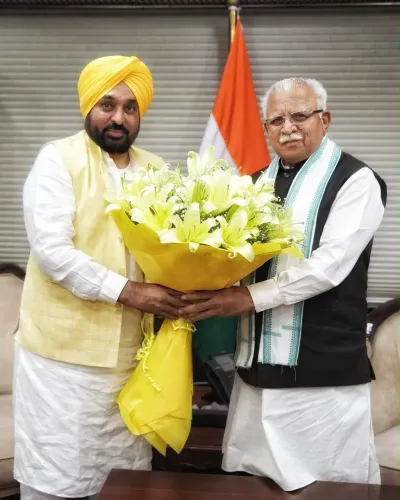
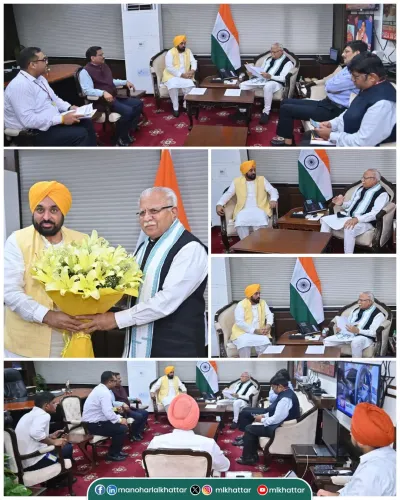
Punjab's power distribution companies are caught in a financial gridlock — and Union Power Minister Manohar Lal Khattar is saying so plainly. On Monday, August 10, 2026, the minister publicly flagged that Punjab's DISCOMs lack the financial viability required by autonomous lending institutions, creating a stalemate that the Centre has been unable to break despite repeated advisories.
Khattar stated that the 'financial viability of Punjab's DISCOMs is comparatively not good,' and that Power Finance Corporation (PFC) and REC Limited — both government-owned but independently governed financial institutions — make their lending decisions strictly on the basis of established norms. Neither institution can be directed by the Centre to bypass those standards.
What the Centre can — and cannot — do
The minister drew a clear line between what New Delhi offers and what it can compel. 'The central government cooperates with states on energy-related matters from time to time,' he said, 'but there are many things where, despite our suggestions, the Punjab government and its DISCOMs do not move forward — and this creates a stalemate.' The admission is significant: it places the onus squarely on Chandigarh, not on federal lending policy.
PFC and REC are the backbone of power-sector financing in India. Their loan approvals hinge on a utility's technical and financial health — aggregate technical and commercial losses, subsidy receivables, revenue gaps. A DISCOM that cannot demonstrate a credible path to viability will find credit doors closed, regardless of political backing.
A recurring fault line in India's power sector
Punjab is not alone in this bind, but its situation is pointed. The Ujwal DISCOM Assurance Yojana (UDAY), launched in 2015, was designed precisely to rescue state utilities drowning in debt — restructuring liabilities and tying future borrowing to performance benchmarks. The broader Electricity Act of 2003 had already laid the reform roadmap. More than two decades on, several state DISCOMs — Punjab's among them — continue to carry structural deficits, kept afloat by state guarantees and deferred reform.
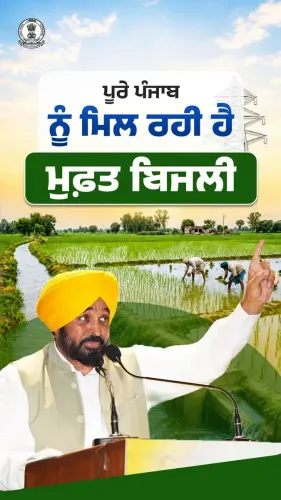
The pattern is well-worn: the Centre sets norms, urges action, and watches states cite fiscal constraints or political compulsions — particularly around subsidised or free power — to avoid the hard restructuring those norms demand. Punjab's government has extended significant free-power commitments to farmers and domestic consumers, a policy popular at the ballot box but corrosive to DISCOM balance sheets.
Why this moment matters
Khattar's public statement is unusual in its directness. Senior ministers rarely call out a state's power utility so explicitly in an open forum. By naming the stalemate and attributing it to inaction on Punjab's side, he is also signalling that the Centre's patience has a limit — and that future financing from PFC or REC will not be unlocked through political pressure alone. The ball, he is saying, is in Bhagwant Mann's court.
For Punjab's electricity consumers, the stakes are concrete: a financially stressed DISCOM means deferred infrastructure investment, unreliable supply, and the creeping risk of a deeper debt crisis that ultimately lands on the state exchequer — and on them.
Reform or stalemate. The ledger does not wait for politics to catch up.
Point of View
Norm-based lending, he insulates the Centre from blame while making clear that financial reform — not federal transfers — is the only exit from the stalemate. The statement also signals that the Centre will not override institutional lending safeguards to bail out a state whose power subsidies are structurally incompatible with DISCOM viability. This centre-state friction over power-sector reform is a recurring fault line across India, but naming it this explicitly in public is a notable escalation.
NationPress
10 Aug 2026
Frequently Asked Questions
Why are Punjab's DISCOMs in financial trouble?
Punjab's electricity distribution companies carry structural deficits driven partly by large subsidised and free-power commitments to farmers and domestic consumers, which reduce revenue recovery and make their balance sheets unattractive to lenders.
Can the central government force PFC or REC to give loans to Punjab?
No. PFC and REC Limited are autonomous institutions that make lending decisions based on established financial and technical norms. Union Power Minister Khattar explicitly stated that the Centre cannot override these independent lending criteria.
What is the UDAY scheme and did it help Punjab?
The Ujwal DISCOM Assurance Yojana (UDAY) , launched in 2015 , aimed to restructure state DISCOM debt and tie future credit to performance benchmarks. Despite the scheme, several states including Punjab continue to face persistent financial stress in their distribution companies.
What did Khattar say about Punjab's power sector stalemate?
Khattar said the central government cooperates with states on energy matters but that, despite repeated suggestions, the Punjab government and its DISCOMs have not acted on reforms, creating a stalemate — and he placed the responsibility for resolving it on the state.
What happens to electricity consumers if Punjab DISCOMs remain financially weak?
Financially stressed DISCOMs typically defer infrastructure investment, leading to unreliable power supply. Prolonged stress can also trigger a deeper debt crisis that falls on the state exchequer and ultimately on consumers through tariff hikes or service deterioration.