Khattar Hails Lok Sabha Passage of Exam Anti-Cheat Bill

Synopsis
The Lok Sabha passed the Public Examinations (Prevention of Unfair Means) Amendment Bill, 2026 on 29 July, introducing fast-track courts, time-bound probes, and Special Task Forces to combat paper leaks. Union Minister Manohar Lal Khattar hailed it as a historic decision protecting crores of exam aspirants.
Key Takeaways
The Lok Sabha passed the Public Examinations (Prevention of Unfair Means) Amendment Bill, 2026 on 29 July 2026 .
The bill mandates time-bound investigations and fast-track courts specifically for exam-fraud cases.
It enables formation of a Special Task Force (STF) to pursue organised paper-leak networks when required.
The amendment builds on the Public Examinations (Prevention of Unfair Means) Act, 2024 , tightening enforcement gaps.
The bill must still pass the Rajya Sabha before becoming law.
Union Minister Manohar Lal Khattar called it a historic step to protect the rights of hardworking youth and strengthen merit-based selection.
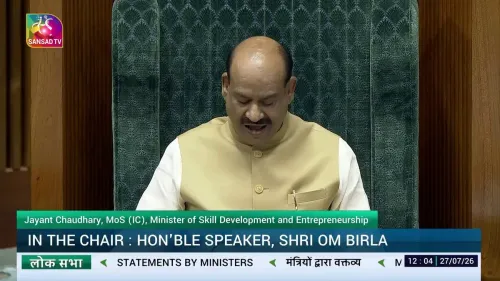
Millions of competitive exam aspirants across India got a legislative shield on Wednesday, 29 July 2026, as the Lok Sabha passed the 'Public Examinations (Prevention of Unfair Means) Amendment Bill, 2026' — a law designed to make paper leaks and exam fraud a far more costly gamble. Union Power Minister Manohar Lal Khattar welcomed the passage, calling it a historic decision that would strengthen the faith of crores of exam-takers in the country's testing system.
What the Bill Promises: Fast Courts, Special Task Forces, and Zero Tolerance
Khattar, posting in Hindi, described the bill as an 'aitihasik nirnay' (historic decision) taken under Prime Minister Narendra Modi's leadership. The amendment, he said, goes well beyond symbolic intent: it mandates time-bound investigations, expedited judicial proceedings, and the establishment of special fast-track courts to handle exam-fraud cases. Where the situation demands it, the law also enables the formation of a Special Task Force (STF) — a dedicated investigative unit to pursue organised paper-leak networks.
The framing is deliberate. India has been scarred by a string of high-profile exam scandals — from state-level recruitment tests to national competitive exams — where question papers surfaced on messaging apps hours before candidates sat down to write. The damage was not just administrative; it was a gut-punch to lakhs of students who had spent years preparing, only to watch the playing field tilt against them.
From the 2024 Act to the 2026 Amendment: Closing the Gaps
The legislative groundwork was laid with the Public Examinations (Prevention of Unfair Means) Act, 2024, which introduced criminal penalties for malpractice in public exams for the first time at the central level. The 2026 amendment now builds on that foundation — tightening enforcement mechanisms and plugging procedural gaps that slowed down accountability after the original law came into force.
The pattern is one of incremental legal hardening: each wave of controversy has pushed Parliament toward sharper teeth in the statute. The fast-track court provision, in particular, addresses a chronic weakness — cases dragging for years while guilty parties remained unpunished and aspirants remained in limbo.
What Comes Next: Rajya Sabha and the Real Test of Implementation
The bill's passage in the Lok Sabha is the first half of the legislative journey. It must now clear the Rajya Sabha before becoming law. Even then, the harder work begins: notifying the fast-track courts, constituting the STFs where needed, and ensuring that state governments — which run the bulk of recruitment exams — align their machinery with the new framework.
For now, the message from the treasury benches is unambiguous: the era of treating exam fraud as a manageable inconvenience is over. Whether the enforcement architecture delivers on that promise is the question crores of aspirants will be watching.
Point of View
The government is trying to shift the narrative from 'we passed a law' to 'we built a machine that punishes quickly.' The political calculus is sharp: exam aspirants are a vast, vocal, and increasingly organised constituency, and being seen as their defender carries real electoral weight. The real stress-test, however, will be implementation — whether states adopt the framework or treat it as a central mandate they can quietly sidestep.
NationPress
29 Jul 2026
Frequently Asked Questions
What is the Public Examinations (Prevention of Unfair Means) Amendment Bill 2026?
It is a bill passed by the Lok Sabha on 29 July 2026 that amends the 2024 Public Examinations Act to introduce stricter anti-cheat provisions, including fast-track courts, time-bound investigations, and Special Task Forces to tackle paper leaks and exam fraud in India.
What are the key provisions of the exam anti-cheat bill 2026?
The bill provides for time-bound investigations, expedited judicial proceedings through special fast-track courts, and the option to constitute a Special Task Force (STF) to investigate organised paper-leak networks.
Has the exam amendment bill 2026 become law yet?
Not yet. The bill passed the Lok Sabha on 29 July 2026 but must also be approved by the Rajya Sabha before it can be enacted into law.
What was the earlier law on exam paper leaks in India?
The Public Examinations (Prevention of Unfair Means) Act, 2024 was enacted to criminalise malpractice in public exams at the central level. The 2026 amendment strengthens that law's enforcement mechanisms.
Why did Manohar Lal Khattar call the exam bill historic?
Khattar described the bill as a historic decision because it goes beyond penalties to build a faster accountability system — fast-track courts and STFs — that directly protects the rights of crores of competitive exam aspirants who have suffered due to paper leaks.