Khattar pays tribute to Ashok Singhal on birth anniversary
Synopsis
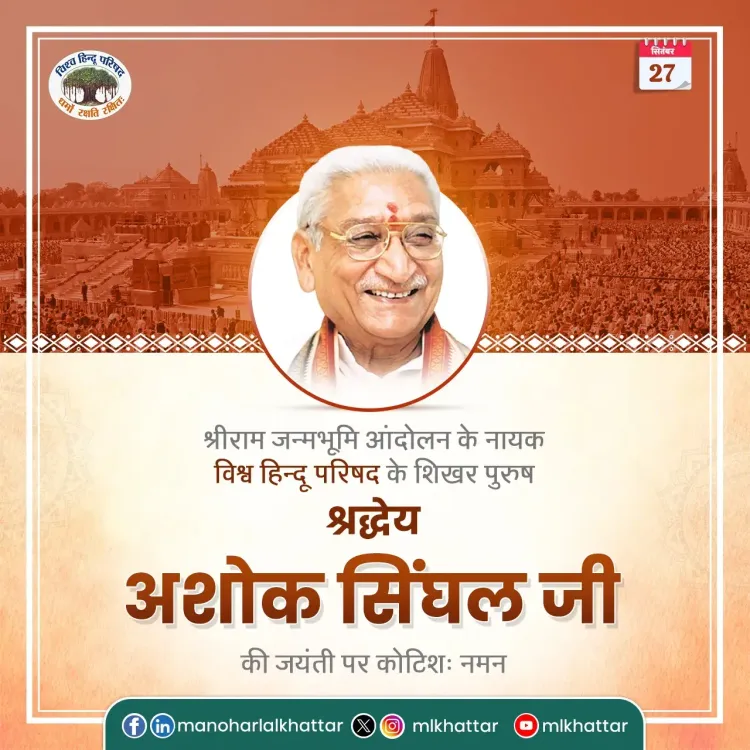
Union Power Minister Manohar Lal Khattar on 27 September 2026 paid tribute to late VHP president Ashok Singhal on his birth anniversary, calling him the flag-bearer of the Shri Ram Janmabhoomi movement and a lifelong servant of Indian cultural heritage.
Key Takeaways
Union Power Minister Manohar Lal Khattar posted a tribute to Ashok Singhal on his birth anniversary on 27 September 2026 .
Singhal was the former president of the Vishva Hindu Parishad (VHP) , founded in 1964 , and a central figure in the Shri Ram Janmabhoomi movement .
Singhal passed away in 2015 , before the 2019 Supreme Court verdict that cleared the path for the Ram temple in Ayodhya .
Khattar described Singhal's life as a guiding example for 'preserving Indian culture and traditions and the rejuvenation of the nation.' Senior BJP leaders regularly mark birth anniversaries of figures linked to the Ram Janmabhoomi campaign, reflecting the party's sustained emphasis on cultural heritage.
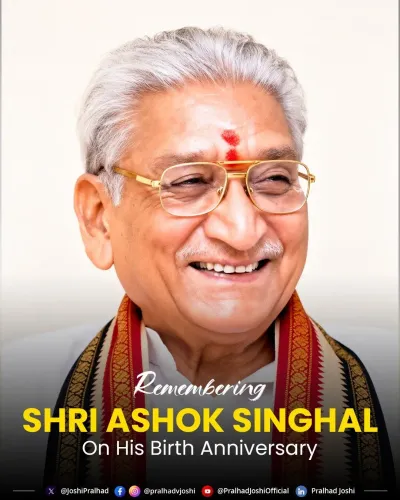
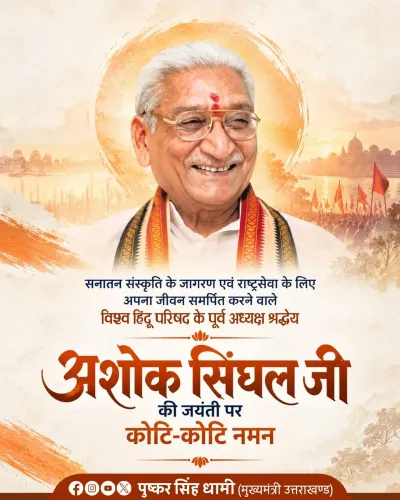
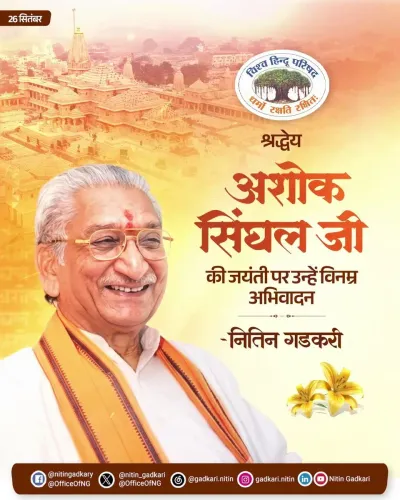
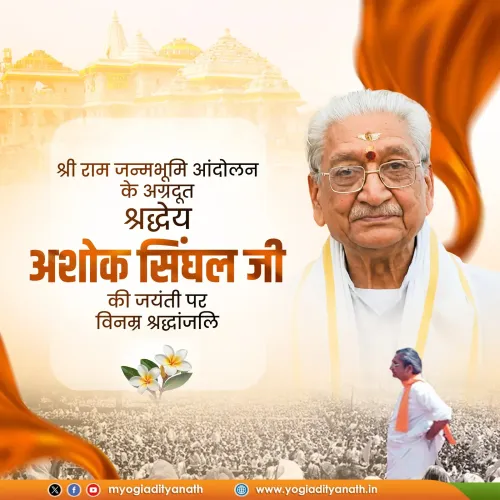
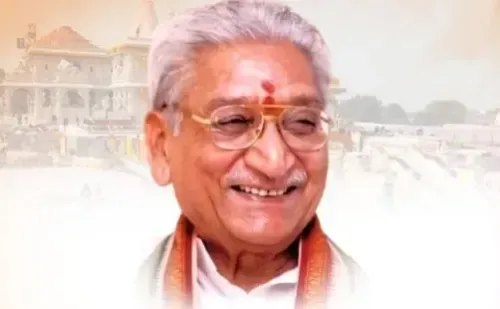
A life spent at the forefront of one of independent India's most consequential religious campaigns deserves more than a passing mention — and on Sunday, 27 September 2026, Union Power Minister Manohar Lal Khattar ensured it got one, offering a formal tribute to the late Vishva Hindu Parishad (VHP) former president Ashok Singhal on his birth anniversary.
Khattar's post in Hindi read: 'Rashtra ke sanskritik gaurav ko punarsthaapit karne ke liye apna sampurna jeevan hom kar dene waale...' — offering 'countless salutations' to Singhal, whom he described as the 'flag-bearer of the Shri Ram Janmabhoomi movement' and a dedicated servant of Indian culture and tradition. 'Your life, devoted to the preservation of Indian culture and traditions and the rejuvenation of the nation, will always guide us,' he wrote.
Who was Ashok Singhal?
Ashok Singhal, who passed away in 2015, was the longest-serving and most prominent leader of the Vishva Hindu Parishad — the Hindu cultural organisation founded in 1964. He became the defining face of the Shri Ram Janmabhoomi movement, the decades-long campaign advocating the construction of a Ram temple at the contested site in Ayodhya, Uttar Pradesh. His organisational drive through the 1980s and 1990s helped transform that campaign into a mass mobilisation that reshaped Indian politics.
The movement he championed ultimately concluded with the landmark Supreme Court verdict of 2019, which cleared the path for temple construction, and the subsequent consecration of the Ram Mandir in Ayodhya in January 2024 — an event Singhal did not live to witness.
Birthday tributes and the BJP's cultural memory
Khattar's tribute follows a consistent pattern among senior BJP leaders, who regularly mark the birth anniversaries of figures central to the Ram Janmabhoomi campaign. For the party, Singhal occupies a distinct place — a non-electoral but foundational figure whose organisational work is credited with building the cultural and religious groundwork on which the party's mobilisation from the 1980s onward was built.
For Khattar — a senior Haryana leader and former Chief Minister who has built his political identity around cultural heritage themes — the tribute carries particular weight. It is a signal that the ideological lineage remains alive and honoured even as the temple itself stands complete.
The movement is over. The monument stands. But the men who built it are not forgotten — and in Indian political culture, birth anniversaries are the formal calendar of that memory.
Point of View
Such commemorations shift from aspiration to vindication — framing the completed temple as the fulfilment of Singhal's life's work. For Khattar, a leader who built his Haryana political base partly on Hindu cultural messaging, aligning publicly with Singhal's legacy is consistent and deliberate. It also quietly reminds the VHP's organisational base that the BJP has not moved on from the ideological compact that bound them.
NationPress
27 Sept 2026
Frequently Asked Questions
Who was Ashok Singhal?
Ashok Singhal was the former president of the Vishva Hindu Parishad (VHP) and the most prominent leader of the Shri Ram Janmabhoomi movement. He passed away in 2015.
What was Ashok Singhal's role in the Ram Janmabhoomi movement?
Ashok Singhal was widely regarded as the flag-bearer of the Ram Janmabhoomi movement, which campaigned for the construction of a Ram temple in Ayodhya. His organisational leadership in the 1980s and 1990s helped turn it into a national mass movement.
What did Manohar Lal Khattar say about Ashok Singhal?
Khattar offered 'countless salutations' to Singhal, calling him devoted to the restoration of India's cultural pride and describing his life as a guiding example for preserving Indian culture and traditions.
What is the Vishva Hindu Parishad (VHP)?
The Vishva Hindu Parishad is a Hindu cultural organisation founded in 1964. It played a central role in the Shri Ram Janmabhoomi movement and has historically maintained close ties with the BJP's ideological ecosystem.
Did Ashok Singhal live to see the Ram Mandir built?
No. Ashok Singhal passed away in 2015, several years before the Supreme Court's 2019 verdict that cleared the path for temple construction and the subsequent consecration of the Ram Mandir in Ayodhya in January 2024.