Khattar Honours Emergency-Era Democracy Fighters in Faridabad
Synopsis
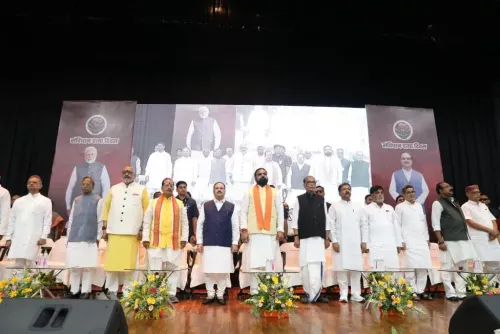
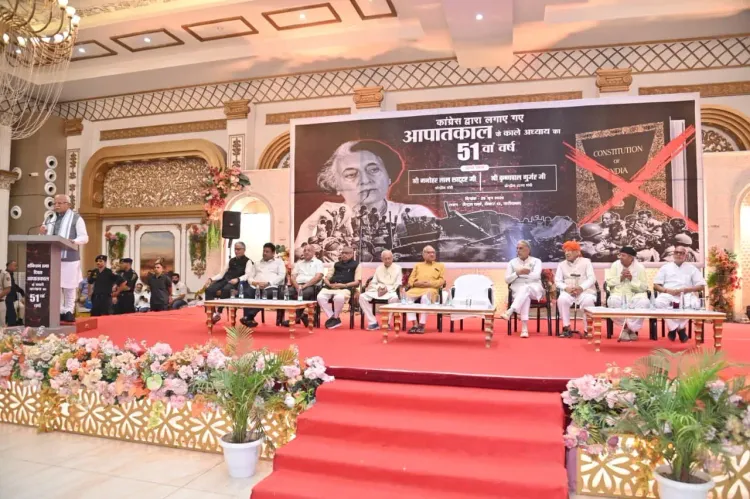
Union Power Minister Manohar Lal Khattar attended a Samvidhan Hatya Diwas felicitation in Faridabad on 25 June 2026, honouring those who resisted the 1975 Emergency. He described the period as Congress's anti-democratic overreach, citing suspension of fundamental rights, press censorship, and judicial silencing as defining violations of that era.
Key Takeaways
Union Power Minister Manohar Lal Khattar attended a democracy defenders' honour programme in Faridabad on 25 June 2026 .
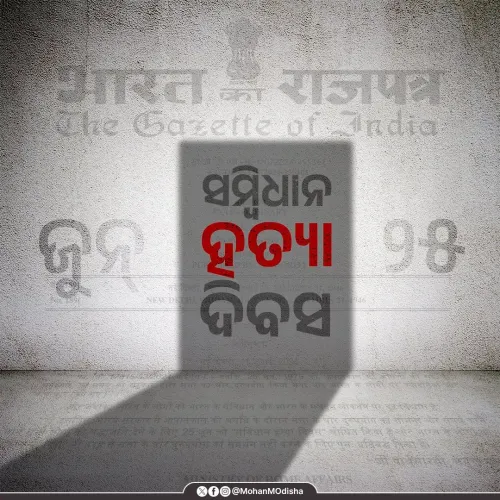
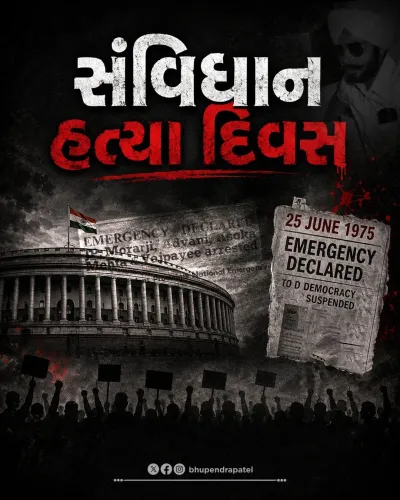
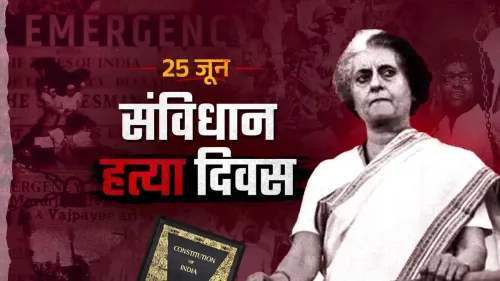
The event marked Samvidhan Hatya Diwas , observed annually on 25 June to commemorate the imposition of the 1975 Emergency .
Khattar described the Emergency as driven by Congress's 'anti-democratic mindset' rather than any national necessity.
He cited four specific violations: suspension of fundamental rights , press censorship , judicial silencing, and imprisonment of social activists.
The 1975 Emergency was proclaimed under Article 352 and lasted from 25 June 1975 to 21 March 1977 .
Khattar paid tribute to all democracy fighters who sacrificed to protect constitutional and democratic values.
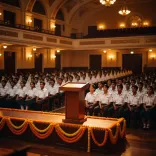
Union Power Minister Manohar Lal Khattar attended a felicitation programme for democracy defenders (Loktantra Raksha Senaniyon) in Faridabad, Haryana, on the occasion of Samvidhan Hatya Diwas on 25 June 2026, marking the 51st anniversary of the imposition of the 1975 Emergency. Khattar paid tribute to those who resisted the Emergency and described the period as a dark chapter in Indian history driven by Congress's anti-democratic impulse.
Context
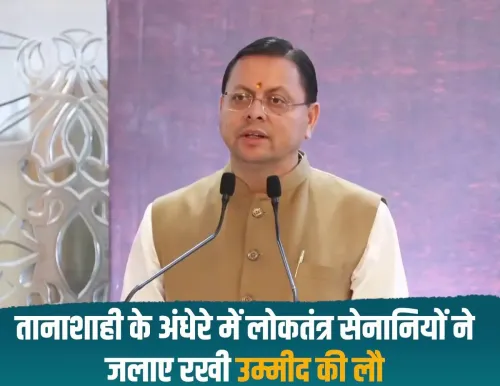
In his post, Khattar stated that 'the nation will never be able to forget the grave injustice and atrocities committed by Congress during the Emergency.' He added that the day serves as a reminder that 'when power turns dictatorial, the people also have the strength to uproot it.' The minister described the Emergency not as a national necessity but as a reflection of 'the anti-democratic mindset of Congress and an individual intoxicated by power.'
Khattar catalogued the specific constitutional violations of that period: suspension of citizens' fundamental rights, censorship of the press — described as the 'fourth pillar of democracy' — silencing of the judiciary, and imprisonment of social activists. He concluded by offering a respectful salute (shraddhapoorn naman) to all democracy fighters who 'sacrificed everything to protect the dignity of the Constitution and democratic values.'
Policy Backdrop
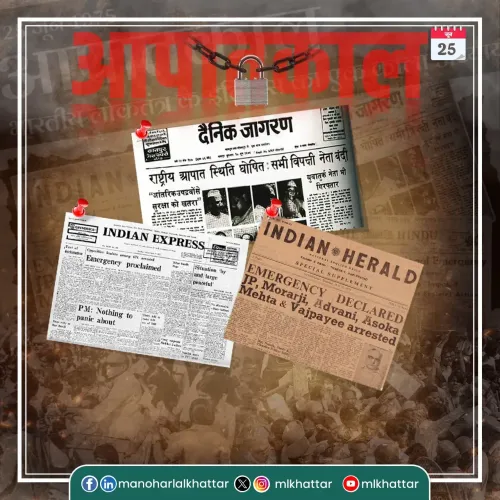
The Internal Emergency was proclaimed across India on 25 June 1975 under Article 352 of the Constitution and remained in force until 21 March 1977. During this period, fundamental rights were suspended, press freedoms were curtailed, and a large number of political opponents and civil society figures were detained under preventive detention laws.
Samvidhan Hatya Diwas — literally 'Constitution Murder Day' — is observed on 25 June each year by the ruling Bharatiya Janata Party and affiliated organisations to commemorate the Emergency's imposition and honour those who resisted it. The BJP has institutionalised this commemoration as a counter-narrative to Congress's constitutional legacy, using the occasion to draw contrasts between Emergency-era executive overreach and the party's stated commitment to democratic and constitutional norms.
Stakeholders and Impact
The primary beneficiaries of such felicitation events are Emergency-era democracy fighters — activists, journalists, lawyers, and ordinary citizens who were imprisoned or persecuted between 1975 and 1977. For many of them, now elderly, state-sponsored recognition represents a formal acknowledgement of sacrifices that went largely unremarked for decades after the Emergency's end.
For the Indian National Congress, such commemorations constitute a sustained political challenge, as they keep the Emergency's legacy in public discourse. Opposition parties and civil society observers have periodically questioned whether the BJP's invocation of the Emergency is a genuine constitutional reckoning or a partisan electoral instrument. Journalists' organisations and press freedom advocates have also noted the resonance of Emergency-era press censorship with contemporary debates about media independence.
What's Next
With the next general election cycle approaching, similar state-level Samvidhan Hatya Diwas commemorations are expected to intensify across BJP-governed states, with senior central ministers and chief ministers likely to participate in parallel events. The Emergency narrative is also likely to surface during parliamentary debates on constitutional amendments and civil liberties. Khattar's participation in the Faridabad event signals continued high-level BJP investment in keeping the 1975 Emergency at the centre of India's political memory.
Point of View
The party signals that this is not merely local commemoration but a coordinated national narrative exercise. The framing of the Emergency as the product of 'one individual's anti-democratic mindset' is a deliberate rhetorical choice that personalises blame while implicating the Congress organisation as a whole. As the next electoral cycle nears, expect this narrative to intensify in parliamentary debates and campaign messaging alike.
NationPress
24 Sept 2026
Frequently Asked Questions
What is Samvidhan Hatya Diwas and why is it observed on 25 June?
Samvidhan Hatya Diwas, or 'Constitution Murder Day', is observed on 25 June each year to mark the anniversary of the imposition of the Internal Emergency by the Congress government on 25 June 1975. The day honours those who resisted the Emergency and is used to recall the suspension of fundamental rights and democratic freedoms during that period.
What did Manohar Lal Khattar say about the 1975 Emergency?
Khattar stated that the Emergency was not a national necessity but a reflection of Congress's anti-democratic mindset. He said the nation will never forget the injustice and atrocities of that period and paid tribute to all democracy fighters who sacrificed to protect constitutional values.
What happened during the 1975 Emergency in India?
The Internal Emergency was proclaimed under Article 352 of the Constitution on 25 June 1975 and lasted until 21 March 1977. During this period, citizens' fundamental rights were suspended, press freedom was curtailed, the judiciary was effectively silenced, and large numbers of political opponents and social activists were imprisoned.
Where did Khattar attend the Samvidhan Hatya Diwas event in 2026?
Khattar attended the democracy defenders' felicitation programme in Faridabad, a major city in Haryana, on 25 June 2026.
Why does the BJP commemorate the 1975 Emergency every year?
The BJP uses 25 June commemorations to highlight what it describes as Congress's anti-democratic overreach during the Emergency era, contrasting it with its own stated commitment to constitutional norms. The occasion is also used to honour activists, journalists, and citizens who resisted the Emergency.