Khattar Meets Delhi LG Sandhu, Discusses City Development
Synopsis
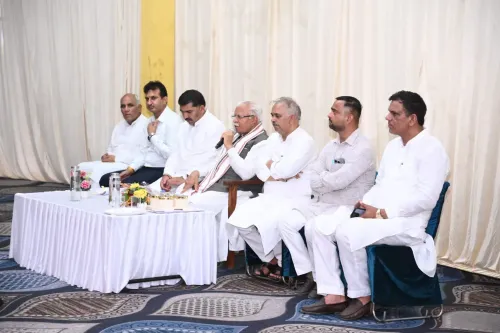
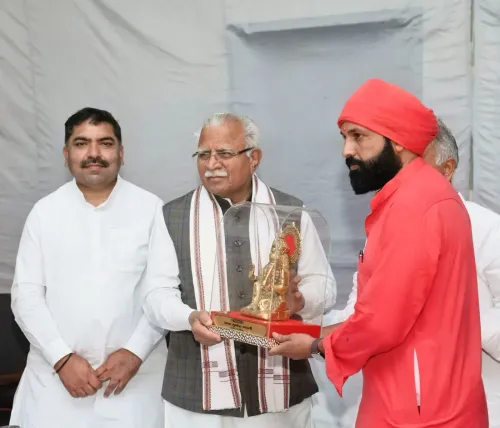
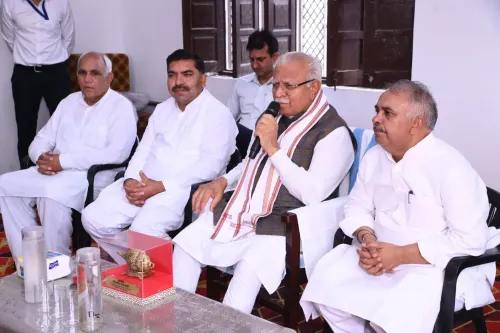
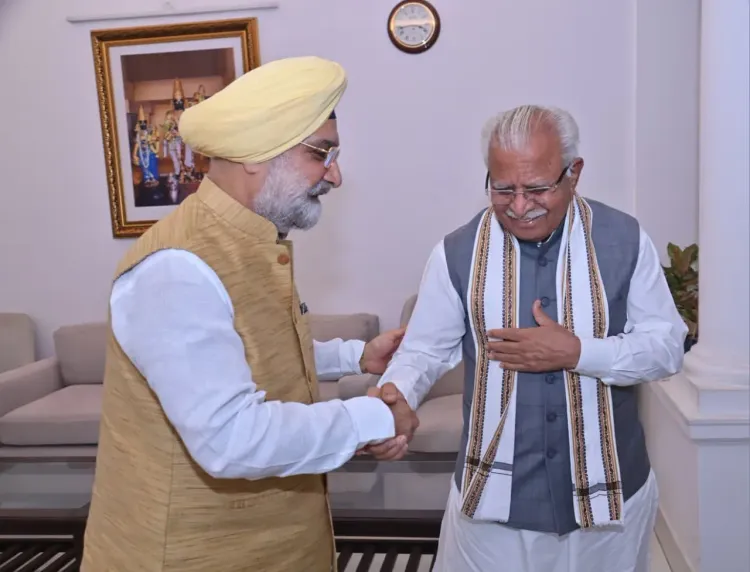
Union Minister Manohar Lal Khattar met Delhi Lieutenant Governor Taranjit Singh Sandhu on 25 July 2026 for a courtesy call, during which both held 'positive and meaningful discussions' on public welfare and development-related issues in the national capital.
Key Takeaways
Union Minister Manohar Lal Khattar held a courtesy meeting with Delhi LG Taranjit Singh Sandhu on 25 July 2026 .
Discussions covered public welfare and development-oriented subjects related to Delhi .
Khattar described the talks as 'positive and meaningful' in his post on X.
As Union Minister for Power and Housing & Urban Affairs , Khattar's portfolio directly overlaps with Delhi's infrastructure needs.
The meeting reflects the coordination framework established under the GNCTD Amendment Act, 2021 , which defines the LG's role in NCT governance.
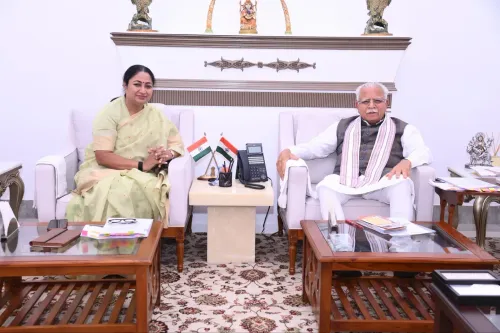
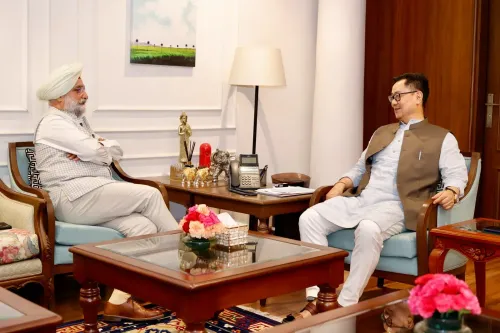
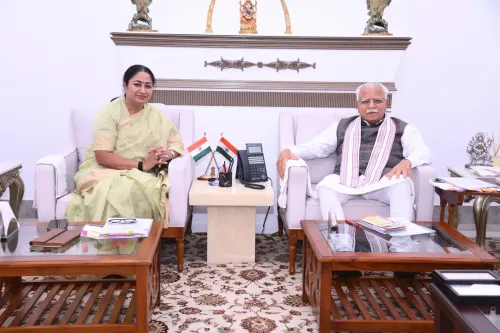
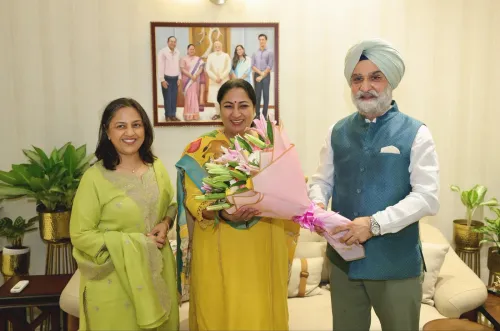
Union Minister of Power and Housing & Urban Affairs Manohar Lal Khattar on Friday, 25 July 2026, called on Delhi Lieutenant Governor Taranjit Singh Sandhu in a courtesy meeting at the LG's office in New Delhi, during which the two held discussions on public welfare and development-oriented issues concerning the national capital.
Khattar posted on X, noting that 'सकारात्मक एवं सार्थक विचार-विमर्श हुआ' ('positive and meaningful discussions were held') on issues related to Delhi's public interest and development.
Context
The meeting was a formal courtesy call — a standard protocol interaction between a senior Union minister and the constitutional head of the National Capital Territory (NCT) of Delhi. As Union Minister for both Power and Housing & Urban Affairs, Khattar's portfolio has a direct bearing on Delhi's infrastructure priorities, making such engagement with the LG's office a functional necessity beyond ceremony.
Taranjit Singh Sandhu, a retired Indian Foreign Service officer and former Ambassador to the United States, was appointed as Delhi's Lieutenant Governor. The LG is the administrative head of the NCT under the constitutional framework governing Union Territories.
Policy Backdrop
Delhi operates under a dual governance structure that distinguishes it from other states. The Government of National Capital Territory of Delhi (Amendment) Act, 2021 clarified the LG's powers relative to the elected government, establishing that the LG's concurrence is required on several categories of executive decisions.
This framework makes coordination between the Union government and the LG's office particularly significant for large-ticket infrastructure projects. Khattar's ministries — Power, and Housing & Urban Affairs — are central to schemes such as urban housing missions and power sector reforms that have active components in Delhi.
Stakeholders and Impact
Delhi's residents stand as the primary stakeholders in any development-focused dialogue between the Union government and the LG. The national capital's power distribution network and urban housing stock are both areas where central policy intersects with local administration on a daily basis.
Power distribution companies operating in Delhi and agencies implementing urban development schemes under the Housing & Urban Affairs Ministry are directly affected by the alignment — or misalignment — of priorities between the LG's office and Union ministries. Smoother coordination can accelerate project clearances and fund disbursement.
What's Next
The broad framing of the discussion — covering 'public interest and development-oriented subjects' — suggests the meeting may have touched on pending urban infrastructure projects, power procurement planning, or the rollout of centrally sponsored schemes in the NCT. Concrete outcomes, if any, are expected to surface through formal administrative communications between the LG's secretariat and the relevant ministries.
Observers will watch for follow-up action on Delhi's power sector coordination and any announcements tied to urban development schemes in the capital, which remains a high-visibility governance theatre ahead of the next electoral cycle.
Point of View
2021 having reinforced the LG's administrative centrality, Union ministers with Delhi-facing portfolios have a structural incentive to maintain close coordination with the LG's office. For Khattar, whose twin ministries of Power and Housing & Urban Affairs carry significant stakes in the capital, such engagement is as much operational as it is diplomatic. The meeting fits a broader pattern of the BJP-led Union government using the LG channel to advance development priorities in the NCT.
NationPress
24 Jul 2026
Frequently Asked Questions
Why did Manohar Lal Khattar meet Delhi LG Taranjit Singh Sandhu?
Khattar met LG Sandhu for a courtesy call to discuss public welfare and development-related issues concerning Delhi, as his Union ministries of Power and Housing & Urban Affairs have direct relevance to the national capital's infrastructure.
Who is the Lieutenant Governor of Delhi?
Taranjit Singh Sandhu is the Lieutenant Governor of Delhi. He is a retired Indian Foreign Service officer and former Ambassador to the United States.
What is the role of Delhi's Lieutenant Governor in governance?
Under the GNCTD Amendment Act, 2021, the Lieutenant Governor is the constitutional head of the NCT and holds significant powers, including the requirement for his concurrence on certain executive decisions by the elected government.
What portfolios does Manohar Lal Khattar hold as Union Minister?
Manohar Lal Khattar is the Union Minister of Power and Housing & Urban Affairs. He is a senior BJP leader and former Chief Minister of Haryana.
What issues were discussed at the Khattar-LG Sandhu meeting?
Khattar stated that 'positive and meaningful discussions' were held on subjects related to public interest and development in Delhi, though specific agenda items were not disclosed publicly.