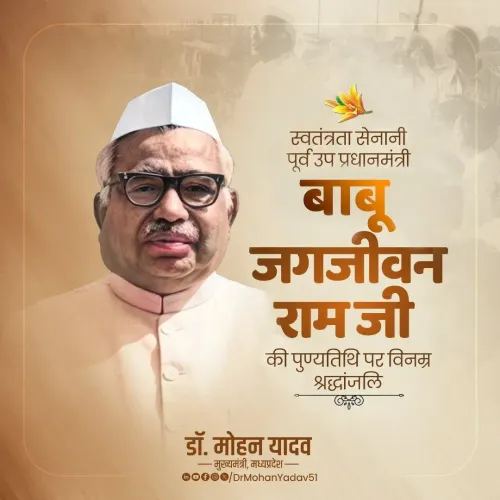
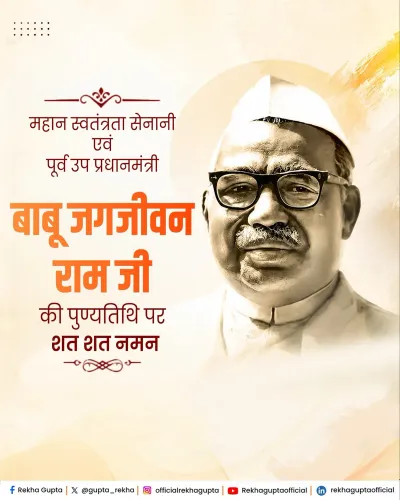
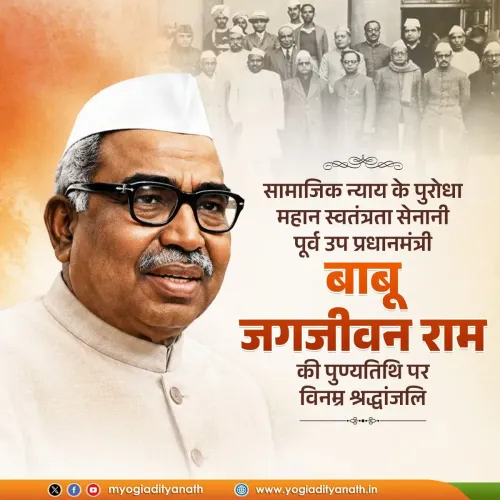
Khattar pays tribute to Babu Jagjivan Ram on death anniversary
Synopsis
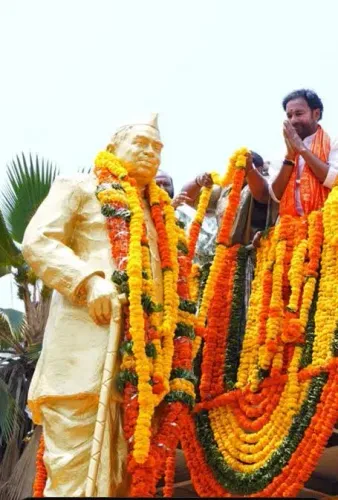
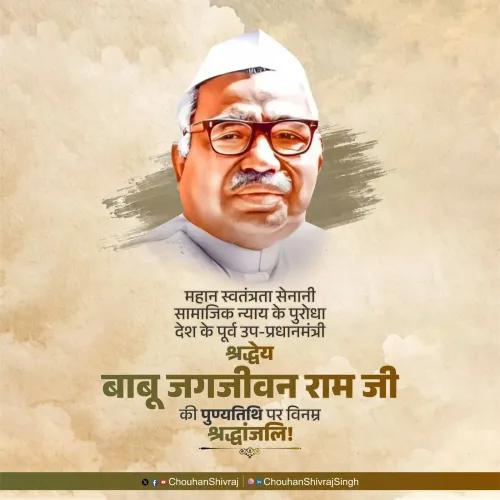
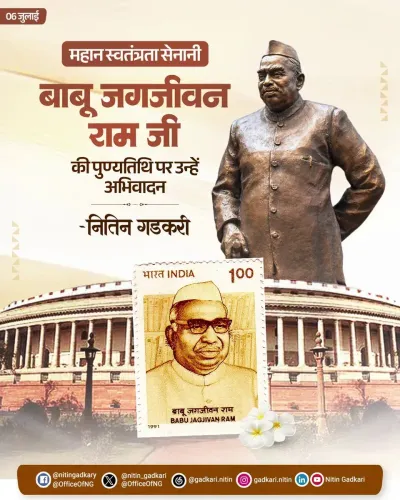
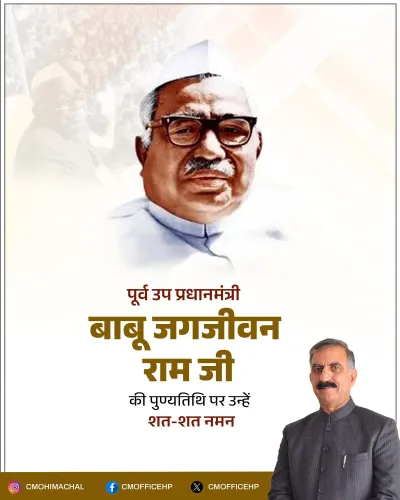
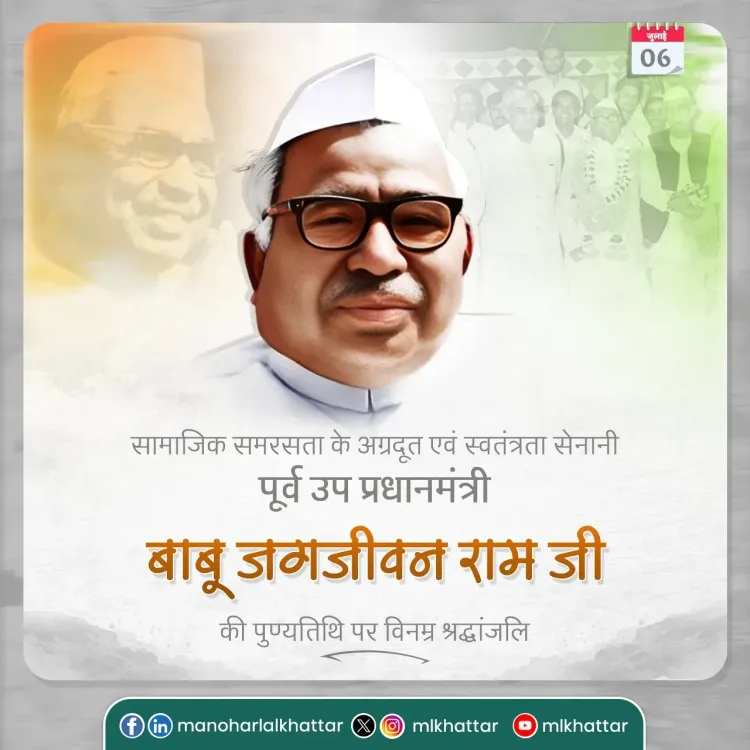
Union Power Minister Manohar Lal Khattar on 6 July 2026 paid tribute to Babu Jagjivan Ram, former Deputy Prime Minister and freedom fighter, honouring his legacy of social justice and upliftment of marginalised communities on his death anniversary.
Key Takeaways
Union Power Minister Manohar Lal Khattar posted a tribute on 6 July 2026 , the death anniversary of Babu Jagjivan Ram .
Khattar described Jagjivan Ram as a 'champion of social justice' and 'great freedom fighter' dedicated to the upliftment of the oppressed.
Jagjivan Ram served as Deputy Prime Minister of India from 1977 to 1979 and held the Labour portfolio in India's first cabinet in 1947 .
His legacy is closely tied to Scheduled Caste political empowerment and remains invoked across party lines.
Such tributes form part of a broader pattern of BJP outreach to Dalit and backward-class voters through association with social-justice icons.
Union Power Minister Manohar Lal Khattar on Monday, 6 July 2026 paid tribute to former Deputy Prime Minister Babu Jagjivan Ram on his death anniversary, honouring the freedom fighter's lifelong commitment to the upliftment of the oppressed and marginalised.
Posting on X in Hindi, Khattar described Jagjivan Ram as 'saamaajik nyaay ke purodha' — a 'champion of social justice' — and a 'great freedom fighter.' He wrote that Jagjivan Ram's dedication to the welfare of the exploited and the deprived 'hamesha vandaneeya rahega', meaning 'will always be worthy of reverence.'
Context
Babu Jagjivan Ram was born on 5 April 1908 in Chandwa, Bihar and became one of independent India's most consequential political figures from a Scheduled Caste background. He joined the Indian National Congress and participated actively in the freedom movement before going on to hold ministerial office for an uninterrupted span of several decades after 1947.
He served as Deputy Prime Minister of India from 1977 to 1979 under Prime Minister Charan Singh, representing the peak of a career that spanned Labour, Agriculture, Railways and Defence portfolios. His death anniversary falls on 6 July each year and is observed by political leaders across party lines.
Policy Backdrop
Jagjivan Ram held the Labour portfolio in the very first cabinet of independent India in 1947, making him a foundational architect of the country's early labour welfare and industrial relations framework. He later served as Agriculture Minister, shaping rural development policy during a critical period of post-independence nation-building.
His political legacy is closely associated with the assertion of Scheduled Caste rights within mainstream democratic politics. He founded the Congress (J) faction and later the Jagjivan Ram Vikas Parishad as vehicles for Dalit political mobilisation, leaving a lasting imprint on the landscape of social-justice politics in India.
Stakeholders and Impact
Tributes to Jagjivan Ram carry particular resonance for Scheduled Caste and Other Backward Class communities, who regard him as a pioneering figure who demonstrated that political power was attainable from the margins of the caste hierarchy. His legacy is invoked by parties across the ideological spectrum as a symbol of constitutional commitment to social equity.
Indian political leaders routinely mark the death anniversaries of national figures associated with social justice and the freedom movement. The practice has intensified as parties compete for electoral support among Dalit and backward-class voters, making such commemorations both a civic act and a political signal.
What's Next
State governments and Dalit welfare organisations typically hold commemorative events around 6 July each year. Parliament's monsoon session, which usually convenes in July, can also see references to Jagjivan Ram's legacy during discussions on social welfare legislation and reservation policy.
As the ruling BJP continues its outreach to Scheduled Caste voters, tributes from senior ministers like Khattar signal the party's intent to claim a share of the ideological inheritance of figures who transcend any single political tradition.
Point of View
But its political subtext is unmistakable: the BJP's senior leadership is actively seeking to appropriate the legacy of Dalit icons who historically belonged to rival political traditions. By positioning Jagjivan Ram as a universal symbol of social justice rather than a Congress or Janata Party figure, the tribute attempts to blur historical ownership of his legacy. This is consistent with a broader BJP strategy of engaging Scheduled Caste communities through symbolic politics alongside welfare delivery. The timing, ahead of Parliament's monsoon session, also keeps the social-justice narrative in the public discourse at a legislatively significant moment.
NationPress
6 Jul 2026
Frequently Asked Questions
Who was Babu Jagjivan Ram?
Babu Jagjivan Ram was a prominent Indian freedom fighter and politician from a Scheduled Caste background who served as Deputy Prime Minister of India from 1977 to 1979 and held key cabinet portfolios including Labour, Agriculture, Railways and Defence over several decades.
When is Babu Jagjivan Ram's death anniversary?
Babu Jagjivan Ram's death anniversary falls on 6 July each year and is observed by political leaders and organisations across India.
Why did Manohar Lal Khattar pay tribute to Jagjivan Ram?
Khattar paid tribute on the occasion of Jagjivan Ram's death anniversary, honouring his legacy as a freedom fighter and champion of social justice for Scheduled Caste and marginalised communities.
What is Babu Jagjivan Ram's contribution to Indian politics?
Jagjivan Ram was the first Labour Minister of independent India in 1947, helped shape early labour and rural development policy, and became a pioneering symbol of Scheduled Caste political empowerment within mainstream democratic politics.
Why do Indian politicians pay tribute to Babu Jagjivan Ram?
Jagjivan Ram is regarded as a cross-party symbol of social justice and Dalit upliftment; tributes to him carry electoral and ideological significance, particularly as parties compete for support among Scheduled Caste and Other Backward Class voters.