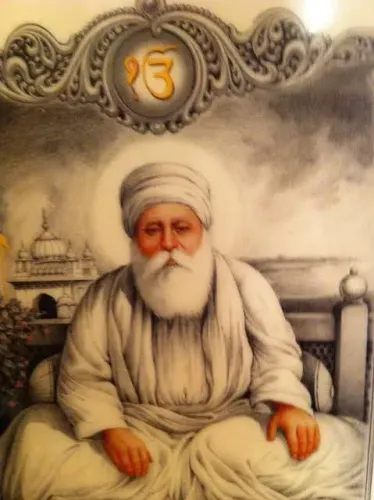
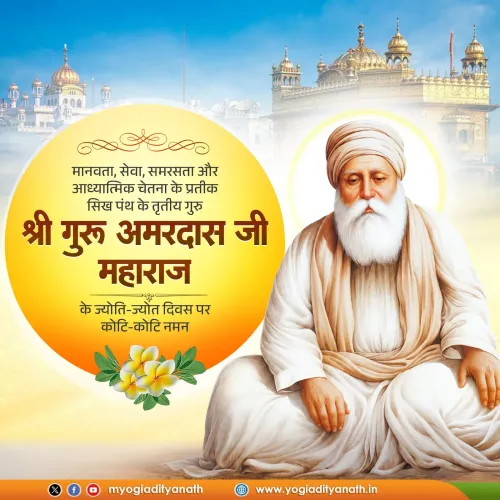
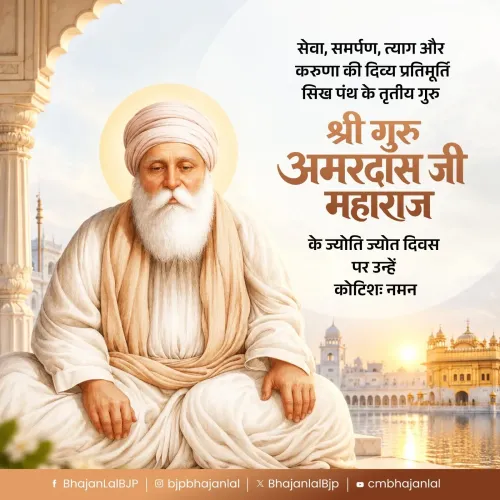
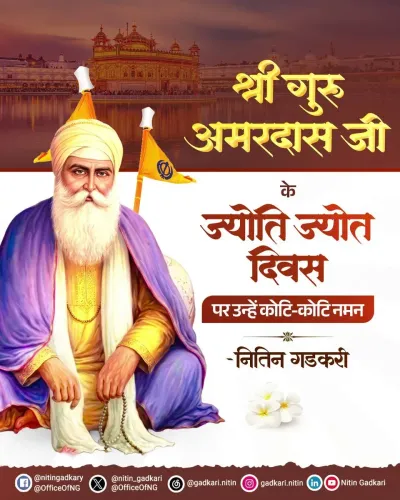
Khattar pays tribute to Guru Amar Das Ji on Jyoti-Jyot Divas
Synopsis
Union Power Minister Manohar Lal Khattar honoured Guru Amar Das Ji on his Jyoti-Jyot Divas, invoking the third Sikh Guru's legacy of service, social harmony, and reform against practices like sati and purdah.
Key Takeaways
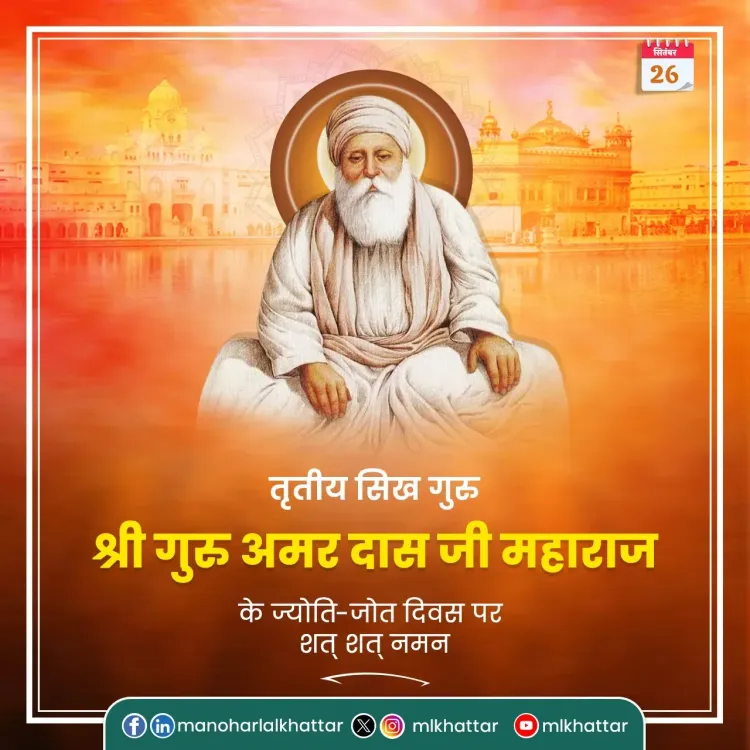
Union Power Minister Manohar Lal Khattar paid homage to Guru Amar Das Ji on Jyoti-Jyot Divas, 26 September 2026 .
Guru Amar Das Ji was the third Guru of Sikhism , leading the Panth from 1552 to 1574 .
The Guru is credited with institutionalising the langar system and campaigning against social practices such as sati and purdah .
Jyoti-Jyot Divas marks the anniversary of a Sikh Guru's passing, observed as the merging of their divine light with the eternal.
Khattar's tribute highlighted the Guru's message of social reform as a continuing source of national inspiration.
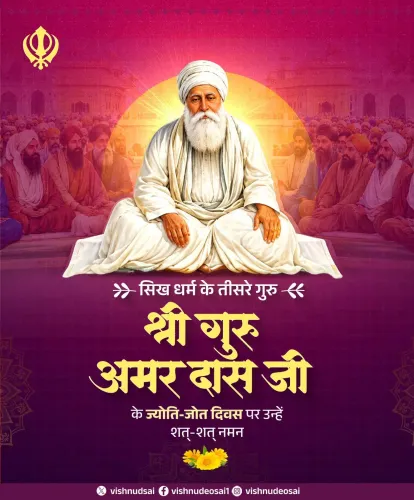
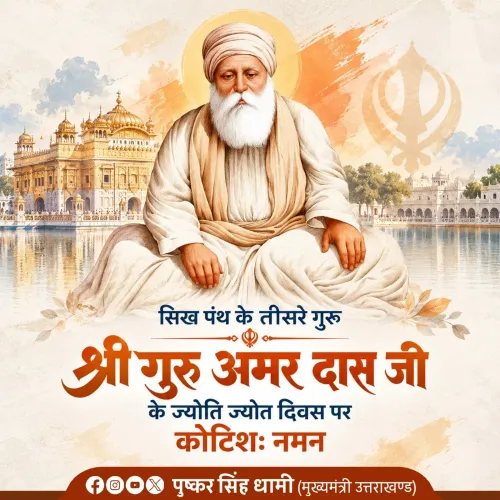
On the Jyoti-Jyot Divas of Guru Amar Das Ji — the third Guru of Sikhism — Union Power Minister Manohar Lal Khattar offered his reverent homage on Saturday, 26 September 2026, honouring a spiritual legacy that has shaped Indian social conscience for centuries.
Khattar wrote in Hindi: 'सेवा, समरसता और आध्यात्मिक चेतना के अमर संवाहक' — 'the immortal bearer of service, harmony, and spiritual consciousness' — as he placed his tribute at the Guru's feet. He recalled the divine message against social evils that Guru Amar Das Ji delivered, calling it an enduring source of inspiration for all.
Who was Guru Amar Das Ji — and why his message still resonates
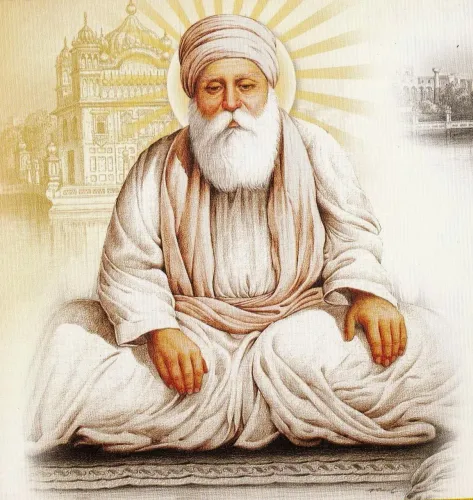
Guru Amar Das Ji led the Sikh Panth from 1552 to 1574, becoming the third in the line of ten Sikh Gurus. His tenure was defined by a fierce stand against entrenched social practices: he campaigned actively against sati and the purdah system, and institutionalised the langar — the community kitchen where all, regardless of caste or creed, sit and eat as equals.
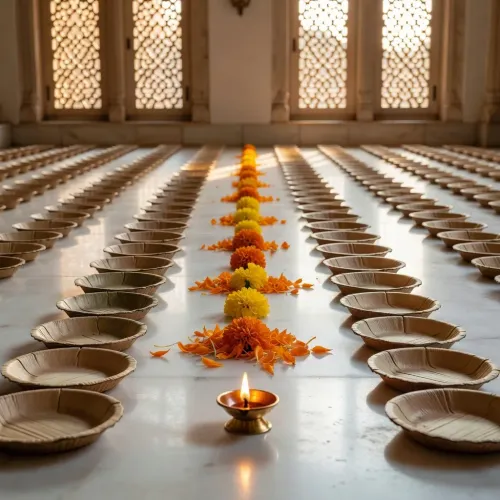
That last act alone was revolutionary. At a time when caste hierarchy governed every meal, insisting that a king must sit beside a commoner before seeking an audience with the Guru was a radical, lived-out theology. The message, as Khattar's tribute underlines, has lost none of its edge.
Jyoti-Jyot Divas — what the observance means
Jyoti-Jyot Divas is the Sikh tradition's way of marking a Guru's passing — not as death, but as the merging of the Guru's divine light with the eternal. The word jyoti means flame or light; the Divas is observed annually by the global Sikh Panth through prayers, kirtan, and community service that echo the Guru's own teachings.
A standard of public remembrance — and what it signals
Indian political leaders across party lines issue tributes on the death anniversaries of Sikh Gurus as a matter of established cultural practice. For a senior BJP leader and former Chief Minister of Haryana — a state with a significant Sikh population — such observances carry particular resonance. Khattar's message draws specifically on the Guru's reformist legacy, foregrounding the themes of service and social harmony rather than purely ritual remembrance.
Half a millennium on, the langar still feeds millions and the questions Guru Amar Das Ji raised about equality have not gone away — which is precisely why tributes like this one land beyond ceremony.
Point of View
A practice that serves both cultural and electoral purposes in states like Haryana with sizable Sikh constituencies. What distinguishes this message is its emphasis on Guru Amar Das Ji's reformist credentials — the campaign against sati and purdah — rather than purely devotional language, aligning the tribute with a progressive social-reform narrative. For a BJP government that has faced periodic scrutiny on minority and community outreach, such deliberate framing of shared social values carries strategic as well as sincere dimensions. The broader arc suggests continued institutional investment by the ruling dispensation in Sikh heritage observances as a pillar of cultural diplomacy.
NationPress
26 Sept 2026
Frequently Asked Questions
Who is Guru Amar Das Ji?
Guru Amar Das Ji was the third Guru of Sikhism, who led the faith from 1552 to 1574. He is celebrated for institutionalising the langar community kitchen and campaigning against social practices such as sati and purdah.
What is Jyoti-Jyot Divas?
Jyoti-Jyot Divas is the annual Sikh observance marking the death anniversary of a Guru, understood as the moment their divine light merged with the eternal. It is marked with prayers, kirtan, and community service.
Why did Manohar Lal Khattar pay tribute to Guru Amar Das Ji?
Union Power Minister Manohar Lal Khattar posted a tribute on 26 September 2026 to mark the Jyoti-Jyot Divas of Guru Amar Das Ji, honouring the Guru's legacy of service, spiritual consciousness, and social reform.
What social reforms is Guru Amar Das Ji known for?
Guru Amar Das Ji is known for actively opposing the practices of sati and purdah, and for institutionalising the langar — a community kitchen where people of all castes and backgrounds eat together as equals.
What is the significance of the langar system introduced by Guru Amar Das Ji?
The langar, or community kitchen, was a radical institution that required all visitors — regardless of caste or social standing — to share a meal as equals before meeting the Guru, making it a powerful, lived statement against caste hierarchy.