Assam CM Himanta at Kandla's 150 TPD E-Methanol Plant Ceremony
Synopsis
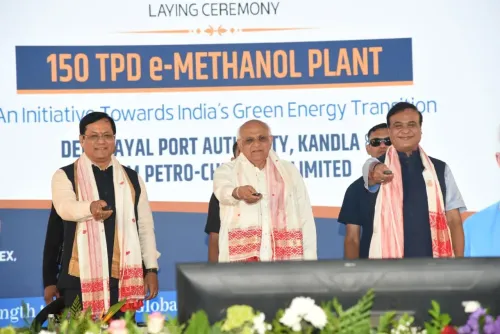
Assam CM Dr. Himanta Biswa Sarma attended the foundation stone laying of a 150 TPD E-Methanol Plant at Kandla, Gujarat, jointly developed by Deendayal Port Authority and Assam Petro-Chemicals Ltd, marking a cross-state push for India's green energy transition.
Key Takeaways
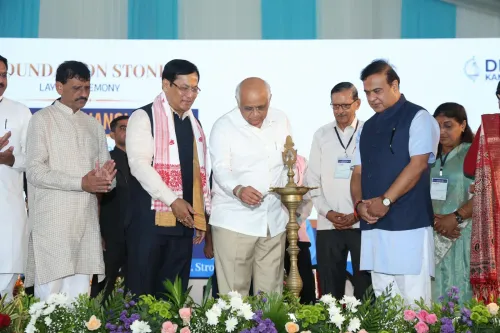
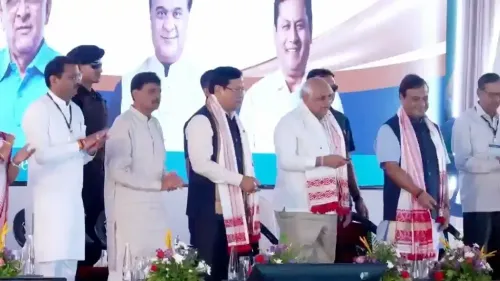
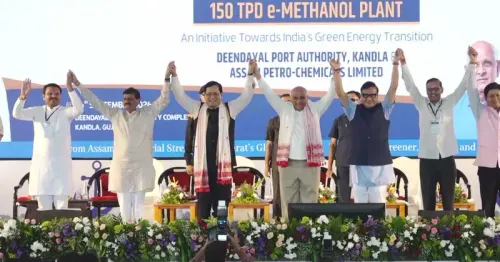
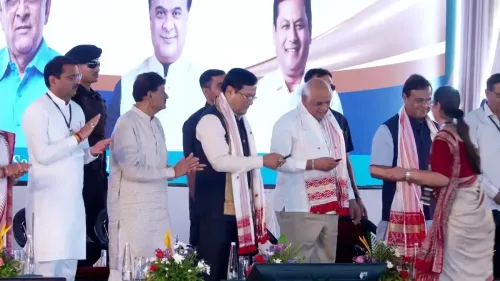
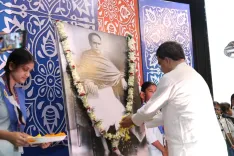
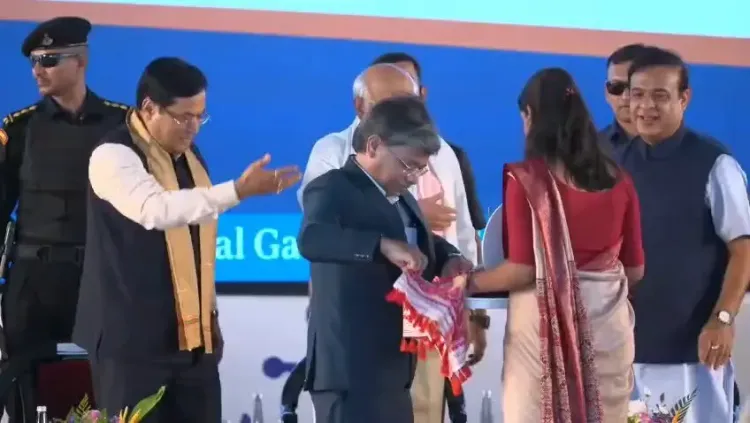
Himanta Biswa Sarma was felicitated at the foundation stone laying ceremony of a 150 TPD E-Methanol Plant in Kandla, Gujarat on September 26, 2026 .
The plant is a joint initiative of Deendayal Port Authority and Assam Petro-Chemicals Ltd , combining port logistics with APL's petrochemical expertise.
Green methanol production at this scale supports India's methanol economy programme launched in 2018 and its net-zero 2070 target.
Kandla was chosen for its bulk-handling infrastructure and strategic feedstock access, reducing production and logistics costs.
The project signals Assam's state-owned enterprises co-investing in national clean energy infrastructure beyond their home state.
A port city in Gujarat just became the latest frontier in India's green energy push — and Assam's Chief Minister flew in to mark the moment. Chief Minister Dr. Himanta Biswa Sarma was felicitated at the foundation stone laying ceremony of a 150 TPD E-Methanol Plant at Kandla, Gujarat, on Saturday, September 26, 2026, in a collaboration that bridges two of India's most strategically distinct states.
Where Assam's chemistry meets Gujarat's port muscle
The plant is a joint initiative between Deendayal Port Authority — which operates one of India's largest and busiest ports at Kandla — and Assam Petro-Chemicals Ltd (APL), a state-owned enterprise with deep roots in methanol and petrochemical manufacturing. The pairing is deliberate: Kandla's logistics infrastructure and feedstock access make it an ideal production hub, while APL brings the technical and industrial lineage to drive output at scale.
At a capacity of 150 tonnes per day (TPD), the facility is pitched as a meaningful addition to India's nascent green methanol supply chain — a fuel derived from renewable or low-carbon sources rather than fossil feedstocks.
Inside India's methanol economy play
India's methanol economy programme, launched in 2018, was conceived to slash crude oil import bills and diversify the country's energy mix. Green methanol — produced via electrolysis and carbon capture rather than natural gas reforming — sits at the premium end of that ambition, feeding into shipping, chemicals, and potentially transport sectors that are hard to decarbonise through batteries alone.
The Kandla plant slots directly into India's net-zero 2070 commitment, which demands a dramatic scaling of low-carbon industrial capacity over the next four decades. Port-based production facilities like this one leverage existing bulk-handling infrastructure, reducing the logistics friction that has historically slowed green-fuel ramp-ups.
An East-West energy corridor taking shape
The project also signals something broader: state-level enterprises from India's northeast are no longer waiting for central pipelines to reach them — they are co-investing in national energy infrastructure at strategic locations. Assam Petro-Chemicals Ltd has been expanding its footprint beyond the state's borders, and the Kandla plant represents one of its most visible inter-state collaborations yet.
For CM Sarma, the ceremony was both an industrial milestone and a political statement — positioning Assam as an active contributor to India's clean energy architecture, not merely a resource-rich bystander.
With the foundation stone now laid, the real test is construction pace and the policy incentives that will determine whether green methanol finds buyers at scale — because in India's energy transition, intent has rarely been the bottleneck.
Point of View
The optics are as important as the output: Assam's industrial identity is being deliberately reframed from a coal and oil-dependent northeast state to a participant in the clean energy economy. The project also tests whether India's methanol economy push, now nearly a decade old, can finally graduate from policy ambition to bankable industrial infrastructure. Watch for central production-linked incentives or green methanol blending mandates that could determine the plant's long-term commercial viability.
NationPress
26 Sept 2026
Frequently Asked Questions
What is the E-Methanol Plant being built at Kandla?
It is a 150 TPD (tonnes per day) E-Methanol Plant at Kandla, Gujarat , jointly developed by Deendayal Port Authority and Assam Petro-Chemicals Ltd to produce green methanol as part of India's clean energy push.
Why was Assam CM Himanta Biswa Sarma at a Gujarat ceremony?
CM Dr. Himanta Biswa Sarma attended because Assam Petro-Chemicals Ltd , a state government enterprise, is a co-developer of the Kandla plant, making it a key inter-state industrial collaboration for Assam.
What is E-Methanol and why does India want to produce it?
E-Methanol (electro-methanol) is produced using renewable energy and captured carbon dioxide, making it a low-carbon fuel. India promotes it under its methanol economy programme (launched 2018) to reduce crude oil imports and advance its net-zero 2070 climate target.
What is Deendayal Port Authority's role in this project?
Deendayal Port Authority operates the Kandla port in Gujarat and is a co-partner in the plant initiative, providing the strategic port infrastructure and logistics advantages needed for large-scale green fuel production.
What is Assam Petro-Chemicals Ltd?
Assam Petro-Chemicals Ltd (APL) is a state government-owned enterprise engaged in methanol and petrochemical manufacturing, now expanding its industrial footprint to national-level projects like the Kandla E-Methanol Plant.