Khattar Meets Village Elders in Nilokheri, Reviews Development
Synopsis
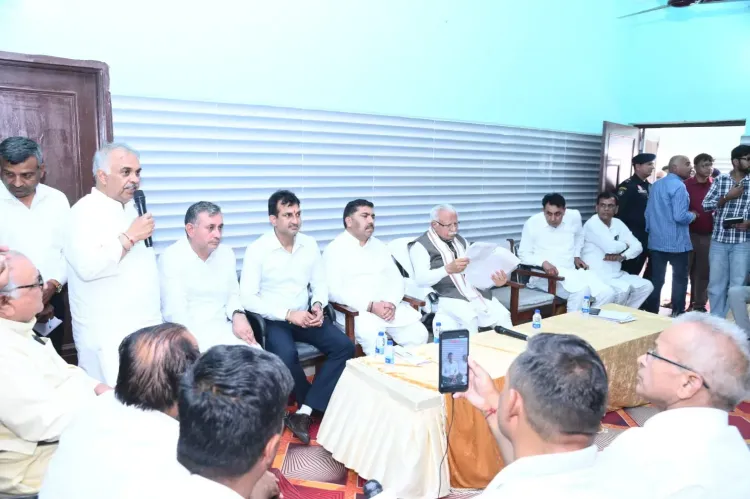
Union Power Minister Manohar Lal Khattar met senior community leaders in Gram Sawant, Nilokheri on 23 May 2026, reviewing local development works and discussing public priorities as part of his continuing grassroots outreach in Haryana.
Key Takeaways
Union Power Minister Manohar Lal Khattar visited Gram Sawant in Nilokheri, Karnal district on 23 May 2026 .
He met with senior and distinguished community members ( prbudhjan ) to review ongoing development works in detail.
Discussions covered local needs, public expectations, and development priorities.
Khattar framed the dialogue as a mechanism to 'connect development priorities with public sentiment,' not merely an exchange of ideas.
The visit continues his established pattern of direct village-level outreach that began during his tenure as Chief Minister of Haryana (2014-2024) .
Further public dialogue interactions across Haryana are indicated by his reference to advancing the 'momentum' of such engagements.
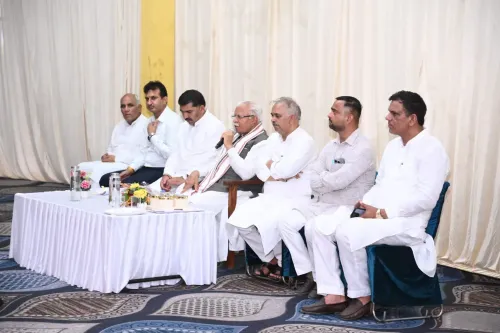
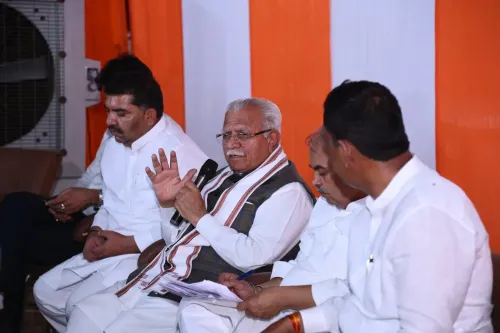
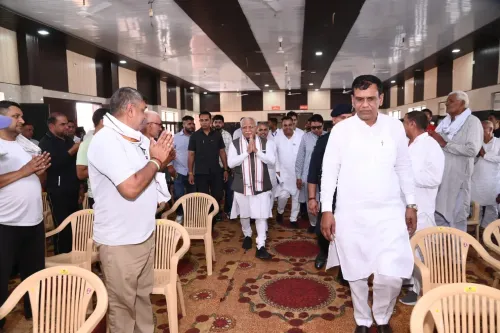
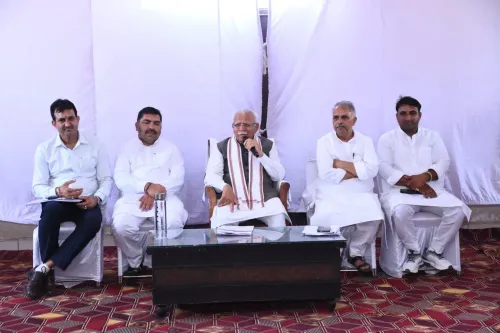
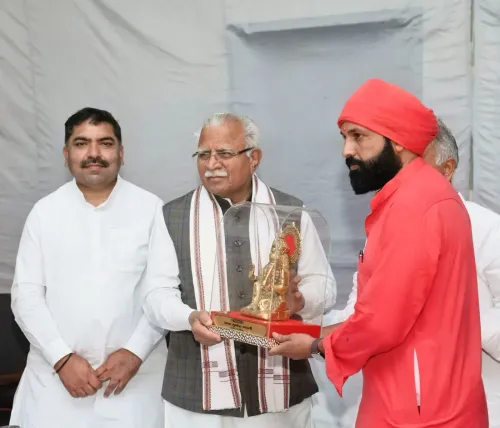
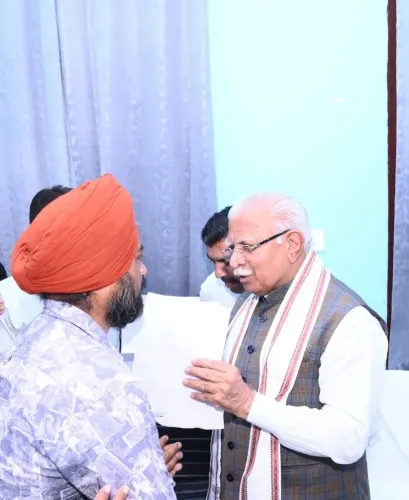
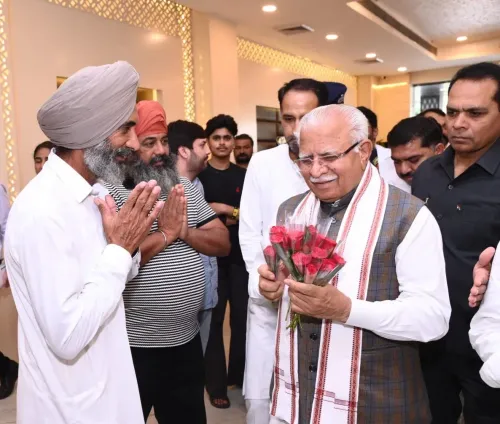
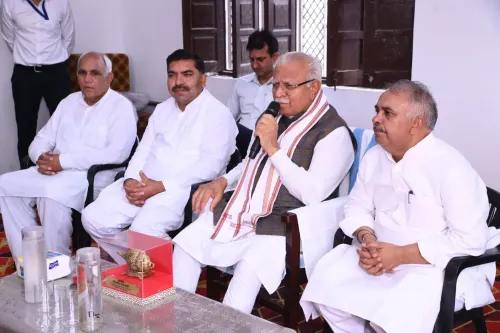
Union Power Minister Manohar Lal Khattar on Saturday, 23 May 2026, met with senior community leaders of Gram Sawant in Nilokheri, Karnal district, Haryana, as part of his ongoing public outreach initiative, conducting a detailed review of local development works and discussing community priorities.
Context
Posting on X, Khattar described the meeting as a warm and affectionate interaction with the senior and distinguished residents of Gram Sawant. In his words, 'जनसंवाद की गति को आगे बढ़ाते हुए' ('advancing the momentum of public dialogue'), he said the gathering reviewed various development works in detail and held 'extensive and meaningful discussions' on local needs, public expectations, and priorities.
He added that such dialogues are 'not merely an exchange of ideas, but a powerful medium to connect development priorities with public sentiment' — framing the outreach as a structural feedback mechanism rather than a ceremonial visit.
Policy Backdrop
Nilokheri, a town in Karnal district, carries historical significance as one of India's early post-independence sites for community development and training programmes. The area falls within Khattar's home state of Haryana, where he served as Chief Minister from 2014 to 2024 before being elevated to the Union Cabinet.
During his decade-long tenure as Chief Minister, Khattar regularly conducted direct meetings with village elders to assess the on-ground status of development projects. That grassroots engagement model appears to have continued even after his transition to a central ministerial role overseeing Power and Housing and Urban Affairs.
The BJP has long emphasised direct community feedback as a mechanism to calibrate the implementation of centrally sponsored schemes at the village level. Khattar's continued field visits to Haryana villages reflect this broader organisational emphasis on last-mile accountability.
Stakeholders and Impact
The primary stakeholders in Saturday's interaction were village elders and senior community members of Gram Sawant — a constituency that typically raises concerns around rural infrastructure, power supply, roads, drinking water, and housing under central and state schemes. Their direct access to a Union Minister provides an unusually high-level channel for local grievance redressal.
For Karnal district broadly, such visits signal continued political attention to development delivery in a region that has historically been a stronghold for the ruling party in Haryana. Any follow-up actions on issues flagged during the meeting could influence the pace of infrastructure work in the area ahead of the next state budget cycle.
What's Next
Khattar's post frames Saturday's meeting as part of an ongoing series — 'जनसंवाद की गति' ('the momentum of public dialogue') — suggesting further such interactions are planned across Haryana constituencies. Observers will watch whether commitments made during these grassroots reviews translate into project approvals or fund releases under central schemes linked to his ministerial portfolios. Progress on power-sector and rural infrastructure projects in Karnal district will be a key indicator of whether the dialogue yields concrete outcomes.
Point of View
He positions himself as a bridge between central policy and grassroots delivery, a role that carries weight in a state where the BJP has had to recalibrate its support base. The outreach also keeps him visible in Haryana at a time when the party is consolidating its position following the 2024 state election. Whether these dialogues produce measurable project outcomes will determine how much political capital the exercise ultimately generates.
NationPress
6 Oct 2026
Frequently Asked Questions
Why did Manohar Lal Khattar visit Gram Sawant in Nilokheri?
Khattar visited Gram Sawant in Nilokheri on 23 May 2026 to meet senior community leaders, review local development works, and discuss public needs and priorities as part of his ongoing public outreach programme in Haryana.
Where is Gram Sawant located?
Gram Sawant is a village in the Nilokheri area of Karnal district in Haryana.
What is Manohar Lal Khattar's current position?
Manohar Lal Khattar is currently the Union Minister of Power and Housing and Urban Affairs in the Government of India. He previously served as Chief Minister of Haryana from 2014 to 2024.
What did Khattar discuss at the Nilokheri village meeting?
According to his post, Khattar conducted a detailed review of various development works and held extensive discussions on local needs, public expectations, and development priorities with senior community members of Gram Sawant.
Does Khattar regularly visit villages in Haryana?
Yes. Khattar has an established pattern of direct meetings with village elders dating back to his tenure as Chief Minister of Haryana. He has continued similar grassroots outreach interactions even after becoming a Union Cabinet minister.