CM Chandrababu Writes to Centre for Rs 96 Crore Cyclone Relief

Synopsis
Chief Minister Chandrababu Naidu has written to Union Agriculture Minister Shivraj Singh Chouhan seeking Rs 96.33 crore in central assistance to restore horticulture crops damaged across 29,960 hectares in 18 Andhra Pradesh districts by cyclones Arnab and Murasu, affecting 71,576 farmers.
Key Takeaways
Cyclones Arnab and Murasu damaged horticulture crops across 29,960 hectares in 18 districts of Andhra Pradesh.
An estimated 71,576 farmers suffered losses totalling approximately Rs 1,092 crore .
CM Chandrababu Naidu has written to Union Agriculture Minister Shivraj Singh Chouhan seeking Rs 96.33 crore in additional central support.
Banana crop rehabilitation is sought under MIDH at Rs 44,000 per hectare ; dry chilli and vegetables under RKVY .
Coconut trees with snapped crowns in districts including Konaseema, Kakinada, East and West Godavari, Eluru, Krishna, and Bapatla are to be supported via the Coconut Development Board .
The state has urged swift fund release to limit long-term economic losses for affected farming communities.
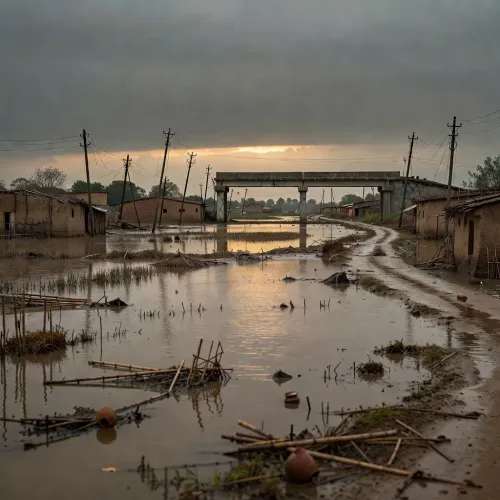
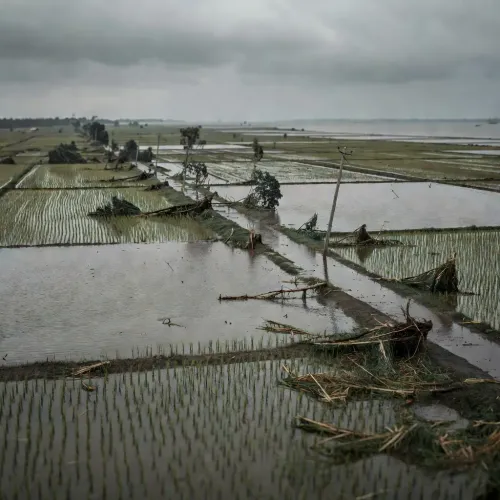
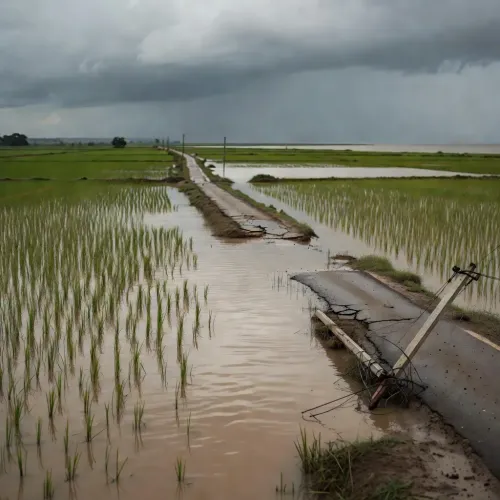
Two back-to-back cyclones have stripped nearly 30,000 hectares of orchards and plantations bare across Andhra Pradesh — and Chief Minister Nara Chandrababu Naidu is now pressing the Centre to foot a critical share of the recovery bill. The Chief Minister's Office of Andhra Pradesh announced on Saturday, 21 November 2026 that CM Naidu has written to Union Agriculture Minister Shivraj Singh Chouhan seeking an additional Rs 96.33 crore in central support to rehabilitate horticulture crops devastated by cyclones Arnab and Murasu.
Scale of the Storm Damage: 71,576 Farmers, 18 Districts
The letter spells out the destruction in stark arithmetic. Cyclones Arnab and Murasu together damaged horticulture crops across 29,960 hectares spread over 18 districts, causing an estimated loss of Rs 1,092 crore. A total of 71,576 farmers have been affected — a figure that captures not just shattered harvests but livelihoods built over years around perennial crops like banana, coconut, chilli, and vegetables.
The scale is significant even by the standards of a coastal state accustomed to Bay of Bengal weather. What makes this appeal particularly pointed is that it covers perennial plantation crops — unlike annuals, these cannot be simply replanted in the next season. A damaged coconut grove or a toppled banana plantation represents years of productive growth lost overnight.
What CM Naidu Is Asking For — and Under Which Schemes
CM Naidu's letter targets three specific central mechanisms. For severely damaged banana crops, he has sought funding at Rs 44,000 per hectare under the Mission for Integrated Development of Horticulture (MIDH), a central scheme designed precisely for post-disaster replanting support in the horticulture sector. The MIDH framework, approved in 2014, allows states to draw rehabilitation support for perennial and annual horticulture crops.
For dry chilli and vegetable crops, the letter invokes the Rashtriya Krishi Vikas Yojana (RKVY) — the flexible, state-driven agricultural scheme launched in 2007 that gives states headroom to fund sector-specific interventions including crop-loss mitigation. And for coconut trees with snapped crowns — a particularly visible and widespread form of cyclone damage in coastal districts — CM Naidu has sought financial support from the Coconut Development Board.
The Districts at the Heart of the Crisis
The coconut rehabilitation request names the worst-hit zones explicitly: Konaseema, Kakinada, East Godavari, West Godavari, Eluru, Krishna, and Bapatla districts. These are the state's traditional coconut and plantation belts — river-delta territories where perennial horticulture is woven into the rural economy. When crowns snap on mature coconut palms, recovery is measured in years, not months.
CM Naidu has urged the Ministry to release funds quickly, stressing in the letter that swift intervention is essential to restore orchards and limit long-term economic losses for affected farmers.
A Federal Pattern: States, Cyclones, and Central Schemes
This appeal fits a well-worn federal template. After major cyclones, state governments routinely approach New Delhi for supplementary funds because the National Disaster Response Fund primarily covers immediate relief rather than crop rehabilitation. Sector-specific central schemes like MIDH and RKVY become the channel for recovery financing — but they require the Union Ministry's active approval and fund release. Andhra Pradesh has navigated this process after previous Bay of Bengal storms, and the speed of the Centre's response will now determine how quickly these 71,576 farmers can begin rebuilding.
The Union Agriculture Ministry's reply — and any subsequent fund release — is what the state's farming communities will be watching.
Point of View
RKVY and the Coconut Development Board, Andhra Pradesh keeps the relief demand within existing scheme envelopes, making it harder for the Centre to decline on procedural grounds. The timing also matters politically — with over 71,000 affected farmers named, the CM is publicly building a paper trail that shifts accountability for delayed recovery onto New Delhi. How quickly the Union Agriculture Ministry responds will signal the operational health of Centre-state agricultural cooperation under the current coalition arithmetic.
NationPress
21 Nov 2026
Frequently Asked Questions
Which cyclones damaged crops in Andhra Pradesh recently?
Cyclones Arnab and Murasu struck Andhra Pradesh in succession, damaging horticulture crops across 29,960 hectares in 18 districts and affecting 71,576 farmers.
How much money has CM Chandrababu Naidu sought from the Centre for cyclone relief?
CM Chandrababu Naidu has requested Rs 96.33 crore in additional central assistance from Union Agriculture Minister Shivraj Singh Chouhan to rehabilitate horticulture crops.
Which central schemes is Andhra Pradesh using to claim cyclone relief funds?
The state has sought funds under the Mission for Integrated Development of Horticulture (MIDH) for banana crops, Rashtriya Krishi Vikas Yojana (RKVY) for dry chilli and vegetables, and the Coconut Development Board for damaged coconut trees.
Which districts in Andhra Pradesh suffered the most coconut damage from cyclones?
Konaseema, Kakinada, East Godavari, West Godavari, Eluru, Krishna, and Bapatla districts reported widespread coconut trees with snapped crowns and are covered in the CM's relief request.
What is the total estimated horticulture crop loss in Andhra Pradesh from the cyclones?
The Chief Minister's letter places the total horticulture crop loss at Rs 1,092 crore across 18 districts of Andhra Pradesh.