Andhra CM Naidu seeks ₹96.33 crore for cyclone-hit horticulture crops

Synopsis
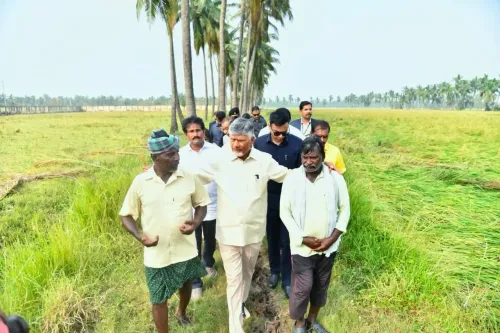
Two cyclones in five days — Arnab on 28 October and Murasu on 2 November — have wiped out horticulture crops across nearly 30,000 hectares in Andhra Pradesh, hitting 71,576 farmers with ₹1,092.90 crore in losses. Chief Minister Naidu is now pressing the Centre for ₹96.33 crore in targeted restoration funds, with banana and coconut plantations facing multi-year yield setbacks if aid is delayed.
Key Takeaways
Andhra Pradesh CM N.
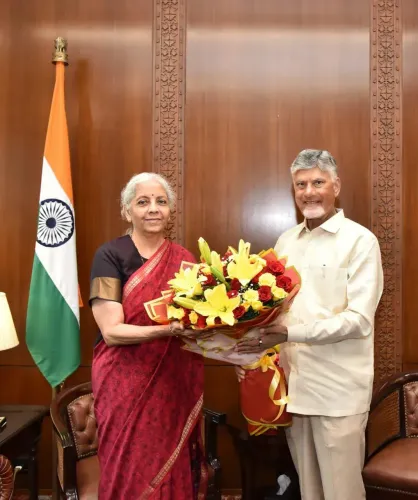
Chandrababu Naidu has written to Union Agriculture Minister Shivraj Singh Chouhan seeking ₹96.33 crore in Central restoration assistance.
Cyclones Arnab (28 October) and Murasu (2 November) damaged horticulture crops across 29,960 hectares in 18 districts , affecting 71,576 farmers .
Total estimated financial loss stands at ₹1,092.90 crore ; banana plantations suffered the most, with 15,549 hectares damaged by Arnab alone.
Restoration assistance sought at ₹44,000 per hectare under MIDH ; chilli and vegetable crops to be covered under RKVY .
Coconut plantation restoration required across approximately 8,000 hectares in Konaseema , Kakinada , East Godavari , West Godavari and other districts.
Total restoration area covered by the ₹96.33 crore request spans 37,000 hectares .
Andhra Pradesh Chief Minister N. Chandrababu Naidu has written to Union Minister for Agriculture and Farmers Welfare Shivraj Singh Chouhan, seeking ₹96.33 crore in additional Central financial assistance to restore horticulture crops devastated by two back-to-back cyclones. The letter, sent from Amaravati on 20 November 2026, highlights damage across 29,960 hectares in 18 districts, affecting 71,576 farmers with an estimated total loss of ₹1,092.90 crore.
Scale of the Destruction
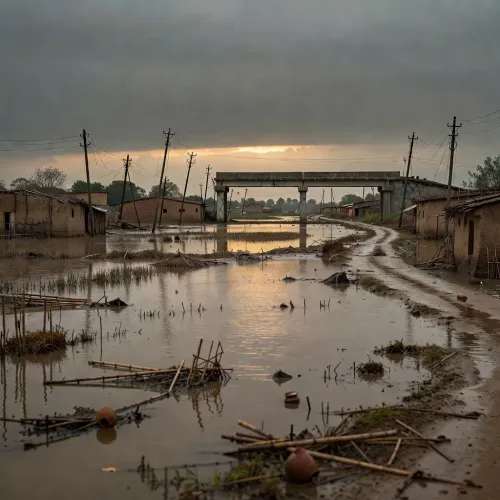
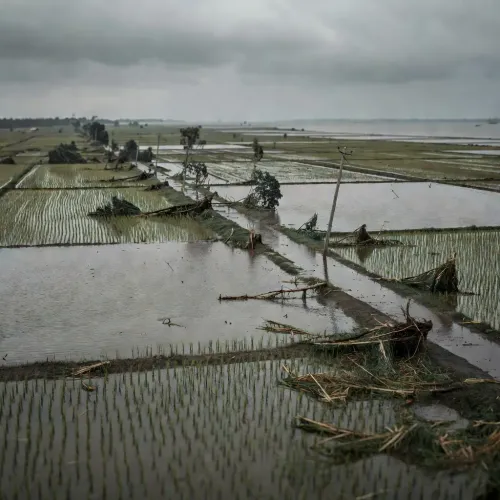
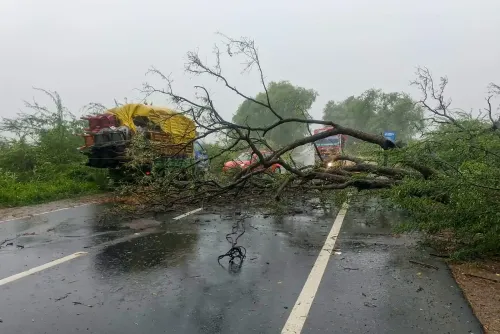
The Arnab cyclone, which struck Andhra Pradesh on 28 October, damaged horticulture crops across 23,211 hectares spanning 215 mandals. Banana plantations alone accounted for 15,549 hectares of that damage. The Murasu cyclone, arriving just days later on 2 November, added further devastation across 6,748 hectares in 108 mandals, with farmers in Palnadu, Guntur, Bapatla, Eluru, and East Godavari districts bearing the brunt of crop losses.
Banana plantations suffered the most widespread damage overall, while chilli, vegetable, and coconut crops also sustained significant losses across multiple coastal and delta districts.
What Naidu Has Requested
Chief Minister Naidu has sought assistance at the rate of ₹44,000 per hectare under the Mission for Integrated Development of Horticulture (MIDH) scheme for restoring damaged orchards. He has also requested support for chilli and vegetable crops under the Rashtriya Krishi Vikas Yojana (RKVY).
Separately, the Chief Minister urged the Coconut Development Board to extend financial assistance for the restoration of coconut plantations — particularly trees whose crowns were damaged — across Konaseema, Kakinada, East Godavari, West Godavari, Eluru, Krishna, and Bapatla districts. The coconut restoration effort covers approximately 8,000 hectares. In total, the requested assistance of ₹96.33 crore would cover a combined area of 37,000 hectares.
Why the Appeal Is Urgent
Horticulture crops such as bananas and coconuts are perennial plantations that take multiple years to mature and return to productive yield. Unlike annual field crops, delayed restoration of orchards and plantations compounds long-term economic losses well beyond the immediate season. This makes the speed of Central disbursal critical, as farmers face compounding income loss with each month of delayed intervention.
Notably, the two cyclones struck Andhra Pradesh within barely five days of each other, leaving coastal and delta farming communities with little recovery window between the two events. The 18 districts affected include several of the state's most productive agricultural zones along the Godavari and Krishna delta belts.
Background and Broader Context
Andhra Pradesh's coastal geography makes it one of India's most cyclone-vulnerable states, with the Bay of Bengal generating repeated storm systems during the October–November post-monsoon season. The state has previously sought and received Central assistance under MIDH and RKVY for cyclone recovery, but the concurrent impact of two named storms in a single fortnight is relatively uncommon and has amplified the scale of this appeal.
Chief Minister Naidu emphasised to the Union Government the need to extend assistance at the earliest to prevent long-term economic erosion for affected farming households.
What Happens Next
The Centre is yet to formally respond to the letter. With the total estimated agricultural loss at ₹1,092.90 crore and the state requesting ₹96.33 crore in targeted restoration support, the quantum requested represents a focused restoration fund rather than a full compensation package. Industry observers and farmer bodies in the state will be closely watching the Centre's timeline for release of funds as the planting season approaches.
Point of View
And the per-hectare rates cited are within precedent. What is unusual is the double-cyclone context: two named storms within five days have stripped the state of the staggered-recovery window that typically exists between weather events. The ₹96.33 crore sought is modest relative to the ₹1,092.90 crore estimated loss, suggesting the state is calibrating a targeted ask rather than a broad demand — a posture likely designed to accelerate Central clearance. The real policy question is whether the MIDH disbursement timeline can match the biological urgency of replanting perennial crops like banana and coconut, whose productive cycles cannot simply be paused.
NationPress
20 Nov 2026
Frequently Asked Questions
What has Andhra Pradesh CM Chandrababu Naidu requested from the Centre?
Chief Minister N. Chandrababu Naidu has requested ₹96.33 crore in additional Central financial assistance for restoring horticulture crops damaged by cyclones Arnab and Murasu. The request covers restoration across 37,000 hectares under the MIDH and RKVY schemes.
Which cyclones damaged crops in Andhra Pradesh and when did they strike?
Cyclone Arnab struck Andhra Pradesh on 28 October and cyclone Murasu followed on 2 November , together damaging horticulture crops across 29,960 hectares in 18 districts and affecting 71,576 farmers .
Which crops were most affected by the two cyclones?
Banana plantations suffered the most extensive damage, with 15,549 hectares lost to cyclone Arnab alone. Coconut, chilli, and vegetable crops also sustained significant losses across coastal and delta districts including East Godavari , West Godavari , Konaseema , and Bapatla .
What government schemes has Naidu sought assistance under?
The Chief Minister has sought ₹44,000 per hectare under the Mission for Integrated Development of Horticulture (MIDH) for orchard restoration, support for chilli and vegetable crops under Rashtriya Krishi Vikas Yojana (RKVY) , and separate funding from the Coconut Development Board for coconut plantation restoration.
What is the total estimated crop loss in Andhra Pradesh from the two cyclones?
The total estimated financial loss from the two cyclones is ₹1,092.90 crore , covering damage to horticulture crops across 18 districts . The state has requested ₹96.33 crore in targeted restoration funding from the Centre.