Dr. Jitendra Singh at RSSDI: India a Global Diabetes Research Hub
Synopsis
Union Minister Dr. Jitendra Singh inaugurated the RSSDI annual conference in Bengaluru, outlining over a dozen DBT-funded molecular and genetic diabetes research projects — including an Indo-Danish gut microbiome study and GLP-1 bacterial engineering — and framing diabetes prevention as a cross-sectoral national responsibility.
Key Takeaways
Union Science and Technology Minister Dr.
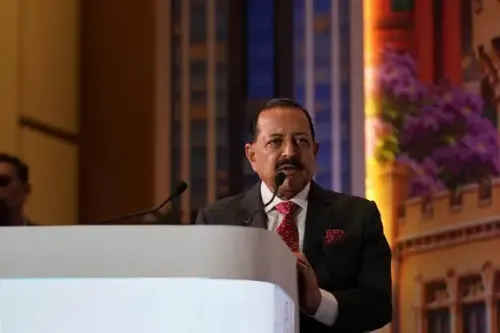
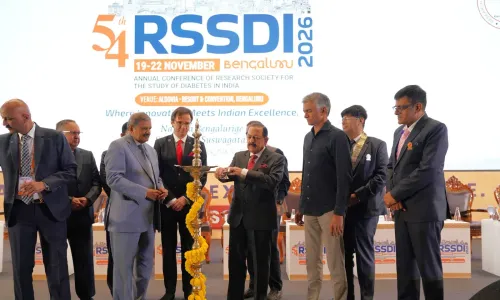
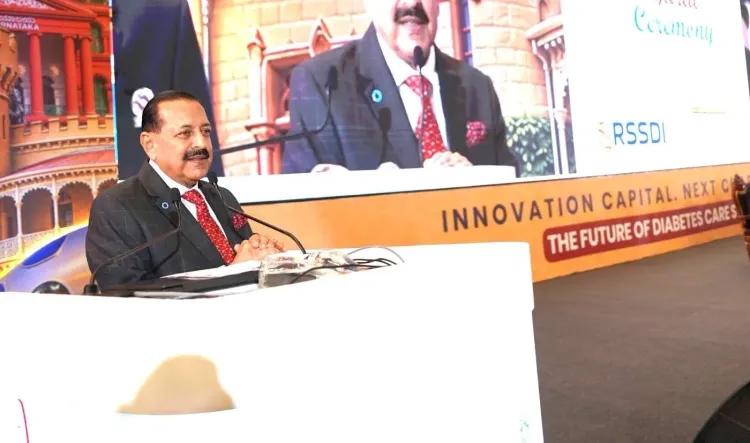
Jitendra Singh delivered the inaugural address at the four-day RSSDI Annual Conference in Bengaluru on 20 November 2026 .
Over a dozen diabetes-related research projects are active under the Ministry of Science and Technology, primarily through the Department of Biotechnology (DBT) .
An Indo-Danish Gut Microbiome Study and a project on genetically engineered E. coli producing GLP-1 are among the notable ongoing studies.
Research is also targeting gestational diabetes biomarkers, preconception-to-early-childhood cardiometabolic interventions, and the Type 2 Diabetes–MAFLD link.
Singh framed diabetes prevention as 'a national responsibility, not merely a doctor's obligation,' citing PM Narendra Modi's consistent emphasis on cross-sectoral action.
India's genetic diversity and large population were positioned as a unique advantage for generating globally relevant health insights.
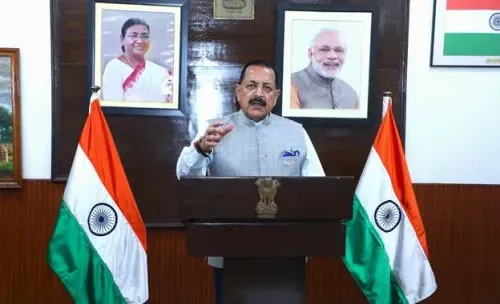
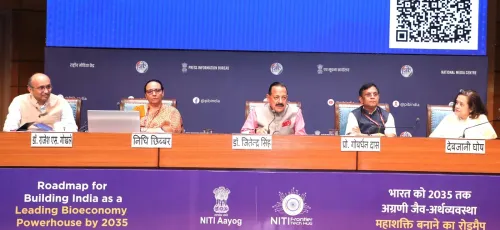
India's genetic diversity — long a clinical challenge — is now its most powerful scientific asset. Union Science and Technology Minister Dr. Jitendra Singh made that case forcefully on Friday, 20 November 2026, delivering the inaugural address at the four-day Annual Conference of the Research Society for Study of Diabetes in India (RSSDI) in Bengaluru, laying out a sweeping vision for how the country can lead the world in diabetes and precision medicine research.
India's genetic edge — from liability to laboratory advantage
At the heart of Dr. Singh's address was a reframing: India's enormous, genetically diverse population is not simply a country with a large diabetes burden — it is a living dataset of unmatched scientific value. 'India's vast population and genetic diversity offer a unique opportunity to develop scientific insights and healthcare solutions with relevance not only for the country, but for the entire mankind,' the minister stated. That framing — local scale, global payoff — has become a consistent thread in how the Ministry of Science and Technology now pitches India's role in precision medicine.
The country's non-communicable disease challenge is real and urgent. The National Programme for Prevention and Control of Cancer, Diabetes, Cardiovascular Diseases and Stroke (NPCDCS), launched in 2010, acknowledged the rising tide of metabolic disorders. What has shifted in the years since is the nature of the scientific response — moving from epidemiological surveillance toward molecular and genetic intervention design, powered by significantly expanded Department of Biotechnology (DBT) funding.
Over a dozen DBT projects — from gut microbiome to engineered bacteria
Dr. Singh enumerated more than a dozen active diabetes-related research projects running under the Ministry, most channelled through the DBT. The range is striking. An Indo-Danish Gut Microbiome Study — a bilateral collaboration with Denmark — is probing the relationship between gut microbial profiles and Type 2 Diabetes Mellitus. A separate DBT-backed project is investigating genetically engineered E. coli capable of producing GLP-1, the hormone-mimicking pathway that has driven the global blockbuster class of obesity and diabetes drugs.
Other studies in the pipeline target different points on the disease arc. One project is examining whether preconception-to-early-childhood interventions can reduce cardiometabolic risks — including childhood blood glucose, blood pressure and adiposity. Another is building a biomarker framework to predict Type 2 Diabetes in women with a history of gestational diabetes, a cohort at disproportionately high subsequent risk. A fifth study is mapping the link between Type 2 Diabetes and Metabolic Dysfunction Associated Fatty Liver Disease (MAFLD), a comorbidity increasingly central to metabolic medicine globally.
Prevention as a national duty — not just a doctor's directive
Perhaps the most politically charged line of Dr. Singh's address was his insistence that diabetes prevention is 'a national responsibility, not merely a doctor's obligation.' He invoked Prime Minister Narendra Modi directly — noting that PM Modi has repeatedly pressed this point — to signal that the prevention agenda carries the highest political endorsement and demands cross-sectoral mobilisation beyond the health fraternity alone.
That framing matters. It signals an intent to bring youth-focused metabolic health interventions into the orbit of science, education and social policy — not just clinical practice. India's youth demographics make the stakes clear: a generation entering adulthood with elevated cardiometabolic risk could translate into an economic and social burden that dwarfs today's numbers.
With a ministerial mandate, bilateral scientific partnerships, and a clutch of frontier research projects now underway, India's answer to the global diabetes crisis may be taking shape in its own laboratories — and the world will be watching what that data yields.
Point of View
Singh elevates diabetes prevention from a health-ministry issue to a whole-of-government mandate, mirroring the political economy of large-scale NCD programmes. The breadth of listed projects — from microbiome science to engineered bacteria — signals that India is moving beyond epidemiological tracking toward intervention-design research with potential export value. How quickly these studies yield publishable, policy-applicable results will determine whether the 'global hub' claim translates from ambition to evidence.
NationPress
20 Nov 2026
Frequently Asked Questions
What is the RSSDI conference and why was it held in Bengaluru?
The Research Society for Study of Diabetes in India (RSSDI) holds an annual conference for diabetes researchers and clinicians. The 2026 edition was a four-day event held in Bengaluru, inaugurated by Union Minister Dr. Jitendra Singh on 20 November 2026.
What diabetes research projects are funded by the Department of Biotechnology?
Over a dozen projects are underway, including an Indo-Danish Gut Microbiome Study, a genetically engineered E. coli project to produce GLP-1, studies on gestational diabetes biomarkers, preconception-to-early-childhood cardiometabolic interventions, and research into the Type 2 Diabetes–MAFLD link.
What is the Indo-Danish Gut Microbiome Study on diabetes?
It is a bilateral research collaboration between India and Denmark, supported by the Department of Biotechnology, investigating the relationship between gut microbial profiles and Type 2 Diabetes Mellitus. Specific results have not yet been publicly confirmed.
Why did Dr. Jitendra Singh say diabetes prevention is a 'national responsibility'?
Singh argued that preventing diabetes and metabolic disorders — especially among Indian youth — requires cross-sectoral government action beyond the healthcare system alone. He cited PM Narendra Modi as having repeatedly made this point, framing it as a whole-of-government priority.
How is India positioning itself as a global hub for diabetes research?
India's large, genetically diverse population provides a unique dataset for generating insights into molecular and genetic drivers of Type 2 Diabetes. The Ministry of Science and Technology is channelling funding through DBT into precision medicine and microbiome research with potential global applicability.