Kishan Reddy: 1.5 Cr Vehicle Records Show E20 Fuel Is Safe

Synopsis
Union Coal Minister G. Kishan Reddy cited FY 2025-26 data from over 1.5 crore vehicle service records — including non-E20-certified vehicles — showing zero reported cases of engine damage, corrosion, or abnormal wear linked to the 20% ethanol-petrol blend.
Key Takeaways
Over 1.5 crore vehicle service records from FY 2025–26 showed no reported engine damage, corrosion, or abnormal wear caused by E20 fuel.
The records covered vehicles older than three years , including many not originally E20-certified — the segment most exposed to blend-transition risk.
India's National Policy on Biofuels 2018 originally targeted E20 by 2030; the deadline was advanced to 2025 in 2021.
E20 underwent multi-stage testing — engine-bench trials, materials-compatibility studies, and field pilots — before commercial rollout.
The ethanol blending programme supports energy security by reducing crude-oil imports and provides demand support for agricultural feedstock producers.
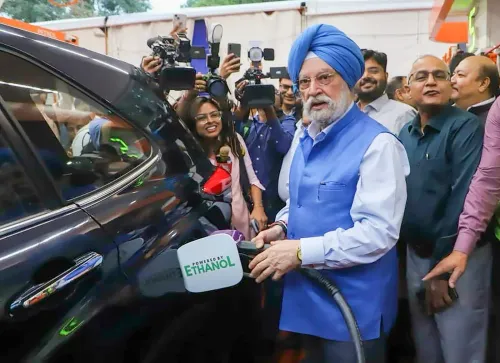
India's E20 fuel blend — petrol mixed with 20% ethanol — has survived its biggest test yet: the real-world scrutiny of 1.5 crore vehicle service records. Union Coal and Mines Minister G. Kishan Reddy on Tuesday, July 28, 2026, cited data from FY 2025–26 showing zero reported cases of engine damage, corrosion, or abnormal wear attributable to E20, even among vehicles not originally certified for the blend.
What 1.5 crore service records actually showed
The scale of the dataset matters. Over 1.5 crore service records — covering vehicles older than three years, a cohort considered most vulnerable to fuel-blend transitions — returned no documented evidence of E20-linked mechanical failure. Reddy's post framed the finding squarely: 'When evidence leads, myths disappear.' The data, he argued, is the rebuttal to persistent consumer anxiety about whether a higher-ethanol blend corrodes rubber seals, degrades fuel-system components, or shortens engine life. Those anxieties are not irrational in origin. When India moved from E5 to E10 blending in earlier years, workshops and online forums filled with anecdotal complaints — many of them later traced to pre-existing maintenance lapses rather than the fuel itself. E20's rollout inherited that cloud of suspicion, and the government has been methodical about dispelling it.The decade-long road to E20 at the pump
India's ethanol blending push has a clear policy spine. The National Policy on Biofuels 2018 set an indicative E20 target for 2030. In 2021, that deadline was pulled forward to 2025, accelerating the rollout of E20-compatible fuel pumps and tightening vehicle type-approval norms. The Ethanol Blended Petrol Programme — which predates both — has progressively raised the blending floor from negligible levels to double digits over two decades. The strategic logic is straightforward: every percentage point of ethanol displaces imported crude, trims the fuel-import bill, and cuts tailpipe carbon output. Sugarcane and grain-surplus states — Uttar Pradesh, Maharashtra, Karnataka — also gain a captive demand channel for agricultural feedstock, binding energy policy to farm income in a politically significant way.Rigorous testing before the first litre reached the pump
Reddy's post underscored that E20 did not arrive untested. 'E20 reached your fuel tank only after rigorous testing and validation,' he wrote, pointing to the multi-stage certification process that preceded commercial rollout — engine-bench trials, materials-compatibility studies, and field pilots across climate zones. The Bureau of Indian Standards and automotive OEMs were involved in setting compatibility benchmarks before the blend was cleared for general sale. The minister closed with a direct appeal: 'Let's trust science. Let's trust evidence.' In a media environment where a single viral video of a sputtering engine can outrun months of technical data, that framing is deliberate — and the 1.5-crore-record dataset is designed to be the kind of number that cuts through noise. If the service-record trend holds as E20 penetration deepens further, the government's next logical move will be signalling timelines for E25 or higher blends — a conversation that is already quietly underway in energy-policy circles.Point of View
The BJP is trying to shift the E20 debate from perception to empirics — a useful template as the programme eyes higher blends. The political subtext is equally clear: with sugarcane-surplus states being electorally significant, a credible E20 safety narrative protects both the energy-security agenda and the farm-income dividend that blending delivers. Watch whether the Petroleum Ministry follows with a formal data release that independent analysts can scrutinise — that would be the real test of the evidence-first posture Reddy is signalling.
NationPress
28 Jul 2026
Frequently Asked Questions
Is E20 petrol safe for older cars in India?
According to FY 2025–26 service data cited by Union Minister G. Kishan Reddy, over 1.5 crore vehicles older than three years — including those not E20-certified — showed no reported cases of engine damage, corrosion, or abnormal wear linked to E20 fuel.
What is E20 fuel and why is India using it?
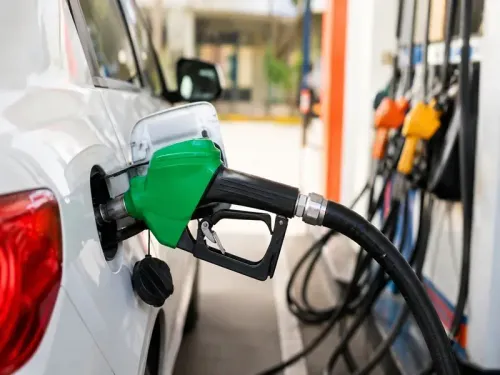
E20 is a blend of 20% ethanol and 80% petrol . India promotes it under the Ethanol Blended Petrol Programme to reduce crude-oil imports, lower fuel costs, cut emissions, and create demand for domestically produced agricultural ethanol.
When did India start E20 fuel rollout?
India advanced its E20 target from 2030 to 2025 following a 2021 policy revision under the National Policy on Biofuels 2018, accelerating pump rollout and vehicle type-approval norms for the higher blend.
Does E20 damage rubber seals or fuel system components?
Consumer concern has centred on rubber seals and fuel-system corrosion, but the large-scale service-record data cited by Reddy for FY 2025–26 found no such damage attributable to E20 across 1.5 crore vehicle records.
What comes after E20 — will India move to E25 or higher blends?
India has not officially announced an E25 mandate, but the government's track record of advancing ethanol targets ahead of schedule means higher blends are widely expected to be the next step as E20 penetration matures.