Kishan Reddy Backs Anganwadi Pre-Schooling Drive
Synopsis
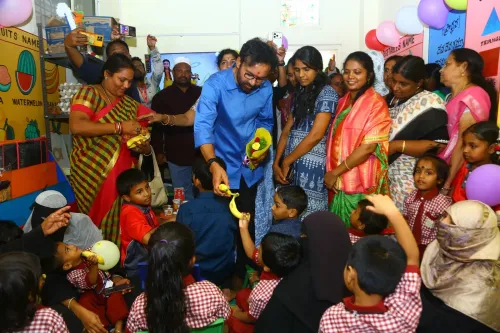
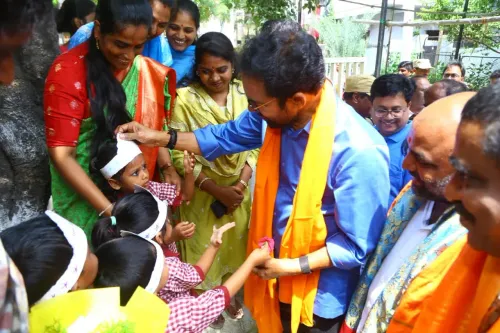
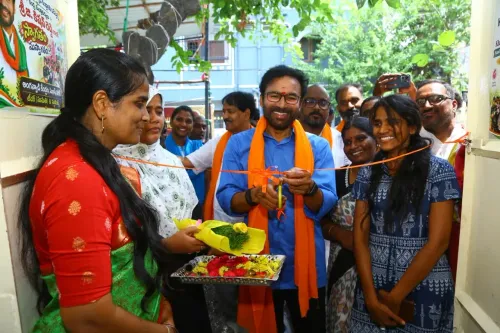
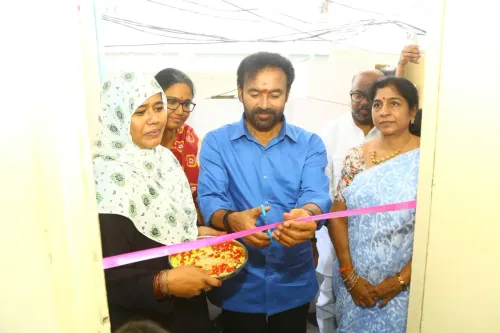
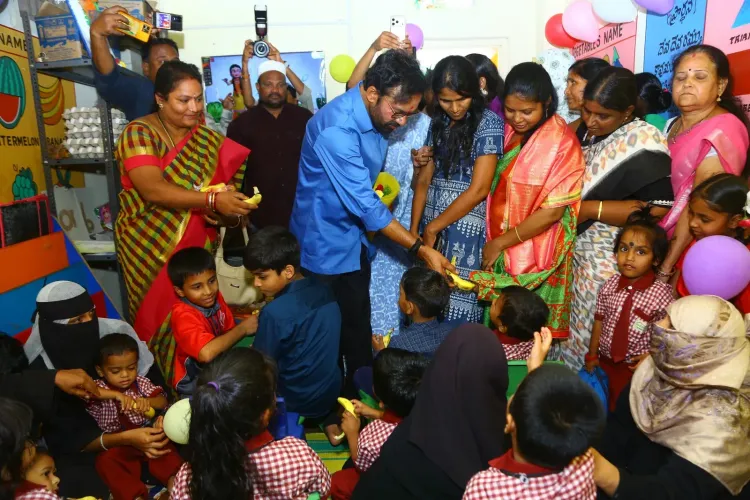
Union Minister G. Kishan Reddy on 26 September 2026 praised growing parental support for Anganwadi pre-schooling under the #SevaSankalpAbhiyan and #AanganMilanSewa campaigns, calling early childhood education a shared national responsibility.
Key Takeaways
Union Coal and Mines Minister G.
Kishan Reddy posted on 26 September 2026 welcoming increased parental participation in Anganwadi pre-schooling.
The post was tagged under #SevaSankalpAbhiyan and #AanganMilanSewa , indicating an organised outreach campaign.
Anganwadis have operated under the Integrated Child Development Services (ICDS) since 1975 , providing nutrition, health, and pre-school education.
Reddy, also BJP Telangana state president , framed Anganwadi participation as a 'shared responsibility' for the nation.
State-level Telangana Anganwadi enrolment data will be the key indicator of whether campaign momentum is sustained.
When more parents choose to send their toddlers to an Anganwadi instead of keeping them home, something real is shifting at the grassroots. Union Coal and Mines Minister G. Kishan Reddy amplified that shift on Saturday, 26 September 2026, calling the rising parental confidence in Anganwadi pre-schooling 'encouraging' and framing early childhood care as a 'shared responsibility' for the nation.
What Kishan Reddy Said — and Why It Matters
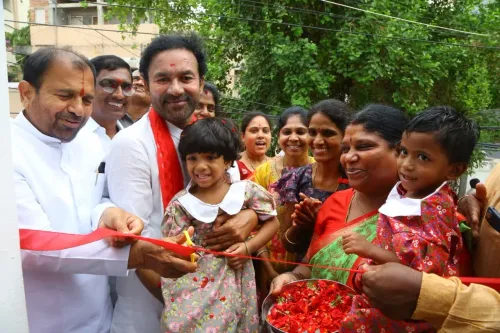
Responding on X under the hashtags #SevaSankalpAbhiyan and #AanganMilanSewa, Reddy wrote: 'It is encouraging to see that this support is motivating more parents to send their children for pre-schooling at Anganwadis. These children are the future of our nation and ensuring them a strong foundation remains our shared responsibility.'
The remark connects to a broader political push by the BJP to associate the party's outreach work with India's flagship child-welfare infrastructure. The two hashtags suggest an organised campaign — though the precise scope of #SevaSankalpAbhiyan and #AanganMilanSewa has not been officially detailed in public documents available at the time of writing.
Anganwadis: Five Decades of Early Childhood Reach
Anganwadis — literally 'courtyard shelters' — have been the backbone of India's early childhood ecosystem since the Integrated Child Development Services (ICDS) was launched in 1975. The centres deliver a package of nutrition support, routine health check-ups, immunisation referrals, and pre-school education to children under six, primarily in rural and semi-urban communities.
Enrolment in these centres has long been uneven, shaped by parental awareness, distance, and the perceived quality of care. Periodic government campaigns to drive community participation — exactly the kind Reddy's post references — have been a recurring feature of both central and state policy for decades. The challenge has never been infrastructure alone; it has been persuading households that showing up is worth it.
The Political Signal Behind the Welfare Message
As BJP Telangana state president, Reddy's engagement with Anganwadi outreach carries a dual register: it is simultaneously a welfare statement and a ground-level mobilisation signal in a state where the party has been working to expand its social base. Campaigns that embed party workers in community services — health camps, school enrolment drives, child-care awareness — have become a standard BJP playbook across states.
For rural parents, the message is simpler and more direct: the government is watching, and early education at the local Anganwadi is being treated as a national priority, not a bureaucratic afterthought.
The real test will come in Telangana's state-level Anganwadi enrolment data — whenever those figures are released, they will tell whether the campaign's energy translated into sustained attendance or faded with the hashtag.
Point of View
Lending grassroots visibility to schemes that predate the current government by decades. For a party working to deepen its footprint in Telangana, associating with ICDS — a politically neutral, widely respected programme — is tactically shrewd. The 'shared responsibility' framing is also notable: it distributes accountability beyond the state, positioning the campaign as civic rather than partisan. Whether the hashtag energy translates into measurable enrolment gains is the question that will determine whether this is a policy moment or a messaging one.
NationPress
26 Sept 2026
Frequently Asked Questions
What is the SevaSankalpAbhiyan campaign about?
#SevaSankalpAbhiyan appears to be a BJP-linked outreach initiative that includes community engagement with Anganwadi centres, though its full scope has not been officially detailed in publicly available documents.
What are Anganwadis and what services do they provide?
Anganwadis are government-run child-care and pre-school centres established under the Integrated Child Development Services in 1975. They provide nutrition support, health check-ups, immunisation referrals, and early childhood education to children under six.
Why is G. Kishan Reddy involved in Anganwadi campaigns?
As BJP Telangana state president, Kishan Reddy is involved in party-led welfare outreach in the state. Engaging with Anganwadi campaigns allows the party to connect with rural and semi-urban communities on child-care and education issues.
What is AanganMilanSewa?
#AanganMilanSewa is one of the hashtags used in the campaign Kishan Reddy referenced; it appears to be a community-engagement drive focused on Anganwadi participation, though official details of its scope are not yet publicly verified.
How does Anganwadi pre-school enrolment benefit children?
Early enrolment in Anganwadis gives children access to structured pre-school learning, nutritional supplements, and health monitoring, which research consistently links to better school readiness and long-term developmental outcomes.