Kishan Reddy Backs ECI's SIR Drive, Urges BJP to Join
Synopsis
Union Minister and BJP Telangana president G. Kishan Reddy on 25 June 2026 called on party workers to actively participate in the Election Commission's Special Intensive Revision of voter rolls in Telangana, dismissing opposition concerns as political and urging removal of all duplicate and fake voter entries.
Key Takeaways
Kishan Reddy , Union Coal and Mines Minister and BJP Telangana president, announced on 25 June 2026 that the ECI's Special Intensive Revision (SIR) of electoral rolls had commenced in Telangana .
The SIR is a constitutional exercise under the Representation of the People Act, 1950 , conducted in phases across India to update voter rolls and remove duplicate and fake entries.
Reddy said the exercise had already concluded successfully in states that recently held assembly elections and in BJP-governed states without disruption.
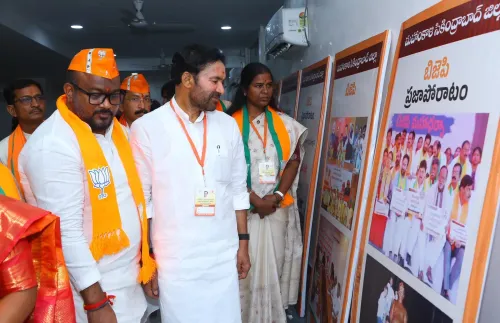
He directed all BJP MPs, MLAs, and workers in Telangana to actively participate, under the guidance of national president Nitin Nabin and state president Ramchander Rao .
Reddy criticised opposition parties for making 'inflammatory' statements about the SIR, calling such remarks 'incorrect' and urging the process to be seen as a voter-list reform, not a political act.
He emphasised that every eligible Indian citizen must have the right to vote, while duplicate, fake, and counterfeit voter cards must be removed to protect democracy.
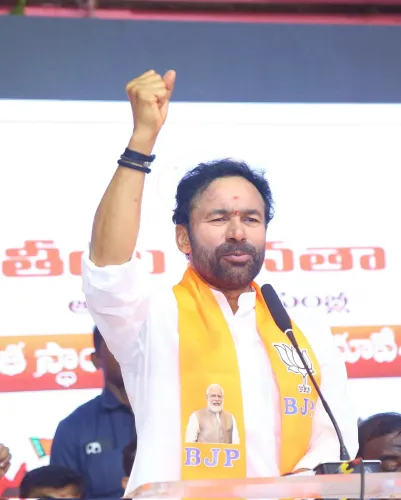
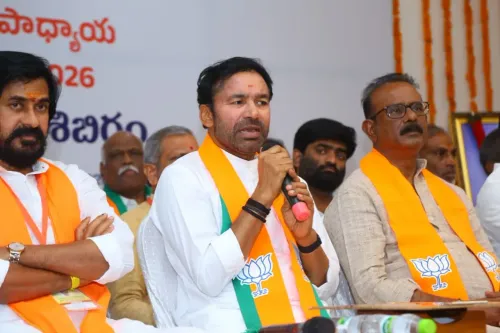
Union Coal and Mines Minister G. Kishan Reddy, who also serves as BJP's Telangana state president, on Thursday, 25 June 2026, called on all party MPs, MLAs, and workers to actively participate in the Election Commission of India's Special Intensive Revision (SIR) process, which he said had commenced in Telangana that day. Reddy urged that the exercise be viewed strictly as an administrative reform of the state's voter rolls — not through a political lens — and demanded that not a single duplicate or fake vote remain in the updated list.
Context
Posting in Telugu on 25 June 2026, Reddy described the SIR process as a raajyaangaparaina, chaattabaddhamaaina kaaryakramam (constitutional, statutory programme) being conducted by the Election Commission of India (ECI) across the country in phases. He noted that the revision had already concluded successfully in states that recently held assembly elections, including BJP-governed states, without disruption. With Telangana now entering the SIR cycle, Reddy said the party would extend full cooperation, as it always has, to any transparent voter-list update process.
Reddy directly addressed political parties and leaders who, he said, were making 'inflammatory statements suggesting something untoward is happening.' He called such rhetoric 'incorrect' and said it misrepresents a routine constitutional exercise as a partisan act.
Policy Backdrop
The Election Commission of India derives its authority to revise electoral rolls from Article 324 of the Constitution and the Representation of the People Act, 1950. The ECI periodically conducts both summary and intensive revisions to add eligible voters, remove deceased or shifted entries, and eliminate duplicates. A nationwide phased Special Summary Revision was conducted ahead of the 2024 Lok Sabha elections for the same purpose.
The SIR is a more thorough, door-to-door exercise compared to a summary revision. It involves booth-level officers verifying entries, accepting claims from eligible citizens not yet on the rolls, and processing objections against ineligible or duplicate entries. The process culminates in the publication of a final, updated electoral roll.
Stakeholders and Impact
For Telangana's voters, the SIR offers a structured window to enrol, correct details, or flag bogus entries. Reddy's post framed the exercise around a dual democratic obligation: ensuring every eligible Indian citizen has the right to vote, while simultaneously purging fake, duplicate, and counterfeit voter cards that can distort electoral outcomes.
Reddy directed all BJP MPs, MLAs, and workers in Telangana to participate actively under the guidance of BJP national president Shri Nitin Nabin and the leadership of Telangana BJP president Shri Ramchander Rao. The instruction signals that the party intends to use its ground network to assist booth-level officers and mobilise voter enrolment during the claims-and-objections window.
Opposition parties and some political leaders have apparently raised concerns about the timing or conduct of the SIR in Telangana. Reddy's post is, in part, a rebuttal to those voices, urging them not to 'incite' the public with alarmist statements about an otherwise standard ECI-mandated process.
What's Next
The completion of the SIR in Telangana will be followed by a claims-and-objections period, after which the Election Commission will publish a final revised electoral roll for the state. Political parties, including the BJP, are expected to submit representations on disputed entries during that window. How opposition parties in Telangana respond to the ongoing revision — and whether their concerns are formally placed before the ECI — will shape the political temperature around the exercise in the weeks ahead.
Point of View
Pro-institution party that cooperates with constitutional bodies, while simultaneously delegitimising opposition criticism of the SIR as alarmism. By invoking the ECI's constitutional mandate and pointing to the exercise's smooth completion in BJP-ruled states, he pre-empts any narrative that the revision is being weaponised. The instruction to mobilise the party's full ground machinery — MPs, MLAs, and workers — also signals that the BJP sees the SIR window as an organisational opportunity ahead of future state-level contests in Telangana.
NationPress
25 Jun 2026
Frequently Asked Questions
What is the Special Intensive Revision (SIR) of electoral rolls?
The Special Intensive Revision is a door-to-door exercise conducted by the Election Commission of India under the Representation of the People Act, 1950, to add eligible voters, remove deceased or relocated entries, and eliminate duplicate or fake voter cards from electoral rolls.
Why has the SIR started in Telangana in June 2026?
The Election Commission of India conducts the SIR in phases across all states. According to Union Minister G. Kishan Reddy's post on 25 June 2026, Telangana's phase of the SIR began that day as part of this nationwide phased rollout.
What did G. Kishan Reddy say about the SIR in Telangana?
Reddy described the SIR as a constitutional and statutory programme, urged BJP workers to participate actively, and asked opposition parties to stop making inflammatory statements about the process, calling such statements incorrect.
Is the SIR process the same in BJP-ruled and non-BJP-ruled states?
Yes. Reddy's post stated that the SIR has been conducted without disruption in BJP-governed states as well as in states that recently held assembly elections, underlining that it is a uniform, ECI-mandated exercise not tied to any party's agenda.
What happens after the SIR is completed in Telangana?
After the field revision, a claims-and-objections window opens for citizens and parties to contest entries. The Election Commission then publishes a final, updated electoral roll for Telangana.