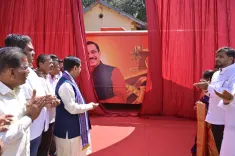
Kishan Reddy: Central tax share to Telangana up ~90% in 5 years

Synopsis
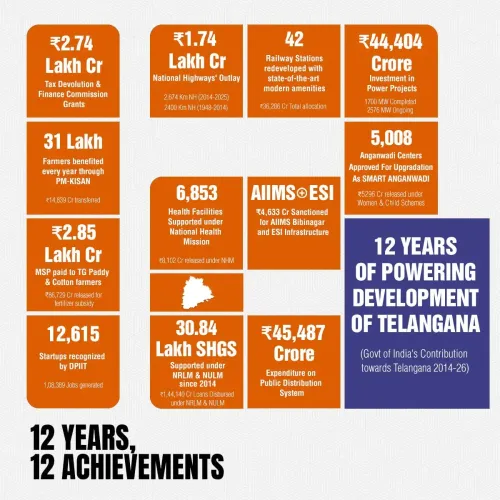
Union Minister G. Kishan Reddy has shared year-wise data showing Telangana's central tax devolution rising ~90% over five years — from ₹17,496 crore in 2021-22 to ₹33,181 crore in 2026-27 — crediting the Modi government and the 16th Finance Commission's upward revision of the state's share.
Key Takeaways
Central tax devolution to Telangana has grown approximately 90 percent over five years, according to data shared by Union Minister G.
The year-wise figures run from ₹17,496 crore (2021-22) to a projected ₹33,181 crore (2026-27) , an absolute increase of ₹15,685 crore .
Under the 16th Finance Commission , Telangana's share in the central divisible pool has been revised upward from 2.102% to 2.174% .
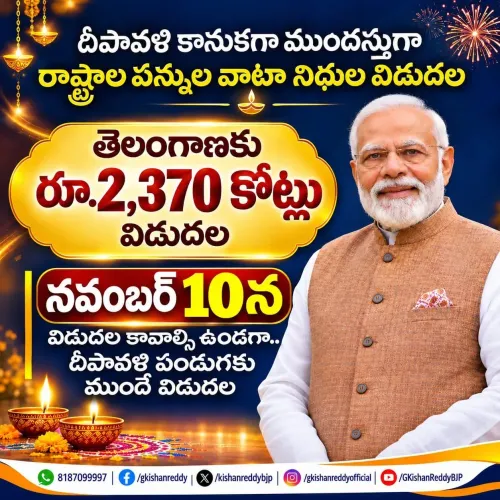
An additional advance instalment of ₹2,370 crore has been released to Telangana under the new framework.
The post carries clear political weight: Reddy is BJP Telangana state president and is countering the state government's narrative of central neglect.
The 16th Finance Commission covers the period 2026-2031 ; actual releases against projected figures will serve as the real test of the trajectory.
A ~90 percent surge in Telangana's share of central taxes over five years — that is the headline figure Union Coal and Mines Minister G. Kishan Reddy put before the public on Tuesday, 10 November 2026, laying out a year-by-year ledger that tracks the state's devolution receipts from ₹17,496 crore in 2021-22 all the way to a projected ₹33,181 crore in 2026-27.
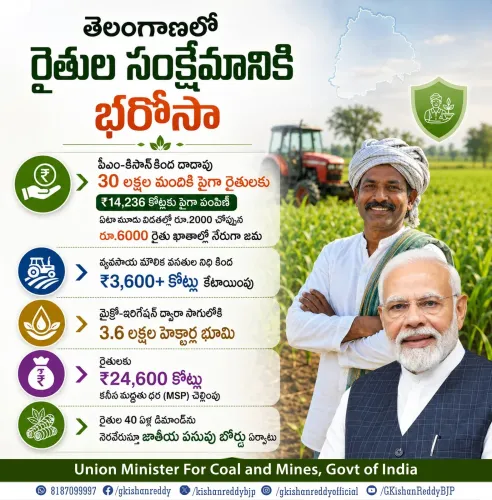
Posting in Telugu, Reddy framed the data as proof of Prime Minister Narendra Modi's government standing firmly behind Telangana's growth: 'తెలంగాణా అభివృద్ధికి మోదీ ప్రభుత్వం అండ' — 'The Modi government is a pillar of support for Telangana's development.' The numbers he cited trace a steady climb: ₹19,668 crore (2022-23), ₹23,592 crore (2023-24), ₹27,050 crore (2024-25), and ₹29,900 crore (2025-26) before hitting the ₹33,181 crore estimate for the current award period.
From 2.102% to 2.174%: What the 16th Finance Commission changed for Telangana
The sharpest specific in Reddy's post is the devolution share itself. Under the 16th Finance Commission — the constitutional body recommending tax transfers for 2026-2031 — Telangana's share has been revised upward from 2.102 percent to 2.174 percent of the divisible pool. That fraction-of-a-percentage-point shift, multiplied across India's total central tax collections, translates into a meaningful addition to the state's annual revenue. Reddy separately flagged that an additional advance instalment of ₹2,370 crore has been released to the state under this framework.
Finance Commissions calibrate state shares using criteria such as population, geographic area, forest cover, and income distance from the national average. Telangana, carved out of undivided Andhra Pradesh in 2014 — the same year the BJP-led government came to power at the Centre — has seen its fiscal weight grow as its economic indicators mature. The 15th Finance Commission had recommended a 41 percent aggregate devolution to all states; the 16th is now shaping transfers through 2031.
The cooperative federalism argument — and its political context
The timing is deliberate. G. Kishan Reddy wears two hats: Union minister and BJP Telangana state president. His party is in opposition in Hyderabad, where the Congress-led state government under Chief Minister A. Revanth Reddy has frequently accused the Centre of shortchanging Telangana on funds. By publishing a rupee-by-rupee breakdown, Kishan Reddy is mounting a direct counter-narrative — the Centre is not withholding; it is delivering, and demonstrably so.
This is a well-worn BJP playbook on cooperative federalism: cite Finance Commission data, name the absolute rupee increase, and anchor the message to Modi's personal commitment. The ₹15,685 crore absolute increase over five years that Reddy highlights does reflect genuine growth in nominal terms, though analysts typically also track devolution as a share of state expenditure to assess real adequacy. That nuance, however, is not part of Reddy's framing — nor would it be expected from a party communication.
What the 16th Finance Commission report means going forward
The release and full incorporation of the 16th Finance Commission report into successive Union Budgets will determine whether the upward trajectory Reddy describes holds. States across the political spectrum watch these numbers closely: devolution is the single largest source of unconditional revenue for most state governments, funding everything from welfare schemes to infrastructure. For Telangana specifically, the revised 2.174 percent share and the ₹33,181 crore projection for 2026-27 will be a live benchmark against which actual releases will be measured.
The numbers are on the table. Whether Telangana's ruling government credits the Centre or points to its own fiscal management for the state's development trajectory, the devolution data is now squarely in the public domain — and that, for Kishan Reddy, is precisely the point.
Point of View
The BJP attempts to neutralise the Telangana Congress government's 'step-motherly treatment' charge before it can calcify into electoral conventional wisdom. The 16th Finance Commission's marginal upward revision of Telangana's share — from 2.102% to 2.174% — is a genuinely verifiable policy marker that lends the argument credibility beyond mere rhetoric. However, the framing of nominal growth as evidence of commitment sidesteps the question of whether devolution keeps pace with the state's expenditure needs or inflation, a gap that the opposition will exploit. As the full 16th Finance Commission report gets absorbed into coming budgets, this data will become a live scoreboard — watched by both sides.
NationPress
10 Nov 2026
Frequently Asked Questions
How much has central tax devolution to Telangana increased in the last five years?
According to data shared by Union Minister G. Kishan Reddy, Telangana's central tax devolution has risen by approximately 90 percent over five years — from ₹17,496 crore in 2021-22 to a projected ₹33,181 crore in 2026-27 , an absolute increase of ₹15,685 crore .
What did the 16th Finance Commission decide for Telangana?
The 16th Finance Commission revised Telangana's share in the central divisible pool upward from 2.102 percent to 2.174 percent for the award period 2026-2031, resulting in higher annual transfers to the state.
What is the ₹2,370 crore advance instalment released to Telangana?
Kishan Reddy stated that an additional advance instalment of ₹2,370 crore has been released to Telangana under the provisions of the 16th Finance Commission framework, over and above regular devolution tranches.
Why is Kishan Reddy highlighting central funds to Telangana?
As BJP Telangana state president and Union Minister, Reddy is countering the Congress-led state government's claim that the Centre is shortchanging Telangana — presenting Finance Commission data to argue the Modi government has consistently increased fiscal transfers to the state.
What is the Finance Commission and how does it affect states?
The Finance Commission is a constitutional body that recommends how central tax revenues should be shared with states. Its devolution formula — based on factors like population, area and income distance — determines the single largest unconditional revenue source for most state governments, including Telangana.