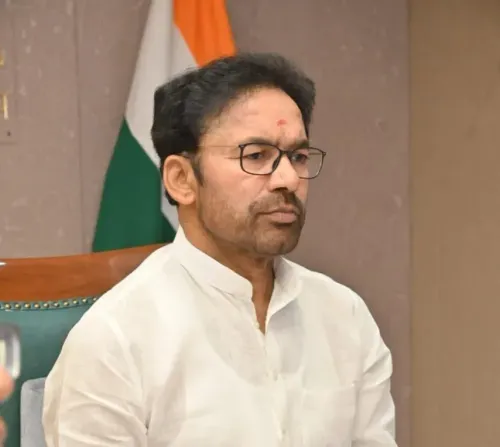
Kishan Reddy Chairs SCCL Review Meet in Hyderabad

Synopsis
Union Coal and Mines Minister G. Kishan Reddy chaired a review of Singareni Collieries Company Limited in Hyderabad on July 4, 2026, directing management to boost production, improve coal quality, cut waste, prioritise employee welfare, and acquire new coal blocks amid El Nino Southern Oscillation contingency concerns.
Key Takeaways
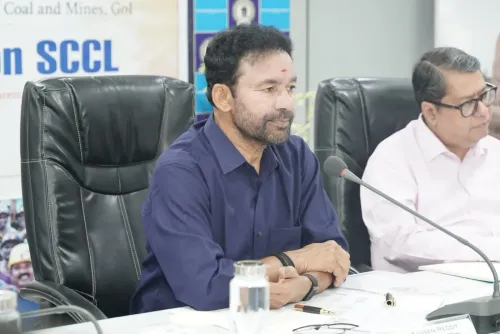
Kishan Reddy chaired a review meeting with SCCL officials at Singareni Bhavan, Hyderabad on July 4, 2026 .
The meeting was triggered by prevailing El Nino Southern Oscillation (ENSO) conditions that can disrupt coal logistics and power generation.
Management was directed to enhance production, improve coal quality, and reduce wasteful expenditure.
Employee welfare was explicitly listed as a priority alongside operational efficiency.
SCCL was called upon to proactively acquire new coal blocks to ensure long-term sustainability.
SCCL is jointly owned by the Telangana state government and the central government , operating in the Godavari valley coalfields.
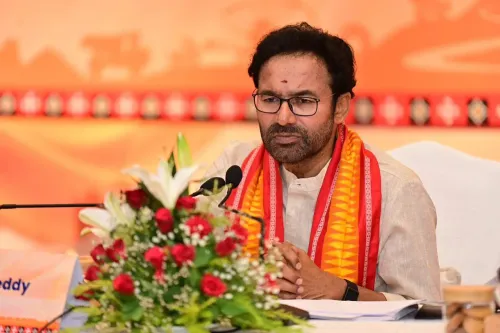
Union Coal and Mines Minister G. Kishan Reddy chaired a high-level review meeting with officials of Singareni Collieries Company Limited (SCCL) at Singareni Bhavan, Hyderabad, on Saturday, July 4, 2026, citing prevailing El Nino Southern Oscillation (ENSO) conditions as a key trigger for the contingency-focused discussion.
Context
The minister called upon SCCL management and stakeholders to 'take appropriate measures and be ready for contingencies' in light of the ongoing ENSO conditions. The meeting covered the company's operational performance, future roadmap, and a review of ongoing and upcoming projects. Reddy's dual role as Union Coal and Mines Minister and BJP Telangana state president makes his direct engagement with SCCL — a Hyderabad-headquartered public sector miner — politically as well as administratively significant.
Policy Backdrop
SCCL is jointly owned by the Telangana state government and the central government, and operates coal fields across the Godavari valley. It is one of India's key domestic coal producers, supplying thermal power utilities across the region. The review comes against the backdrop of successive central government efforts to scale up domestic coal output — beginning with the Coal Mines (Special Provisions) Act, 2015, which enabled competitive block auctions, and accelerating with the commercial coal mining auction framework launched in 2020, which opened new block bidding to state companies including SCCL.
ENSO events are known to disrupt Indian monsoon patterns, which in turn affect hydropower generation and push greater load onto thermal plants, increasing pressure on coal stocks and logistics. Contingency planning at the production level is therefore directly linked to grid stability and energy security.
Key Directives from the Meeting
Reddy outlined a multi-pronged agenda for SCCL's management: enhancing coal production, improving coal quality, reducing wasteful expenditure, prioritising employee welfare, and proactively acquiring new coal blocks to ensure long-term sustainability. The explicit mention of new block acquisition signals that SCCL is being encouraged to expand its resource base through the existing auction mechanism rather than rely on legacy allocations. The focus on quality improvement reflects persistent concerns among thermal utilities about the calorific value and consistency of domestic coal supply.
Stakeholders and Impact
SCCL employees — a large workforce concentrated in the Godavari coalfields — stand to be directly affected by the welfare and expenditure-rationalisation directives. Thermal power utilities that depend on SCCL output will be watching production and stock data closely, particularly if ENSO conditions tighten supply chains or affect rail and road logistics. For Telangana as a state, SCCL's performance has broader economic implications, given the company's role as a major regional employer and revenue contributor.
What's Next
The Ministry of Coal's quarterly production and stock releases will serve as the first concrete indicator of whether the directives from this meeting translate into measurable output gains. Any fresh notifications on coal block allocations to SCCL under the commercial mining framework will also be closely tracked. With ENSO conditions continuing to influence energy planning, high-level reviews of this nature are likely to recur as the government seeks to insulate domestic power supply from climate-driven disruptions.
Point of View
Especially given his concurrent role as the party's state president. The ENSO framing gives the meeting a policy rationale that extends beyond routine oversight, positioning coal preparedness as part of a broader energy-security narrative the central government has consistently advanced since 2020. The directives on new block acquisition and quality improvement also signal that SCCL is expected to compete more aggressively within the commercial mining framework, reducing dependence on legacy allocations. How quickly these directives materialise in production data will determine whether this review is remembered as a turning point or a routine ministerial exercise.
NationPress
4 Jul 2026
Frequently Asked Questions
Why did Kishan Reddy hold a meeting with SCCL in Hyderabad?
Union Coal and Mines Minister G. Kishan Reddy chaired the meeting in view of prevailing El Nino Southern Oscillation conditions, to ensure SCCL management is prepared for contingencies and to review the company's operational performance and future roadmap.
What is SCCL and who owns it?
Singareni Collieries Company Limited (SCCL) is a public sector coal mining company jointly owned by the Telangana state government and the central government. It operates in the Godavari valley coalfields and is a major supplier to thermal power utilities.
What were the key directives given to SCCL at the July 2026 review?
The minister directed SCCL to enhance coal production, improve coal quality, reduce wasteful expenditure, prioritise employee welfare, and proactively acquire new coal blocks to ensure long-term sustainability.
How does El Nino affect coal production and power supply in India?
El Nino events can disrupt Indian monsoon rainfall, reducing hydropower generation and increasing reliance on thermal plants. This raises pressure on coal stocks and logistics, making contingency planning at the production level critical for grid stability.
What is the significance of SCCL acquiring new coal blocks?
Acquiring new coal blocks under the commercial mining auction framework — launched in 2020 — would expand SCCL's resource base beyond legacy allocations, supporting long-term production growth and reducing India's dependence on coal imports.