Kishan Reddy at Renergize 2026: Clean Energy Now a People's Movement
Synopsis
Union Coal and Mines Minister G. Kishan Reddy addressed Renergize 2026 in Hyderabad on 23 May 2026, declaring India's clean energy shift a people's movement and spotlighting Surya Ghar and PM-KUSUM schemes offering subsidies of up to 70 per cent for households and farmers.
Key Takeaways
Kishan Reddy addressed the Renergize 2026 conclave at Madhapur, Hyderabad on 23 May 2026 .
He described renewable energy as a 'people's movement,' not merely a government policy initiative.
Pradhan Mantri Surya Ghar: Muft Bijli Yojana and PM-KUSUM were highlighted as flagship schemes with subsidies of up to 70 per cent .
India's renewable capacity grew from approximately 35 GW in 2014 to over 180 GW by 2024 .
The government targets 500 GW of non-fossil capacity by 2030 and net-zero emissions by 2070 .
PM-KUSUM , launched in 2019 , focuses on solar solarisation of agricultural pumps for farmers.
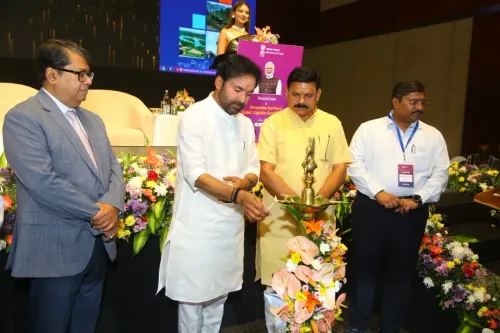
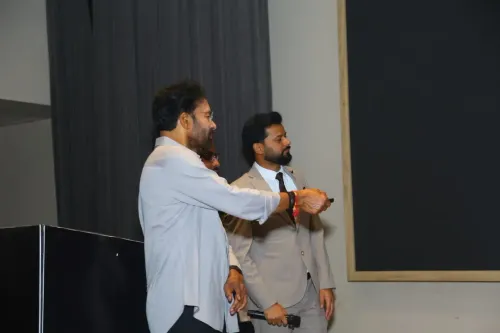
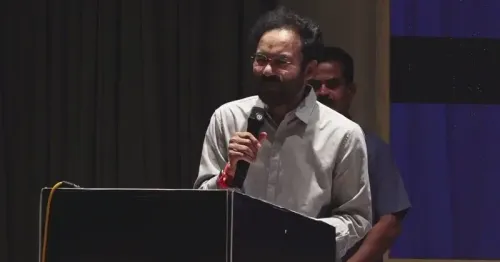
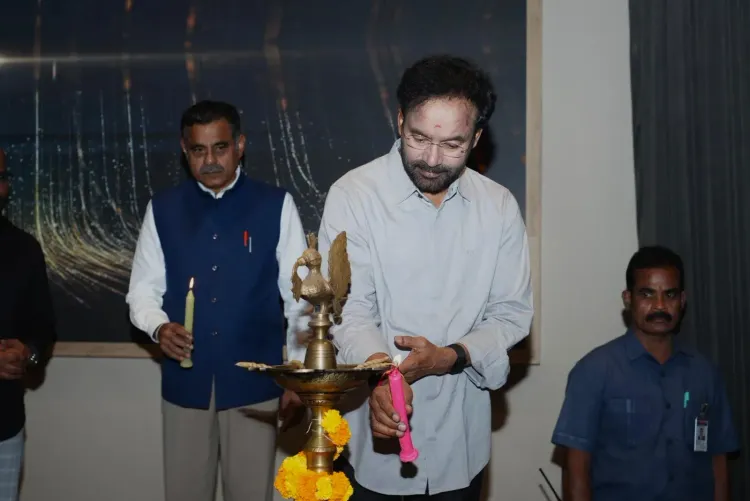
Union Coal and Mines Minister G. Kishan Reddy addressed the Renergize 2026 conclave organised by Rengy at Madhapur, Hyderabad, on the morning of Saturday, 23 May 2026, affirming that India's clean energy transition has moved far beyond government policy to become a broad-based people's movement.
Context
Speaking at the industry conclave focused on renewable energy and sustainability, Kishan Reddy said the Narendra Modi government has 'ushered in a clean energy revolution that is driving India's economic growth.' He described the shift as a structural transformation, not a transitional policy phase, noting that renewable energy 'has evolved into a powerful people's movement across the country.'
The Renergize 2026 event in Madhapur — a technology and business hub within Hyderabad — brought together stakeholders for conversations around renewable energy, sustainability, and India's long-term energy future. The minister, who also serves as BJP Telangana state president, participated in and addressed the gathering.
Policy Backdrop
At the conclave, Kishan Reddy highlighted two flagship central schemes designed to accelerate solar adoption. The first, Pradhan Mantri Surya Ghar: Muft Bijli Yojana, provides rooftop solar subsidies to households, aimed at reducing electricity bills for ordinary families. The second, Pradhan Mantri Kisan Urja Suraksha evam Utthaan Mahabhiyan (PM-KUSUM), supports solarisation of agricultural pumps and decentralised renewable energy plants for farmers.
Both schemes offer subsidies of up to 70 per cent, which the minister said makes green energy 'accessible even for common households.' PM-KUSUM was originally launched in 2019 to promote rural and agricultural renewable adoption, while the Surya Ghar scheme was introduced subsequently to push rooftop solar penetration at the household level. These programmes build on the framework established by the National Solar Mission, first launched in 2010 and revised in 2015.
India's total renewable energy capacity has grown from approximately 35 GW in 2014 to over 180 GW by 2024, underpinned by central schemes and state-level execution. The government has set a target of 500 GW of non-fossil fuel capacity by 2030, alongside a net-zero emissions goal for 2070.
Stakeholders and Impact
The primary beneficiaries of the schemes cited by Kishan Reddy are households and the farming community. The Surya Ghar scheme targets urban and semi-urban families seeking to lower electricity costs through rooftop installations, while PM-KUSUM is directed at reducing diesel dependence among farmers by subsidising solar-powered irrigation pumps.
Ministers holding both coal and energy-adjacent portfolios increasingly use public forums such as Renergize to signal policy continuity and cross-sector commitment to the clean energy agenda — a notable signal given that Kishan Reddy heads the Ministry of Coal and Mines, a portfolio closely watched for signals on India's fossil-fuel transition timeline.
What's Next
Attention will turn to state-wise progress reports on subsidy disbursal under Surya Ghar and PM-KUSUM during the 2025-26 budget cycle, as well as any mid-term review of India's renewable capacity targets. The minister's participation in a Hyderabad-based renewable energy conclave also signals continued political outreach in Telangana, where the BJP is seeking to expand its footprint ahead of future electoral cycles.
As India's renewable energy ecosystem matures, the framing of clean energy as a 'people's movement' — rather than a top-down mandate — is likely to become a recurring rhetorical anchor for the government as it navigates the political economy of the energy transition.
Point of View
Even as coal remains central to India's baseload power. Kishan Reddy's dual role as BJP's Telangana state president adds a local political dimension: the Hyderabad address doubles as a visibility exercise in a state the party is keen to consolidate. The 'people's movement' framing is a deliberate rhetorical escalation, shifting the narrative from subsidy-driven adoption to organic, citizen-led transformation — a harder claim to verify but a more durable political asset. Watch whether this language is adopted uniformly across ministerial communication as the 2030 renewable targets draw closer.
NationPress
19 Sept 2026
Frequently Asked Questions
What is Renergize 2026 and where was it held?
Renergize 2026 is a renewable energy and sustainability conclave organised by Rengy, held at Madhapur, Hyderabad on 23 May 2026. Union Coal and Mines Minister G. Kishan Reddy was among the speakers who addressed the event.
What is Pradhan Mantri Surya Ghar: Muft Bijli Yojana?
Pradhan Mantri Surya Ghar: Muft Bijli Yojana is a central government scheme that provides subsidies for rooftop solar panel installations at households, aimed at reducing electricity bills. The scheme offers subsidies of up to 70 per cent, making solar energy accessible to common families.
What is PM-KUSUM and who does it benefit?
PM-KUSUM, or Pradhan Mantri Kisan Urja Suraksha evam Utthaan Mahabhiyan, was launched in 2019 to support farmers through subsidised solar-powered irrigation pumps and decentralised renewable energy plants. It reduces dependence on diesel and grid electricity in rural and agricultural areas.
How much has India's renewable energy capacity grown under the Modi government?
India's renewable energy capacity grew from approximately 35 GW in 2014 to over 180 GW by 2024, driven by central schemes and state-level execution. The government has set a target of 500 GW of non-fossil fuel capacity by 2030.
Why is a Coal Minister speaking about renewable energy?
G. Kishan Reddy holds the portfolio of Union Minister of Coal and Mines, but the Modi government has increasingly used cross-portfolio messaging to signal commitment to the clean energy transition. His address at Renergize 2026 reflects a broader strategy of projecting policy continuity across energy-related ministries.