Kishan Reddy Demands Rahul Gandhi Apologise for 'Idiot' Remark
Synopsis
Union Minister G. Kishan Reddy has demanded an unconditional apology from Leader of the Opposition Rahul Gandhi for using the word 'idiot' in the Lok Sabha, calling it an insult to India's democratic institutions and its 140 crore citizens.
Key Takeaways
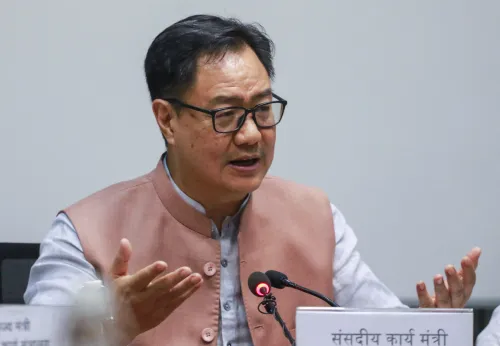
Kishan Reddy , Union Coal and Mines Minister, publicly demanded that Rahul Gandhi apologise to the people of India, PM Modi , and Home Minister Amit Shah .
Gandhi allegedly used the unparliamentary term 'idiot' repeatedly on the Lok Sabha floor, triggering the BJP's formal condemnation.
Lok Sabha rules maintain a codified list of unparliamentary expressions; a Speaker's ruling on the remarks is a key procedural development to watch.
Reddy alleged Gandhi tried to exploit a student agitation at Jantar Mantar, New Delhi for political gain before being 'rejected by the students themselves' — claims that remain unverified.
The BJP framed the episode as evidence of Congress 'political bankruptcy' following repeated electoral defeats since 2014 .
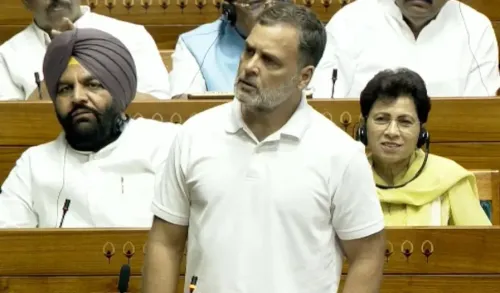
A single word on the floor of the Lok Sabha has ignited one of the sharpest political confrontations of the current parliamentary session. Union Coal and Mines Minister G. Kishan Reddy on Wednesday, July 29, 2026, demanded that Leader of the Opposition Rahul Gandhi tender an unconditional public apology — to the people of India, Prime Minister Narendra Modi, and Union Home Minister Amit Shah — for repeatedly using the word 'idiot' on the floor of the House, which Reddy called 'an insult to the 140 crore people of India.'
The Remark That Crossed the Floor
Lok Sabha maintains a codified list of unparliamentary expressions, enforced by the Speaker, that members are prohibited from using during proceedings. Reddy's statement directly invokes this convention, arguing that Gandhi's language was not merely impolite but a deliberate assault on the dignity of democratic institutions. 'Every word he uttered reflected irresponsibility and a deliberate attempt to undermine the dignity of democratic institutions,' Reddy wrote, framing the episode as a symptom of deeper political dysfunction within the Congress party.
The Jantar Mantar Protest and Modi's Intervention
The BJP minister's statement is anchored in a broader sequence of events. Reddy alleges that Gandhi had first tried to 'exploit the students' agitation for political gains' — a reference to a recent student protest at Jantar Mantar, New Delhi — and was 'rejected by the students themselves.' He then credits Prime Minister Modi with personally intervening to resolve the standoff, engaging with demonstrators 'in the language of Gen-Z' and facilitating a peaceful conclusion. These specific claims about the protest and the PM's role are flagged as unverified in available records and have not been independently confirmed.
Congress 'Bankruptcy' vs. BJP's Majority Mandate
Reddy's statement fits squarely into a pattern the ruling BJP has deployed since its successive general election victories from 2014 onward: framing opposition rhetoric as personal abuse that substitutes for policy argument. 'Unable to come to terms with the Congress party's repeated electoral defeats, its leadership has increasingly relied on personal abuse instead of constructive politics,' Reddy wrote. Congress leaders have historically countered such characterisations by pointing to issues of economic inequality and what they describe as institutional erosion — but in this instance, no immediate Congress response was available at the time of publication.
The Apology Demand and What Follows
The immediate political question is whether the Lok Sabha Speaker will issue a formal ruling on Gandhi's remarks — which would carry procedural weight beyond any party statement. Reddy's demand for an apology to both the Prime Minister and the Home Minister is unusually specific, signalling that the BJP intends to press this issue inside and outside the House. 'Insulting the Prime Minister is, in effect, insulting the democratic verdict of 140 crore Indians,' Reddy stated, elevating a parliamentary word-choice dispute into a question of national mandate.
Whether the Speaker acts, whether Gandhi responds, and how the Congress frames its counter-narrative will determine if this remains a one-day flash or becomes the defining parliamentary moment of the session.
Point of View
Making the Congress appear to be fighting the people rather than the government. The demand for an apology to both the PM and Home Minister — not just the House — is strategically calibrated to keep the story alive beyond the parliamentary session. The unresolved question of a Speaker's ruling gives the BJP a procedural lever; if no ruling comes, the party will continue to litigate this in the public arena. Congress faces a familiar dilemma: any response risks amplifying the original remark, while silence can be read as concession.
NationPress
29 Jul 2026
Frequently Asked Questions
What did Rahul Gandhi say in the Lok Sabha that caused controversy?
According to G. Kishan Reddy 's statement, Rahul Gandhi repeatedly used the word 'idiot' on the floor of the Lok Sabha, which is classified as an unparliamentary expression under House rules. The exact context of the remark has not been independently verified.
Why is Kishan Reddy demanding an apology from Rahul Gandhi?
Reddy argues that using unparliamentary language in Parliament amounts to insulting the dignity of democratic institutions and, by extension, the 140 crore citizens of India who elected their representatives. He has asked Gandhi to apologise to the public, PM Modi , and Home Minister Amit Shah .
What is an unparliamentary expression in the Lok Sabha?
The Lok Sabha maintains a codified list of words and phrases deemed unparliamentary — language considered offensive, disrespectful, or disruptive to House proceedings. The Speaker has the authority to expunge such remarks from the official record and can direct members to withdraw them.
What was the student protest at Jantar Mantar that Kishan Reddy mentioned?
Reddy referenced a recent student agitation at Jantar Mantar, New Delhi , claiming Gandhi tried to exploit it for political gain but was rejected by the students, and that PM Modi personally intervened to bring it to a peaceful resolution. These specific details remain unverified.
Can the Lok Sabha Speaker take action on Rahul Gandhi's remarks?
Yes. The Speaker has the authority to rule on whether specific remarks are unparliamentary, order their expunction from the record, and ask the member concerned to withdraw them. Whether a formal ruling will be issued in this case is the key procedural development to watch.