Kishan Reddy Flags Mine Restoration as Green Blueprint

Synopsis
Union Coal and Mines Minister G. Kishan Reddy highlighted an Australian example of eco-friendly mine-land restoration on October 28, 2026, tagging the Ministries of Mines and Coal and India's Canberra mission — signalling India's intent to benchmark global best practices in mine closure.
Key Takeaways
Union Coal and Mines Minister G.
Kishan Reddy posted on October 28, 2026 praising eco-friendly restoration of old mine lands.
The post tagged the High Commission of India in Canberra , placing the example in an India-Australia context.
India's National Mineral Policy 2019 mandates scientific mine closure and progressive rehabilitation by lease holders.
The Mines and Minerals (Development and Regulation) Act has been progressively amended to tighten end-of-life restoration obligations.
The Ministry of Coal and Ministry of Mines are under growing pressure to deliver visible, on-ground restoration outcomes beyond paperwork compliance.
A potential India-Australia bilateral working group on rehabilitation technology remains a key development to watch.
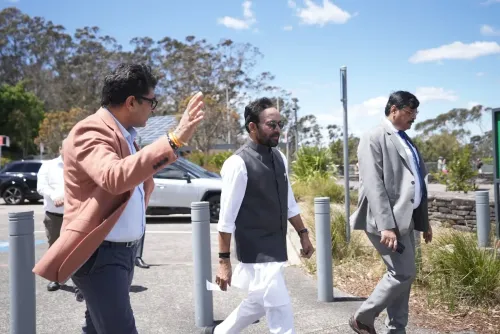
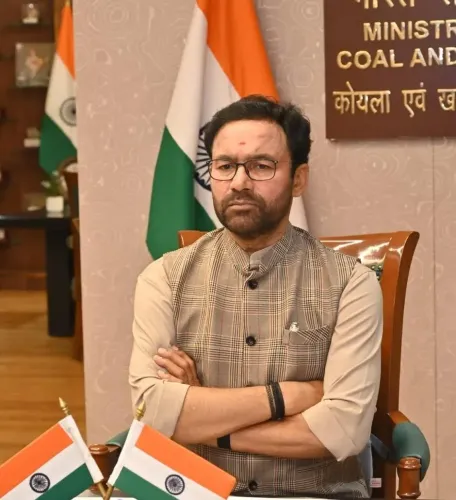
What if the scars left by decades of mining could be turned back into thriving landscapes? Union Coal and Mines Minister G. Kishan Reddy posted on X on Wednesday, October 28, 2026, sharing images of a restored former mining site and calling it a compelling example of how exhausted mine lands can be rehabilitated in an environmentally responsible way.
Posting in Telugu, the Minister wrote: 'పాత మైనింగ్ భూములను పర్యావరణ హితంగా, ఎంత చక్కగా పునరుద్ధరించవచ్చో ఇదొక మంచి ఉదాహరణ!' — 'This is a fine example of how old mining lands can be restored in an environmentally friendly way!' The post tagged the Ministry of External Affairs, the Ministry of Mines, the Ministry of Coal, and the High Commission of India in Canberra, pointing clearly toward an Australia-India context for the images shared.
Australia as a Living Classroom for Indian Mine Closure
The Canberra tag is the telling detail here. Australia — one of the world's largest mining economies — has accumulated decades of experience in progressive mine rehabilitation, turning open-cut pits and tailings zones into wetlands, forests, and agricultural land. By publicly surfacing an Australian example, Kishan Reddy is signalling that India's mine-closure reform agenda is actively drawing on international best practice, not just domestic policy drafts.
India's own framework is mid-evolution. The National Mineral Policy 2019 mandated scientific mine closure, requiring mining lease holders to submit progressive rehabilitation plans and set aside financial assurances for end-of-life restoration. Amendments to the Mines and Minerals (Development and Regulation) Act have progressively tightened these obligations, with the Indian Bureau of Mines the key regulator overseeing compliance.
The Scale of the Challenge India Still Faces
India carries a substantial legacy of abandoned and exhausted mines — opencast coal pits, iron ore quarries, and limestone excavations — whose environmental footprint falls hardest on the communities living around them. Degraded soil, disrupted drainage, and lost forest cover are the typical inheritance. The Ministry of Coal and Ministry of Mines have both been under pressure to move beyond compliance paperwork toward visible, on-ground restoration outcomes.
Four images in the Minister's post appear to document a site that has already made that transition — green cover where bare overburden once sat. The visual argument is deliberate: show, don't tell.
What the Australia Connection Could Unlock
A bilateral working group on rehabilitation technology between India and Australia — two major mining economies with a growing strategic partnership — remains a logical next step that observers are watching for. Australian companies and public agencies have pioneered techniques in landform engineering, native species reseeding, and long-term monitoring that Indian regulators and lease holders could adapt at scale.
The Minister's post, brief as it is, carries a policy signal: mine closure is no longer a back-office compliance box — it is becoming a reputational and diplomatic asset India wants to be seen taking seriously.
Point of View
A peer mining economy, as a benchmark rather than a distant ideal. It places India's evolving MMDR framework in a bilateral context just as the India-Australia Comprehensive Economic Cooperation Agreement deepens resources-sector engagement. The tagging of both the Mines and Coal ministries alongside the Canberra mission suggests coordinated diplomatic signalling, not a casual repost. If this translates into a formal technology-transfer or working-group outcome, it could accelerate adoption of advanced rehabilitation techniques by Indian lease holders at a scale the current domestic regulatory push alone has struggled to achieve.
NationPress
28 Oct 2026
Frequently Asked Questions
What did G. Kishan Reddy post about mine restoration?
On October 28, 2026, Union Coal and Mines Minister G. Kishan Reddy shared four images of a restored former mining site, calling it 'a fine example of how old mining lands can be restored in an environmentally friendly way.' The post tagged India's High Commission in Canberra, indicating an Australia connection.
What is India's policy on mine closure and rehabilitation?
India's National Mineral Policy 2019 mandates scientific mine closure, requiring mining lease holders to submit progressive rehabilitation plans and deposit financial assurances. The Mines and Minerals (Development and Regulation) Act has been amended repeatedly to strengthen these obligations, with the Indian Bureau of Mines overseeing compliance.
Why did Kishan Reddy tag the High Commission of India in Canberra?
The Canberra tag suggests the restored mining site shown in the post is located in Australia, positioning it as an international best-practice example India is looking to for its own mine-land rehabilitation efforts.
What is the India-Australia mining cooperation context?
Australia is one of the world's largest mining economies with decades of experience in progressive mine rehabilitation. India and Australia have a growing strategic and economic partnership, and a bilateral working group on rehabilitation technology is seen as a potential next step by observers.
What challenges does India face in mine closure?
India has a significant legacy of abandoned and exhausted mines — coal pits, iron ore quarries, and limestone excavations — leaving behind degraded soil, disrupted drainage, and deforested land. Moving from compliance paperwork to visible on-ground restoration remains the central challenge for the Coal and Mines ministries.