Kishan Reddy hails PM Modi's advance Diwali tax devolution to states
Synopsis
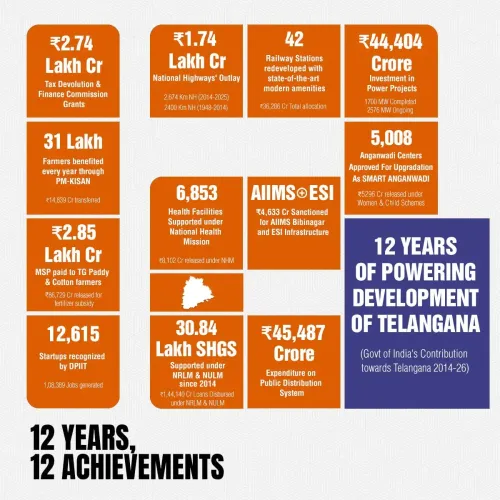
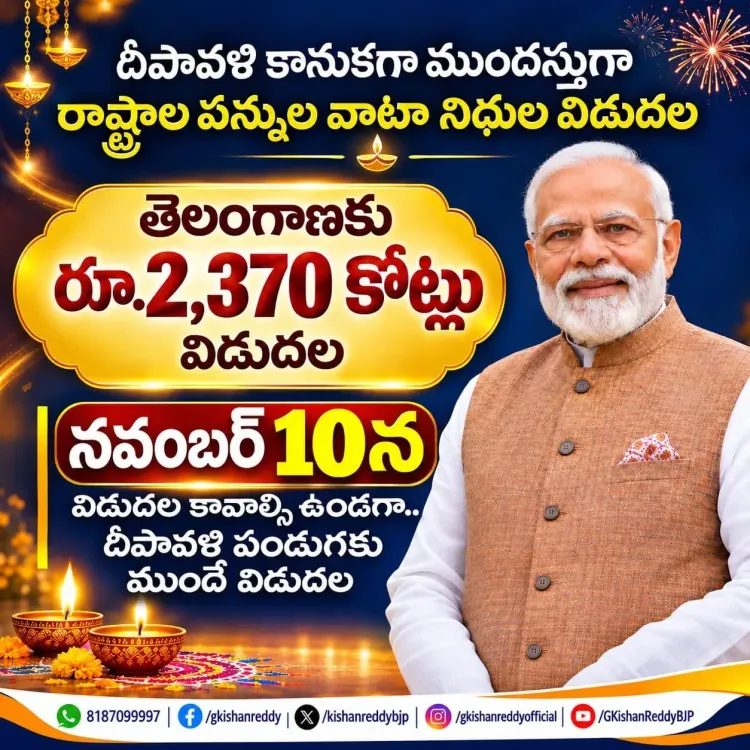
The Centre released ₹1,09,019 crore in advance state tax devolution on 5 November 2026, ahead of Diwali, with Telangana receiving ₹2,370 crore and Andhra Pradesh ₹4,597 crore. Union Minister G. Kishan Reddy praised PM Modi for the early release as an expression of cooperative federalism.
Key Takeaways
The Centre released ₹1,09,019 crore in states' tax devolution on 5 November 2026 , ahead of the scheduled 10 November date.
The advance was timed to coincide with the Diwali festival to ease state treasury liquidity.
Telangana received ₹2,370 crore and Andhra Pradesh received ₹4,597 crore from the national release.
Under the 15th Finance Commission formula, states collectively receive 41 percent of the central divisible tax pool in monthly instalments.
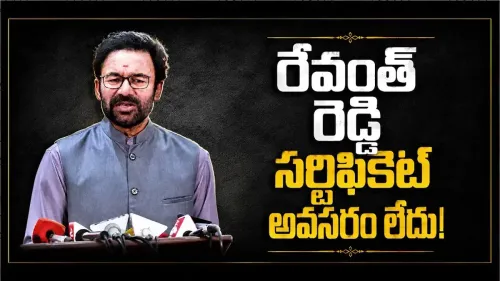
Kishan Reddy praised PM Narendra Modi for the gesture, framing it as an expression of federalism 'in thought, word, and deed.' The move carries political significance for Reddy as BJP's Telangana state president , with the state currently under Congress governance.
Days before the scheduled date, the Centre released a combined ₹1,09,019 crore in states' tax devolution on 5 November 2026 — ahead of the Diwali festival — a move that Union Coal and Mines Minister G. Kishan Reddy publicly welcomed as an act of fiscal generosity rooted in the spirit of cooperative federalism.
Writing in Telugu on X, Reddy said the funds — originally due on 10 November — were released early 'on the occasion of the Diwali festival to provide financial breathing room to states.' He singled out the allocations to the two Telugu-speaking states: Telangana received ₹2,370 crore and Andhra Pradesh received ₹4,597 crore from the total national release.
What advance devolution means for state treasuries
Under the formula set by the 15th Finance Commission, states collectively receive 41 percent of the divisible pool of central taxes, disbursed in monthly instalments. The timing matters enormously: festival seasons drive up state expenditures on welfare payments, public works wages, and administrative disbursements — an advance release, even by a few days, frees up liquidity precisely when it is needed most.
For Telangana and Andhra Pradesh, both heavily reliant on central transfers to bridge fiscal gaps, the early infusion arriving ahead of Diwali carries direct operational significance — from pending salary cycles to social-sector scheme payments.
Reddy frames it as federal goodwill, not routine accounting
Kishan Reddy's post went beyond noting the numbers. He praised Prime Minister Narendra Modi for demonstrating 'samakha spoorti ni manasa, vacha, karmana' — 'the spirit of federalism in thought, word, and deed' — a pointed rhetorical framing that positions the advance release as a values statement about Centre-state relations, not merely a calendar adjustment.
That framing reflects a consistent BJP communications pattern: advance devolution releases ahead of major festivals — Diwali, Dussehra, Eid — are periodically flagged by Union Ministers as evidence that the Centre treats states as partners, not subordinates. The gesture costs the Centre nothing in fiscal terms (the money was due in days regardless), but the optics of arriving before the festival carry political weight, particularly in states where BJP is in opposition and looking to build goodwill.
Reddy, who serves as BJP's Telangana state president in addition to his Union portfolio, has a direct stake in how central transfers to Telangana are perceived — the state is currently governed by the Congress-led government, and the BJP is keen to be seen as the party that ensured the funds arrived on time and then some.
The ₹1.09 lakh crore picture
The ₹1,09,019 crore released represents a single monthly instalment of central tax devolution distributed across all states and union territories with legislatures. At 41 percent of the divisible pool — the highest share ever recommended by a Finance Commission — the monthly quantum reflects India's growing direct and indirect tax collections, which have been running at record levels in recent fiscal years.
With the 16th Finance Commission now deliberating its award for the post-2026 period, states are watching closely to see whether the devolution share holds, rises, or faces pressure from demands for a larger centrally-sponsored-scheme pool. Every early release, and every ministerial statement around it, feeds into that larger negotiation over fiscal federalism's future architecture.
Point of View
Amplifying this in Telugu carries a dual purpose: it signals BJP's concern for Telangana's finances while the state is under Congress rule, and it reinforces the party's cooperative-federalism narrative ahead of the 16th Finance Commission's award. The real test of federal commitment, however, lies not in the timing of a cheque but in whether the devolution share itself holds up in the next Commission cycle — a far higher-stakes question that this week's announcement quietly previews.
NationPress
6 Nov 2026
Frequently Asked Questions
Why did the Centre release state tax devolution early ahead of Diwali 2026?
The Centre released the monthly instalment of states' tax devolution on 5 November 2026 — ahead of the scheduled 10 November date — to provide state governments with additional liquidity during the Diwali festival season, when public expenditures typically spike.
How much did Telangana and Andhra Pradesh receive in the Diwali advance devolution?
Telangana received ₹2,370 crore and Andhra Pradesh received ₹4,597 crore from the total national release of ₹1,09,019 crore.
What is central tax devolution and how is it calculated?
Central tax devolution is the constitutionally mandated transfer of a share of central government tax revenues to states. The 15th Finance Commission recommended that states collectively receive 41 percent of the divisible pool of central taxes for the period 2021-26, released in monthly instalments.
What did G. Kishan Reddy say about the Diwali tax release?
Union Minister G. Kishan Reddy praised PM Narendra Modi for the early release, calling it an expression of cooperative federalism 'in thought, word, and deed,' and expressed happiness at the financial relief provided to state governments during the festival season.
What is the 15th Finance Commission's devolution share for states?
The 15th Finance Commission recommended a devolution share of 41 percent of the central divisible tax pool to states for the period 2021 to 2026 — the highest share ever recommended by a Finance Commission at the time of its award.