Kishan Reddy Hails SC Upholding Danam Disqualification

Synopsis
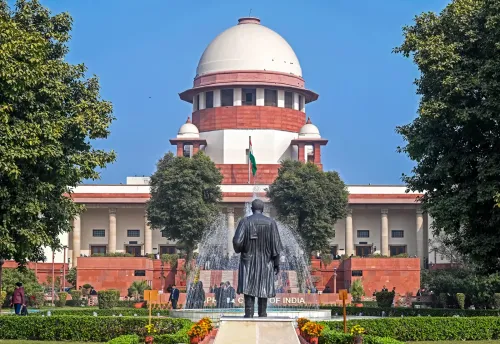
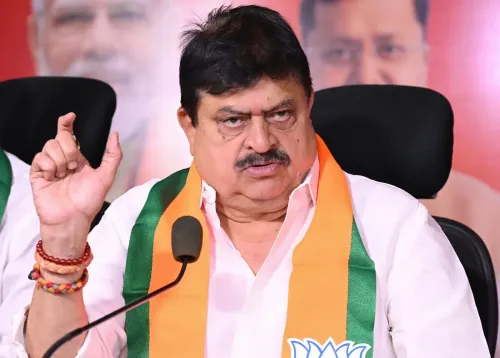
The Supreme Court upheld the Telangana High Court's disqualification of MLA Danam Nagender for contesting Lok Sabha polls on a rival party ticket while holding his assembly seat. Union Minister G. Kishan Reddy welcomed the ruling, blamed Congress and BRS equally, and declared BJP's victory certain in the impending Khairatabad by-election.
Key Takeaways
The Supreme Court of India upheld the Telangana High Court ruling disqualifying Danam Nagender from the Khairatabad assembly seat under the Tenth Schedule's anti-defection provisions.
Nagender had won the assembly seat on one party's symbol but contested the Lok Sabha elections as a candidate of a rival party while still serving as MLA — deemed a violation of the anti-defection law.
Kishan Reddy publicly welcomed the verdict on September 24, 2026 , calling it a rebuke to both Congress and BRS for enabling the defection.
The 52nd Constitutional Amendment of 1985 inserted the Tenth Schedule to prevent legislators from defecting post-election without losing their seats.
A by-election to the Khairatabad assembly constituency in Hyderabad, Telangana is now expected; Kishan Reddy predicted a certain BJP victory.
Telangana has seen repeated BRS–Congress–BJP realignments since the state's formation in 2014 , making defection disputes a recurring constitutional flashpoint.
India's Supreme Court has handed a sharp constitutional rebuke to political defection — and Union Coal and Mines Minister G. Kishan Reddy wasted no time in calling it exactly that. On Thursday, September 24, 2026, the BJP's Telangana state president welcomed the apex court's decision upholding the disqualification of Danam Nagender from the Khairatabad assembly seat, framing it as a slap — his word was 'cheek-slap' (chenapettu) — to both Congress and BRS.
What the Supreme Court Decided — and Why It Matters
The apex court upheld the Telangana High Court's earlier ruling disqualifying Danam Nagender, a sitting MLA, under India's anti-defection law. The core finding: Nagender had won his assembly seat on one party's symbol, then — while still holding that seat — contested the Lok Sabha elections as a candidate of a rival party. That, the courts held, was a textbook violation of the Tenth Schedule of the Constitution.
The Tenth Schedule, inserted by the 52nd Constitutional Amendment of 1985, was designed to stop exactly this: legislators switching allegiances mid-term and betraying the mandate voters gave them. Kishan Reddy quoted the principle plainly — 'winning an MLA seat on one party's symbol and then contesting the Lok Sabha election as another party's candidate, while continuing to hold that post, is against the anti-defection law.'
Congress and BRS in the Dock — Kishan Reddy's Case
The minister's post does not spare either opposition party. He argues that Congress opened the door to defection — and BRS walked two steps further down the same road, together making a mockery of the public mandate (prajaabhishtam apahaasyam). In his framing, both parties share equal blame for the constitutional breach: one invited defectors, the other enabled the subsequent Lok Sabha candidacy.
The political geography matters here. Telangana has seen a churning triangle of loyalty shifts among BRS, Congress, and BJP since the state was carved out in 2014. The BRS — which governed the state from 2014 to 2023 — lost power to Congress in the assembly elections, and the resulting realignment has triggered a series of defection disputes, of which the Nagender case is the most prominent to reach the Supreme Court.
Khairatabad By-Election: BJP's Victory Claim
With Nagender's disqualification confirmed, the Khairatabad assembly constituency in Hyderabad now heads toward a by-election. Kishan Reddy is already planting the flag: 'BJP's victory in the upcoming by-election is certain. Satyameva Jayate!' — truth alone triumphs.
That is, of course, a political prediction, not a judicial finding. But the confidence speaks to BJP's calculation that the Supreme Court verdict has set the narrative firmly against Congress and BRS heading into the poll. Khairatabad voters, the minister says, will now deliver their own verdict on the two parties' conduct.
Indian courts have upheld anti-defection provisions in multiple states wherever legislators have contested elections under a rival banner while retaining their assembly seat. The Nagender case now adds Telangana to that line of precedents — and sets the stakes for whoever contests Khairatabad next.
A Supreme Court that has again reinforced the Tenth Schedule, a disqualified MLA, two opposition parties on the defensive, and a by-election looming: Khairatabad is about to become one of Telangana's most-watched contests of the year.
Point of View
Which is the junior force in Telangana's assembly arithmetic, the verdict is a reputational dividend — it allows the party to position itself as the defender of electoral integrity against both the ruling Congress and the weakened BRS. The Khairatabad by-election will be an early test of whether that framing translates into votes. More broadly, the ruling continues a national judicial trend of strictly reading the Tenth Schedule against legislators who straddle two party loyalties simultaneously.
NationPress
24 Sept 2026
Frequently Asked Questions
Why was Danam Nagender disqualified from the Khairatabad assembly seat?
Danam Nagender was disqualified because, while serving as the sitting MLA for Khairatabad on one party's symbol, he contested the Lok Sabha elections as a candidate of a different party — a direct violation of India's anti-defection law under the Tenth Schedule of the Constitution. The Telangana High Court ordered his disqualification and the Supreme Court upheld that ruling.
What is India's anti-defection law and which constitutional provision covers it?
India's anti-defection law is contained in the Tenth Schedule of the Constitution, inserted by the 52nd Constitutional Amendment Act of 1985. It disqualifies legislators who voluntarily give up membership of the party on whose ticket they were elected, or who vote against the party's directions, protecting the mandate that voters gave to a specific party symbol.
When will the Khairatabad by-election be held?
The exact date of the Khairatabad by-election has not been officially announced yet. The seat fell vacant following the Supreme Court's confirmation of Danam Nagender's disqualification, making a by-poll constitutionally necessary. The Election Commission of India will notify the schedule in due course.
Why did G. Kishan Reddy blame both Congress and BRS in the Danam Nagender case?
Kishan Reddy argued that Congress enabled defection by opening its doors to legislators elected on other party tickets, while BRS took it further by facilitating the Lok Sabha candidacy of the sitting MLA under a rival banner. He held both parties equally responsible for subverting the public mandate that originally elected Nagender.
What is the political significance of the Khairatabad by-election for BJP in Telangana?
Khairatabad is a key Hyderabad constituency and the by-election offers BJP — currently in opposition in Telangana — a chance to gain a foothold in the state assembly. Party president Kishan Reddy has publicly predicted a BJP win, framing the contest as voters' opportunity to punish Congress and BRS for the defection controversy.