CM Fadnavis visits drought-hit Washim, promises full farmer aid
Synopsis
Maharashtra Chief Minister Devendra Fadnavis visited Jaulka village in Washim's Malegaon taluka to meet farmers hit by rainfall failure, assessed crop damage on the ground, and pledged comprehensive state assistance to the agrarian communities of drought-prone Vidarbha.
Key Takeaways
CM Devendra Fadnavis visited Jaulka, Malegaon taluka, Washim district on 24 September 2026 to meet rain-affected farmers.
Farmers shared grievances over crop losses caused by insufficient monsoon rainfall this kharif season.
Washim district is in the Vidarbha region, chronically vulnerable to rainfall deficits that damage cotton and soybean crops.
Fadnavis assured farmers of 'all possible help' from the state government.
The state revenue department is expected to conduct formal crop-loss surveys to trigger drought declarations and compensation disbursements.
During his 2014–2019 tenure, Fadnavis had launched Jalyukt Shivar Abhiyan to address Maharashtra's recurring drought vulnerability.
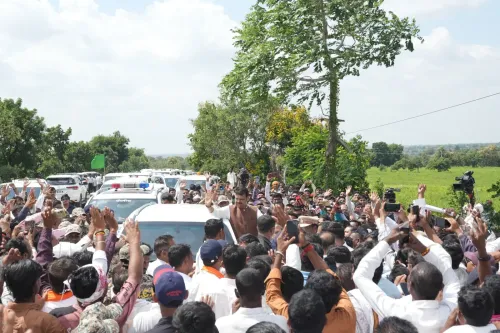
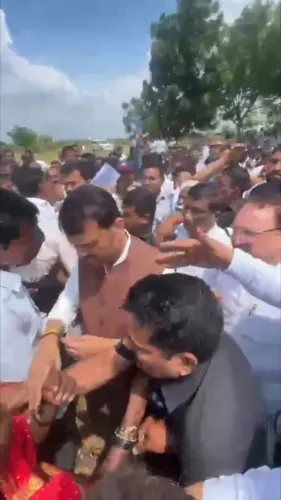
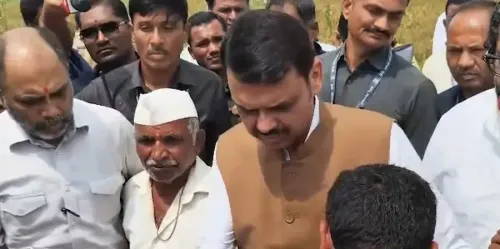
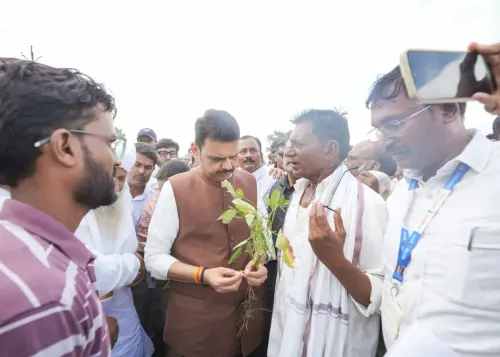
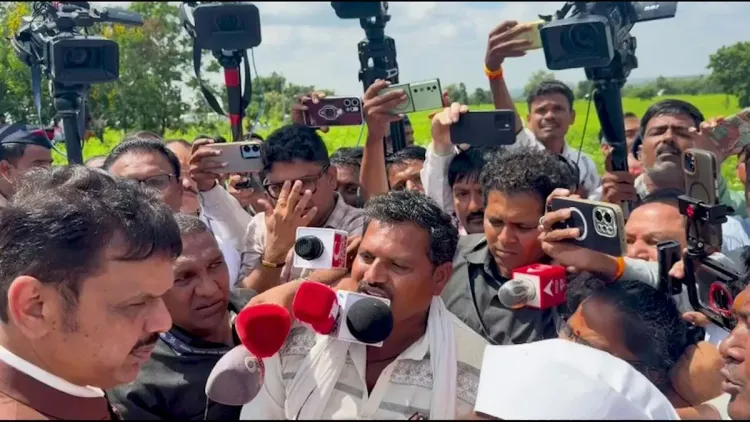
Rainfall has deserted Washim district this season — and on Thursday, 24 September 2026, Maharashtra Chief Minister Devendra Fadnavis travelled to Jaulka village in Malegaon taluka to hear the distress firsthand, sitting with farmers whose kharif crop hopes are withering in dry fields.
Posting on X after the interaction, Fadnavis wrote in Marathi: 'Washim jilhyatil Malegaon talukytil Jaulka ya thikaani jamalelya shetkari bandhavanchya vytha janun ghetlya' — 'I listened to the grievances of farmer brothers gathered at Jaulka in Malegaon taluka of Washim district. I took stock of the damage caused to farmers by the failure of rain and assured them of all possible help.'
Why Washim sits at the heart of Maharashtra's rain grief
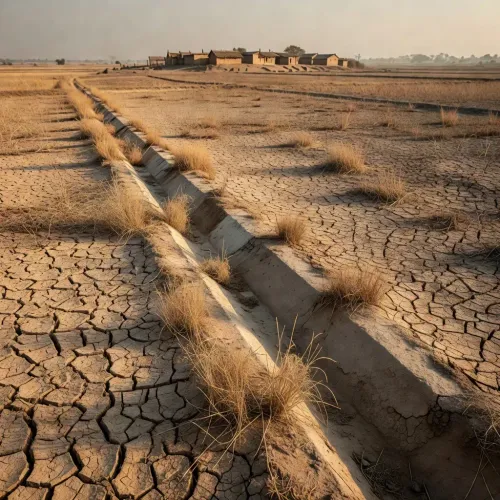
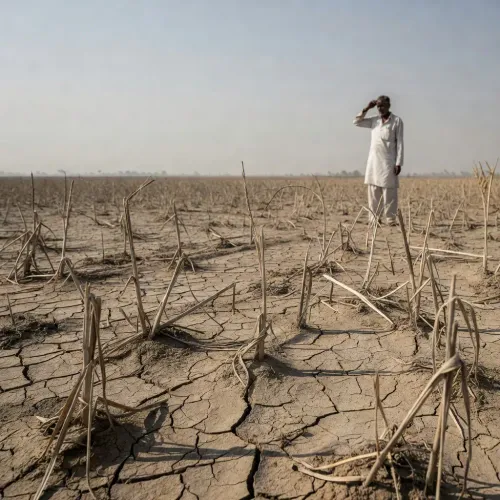
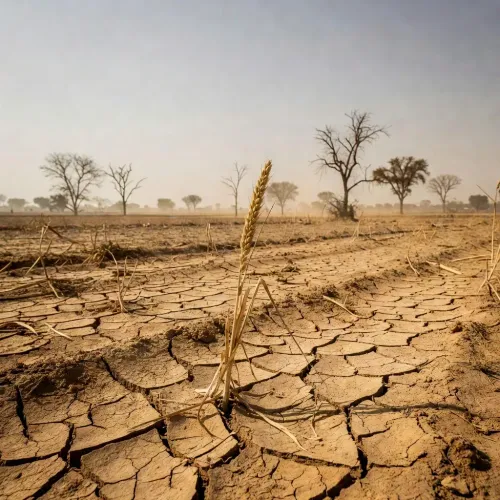
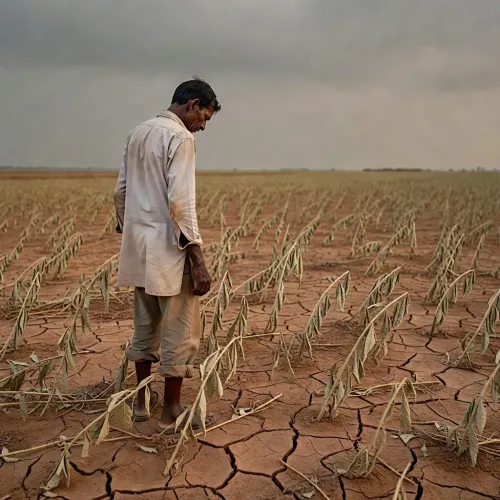
Washim district lies in the Vidarbha region of eastern Maharashtra — a belt that has recurrently borne the brunt of deficient monsoons, failed kharif harvests, and the agrarian despair that follows. Cotton and soybean, the twin pillars of Vidarbha farming, are acutely sensitive to erratic rainfall, and a dry spell during the critical sowing-to-flowering window can wipe out an entire season's investment overnight.
The broader Vidarbha-Marathwada belt has seen state leaders conduct field visits for damage assessment year after year, with relief packages combining immediate ex-gratia payments, input subsidies, and crop insurance disbursements under Pradhan Mantri Fasal Bima Yojana. The pattern is familiar; the stakes are always real.
Fadnavis's track record on agrarian drought response
During his first term as Chief Minister (2014–2019), Fadnavis launched the Jalyukt Shivar Abhiyan — an ambitious watershed and water-conservation programme aimed at making Maharashtra permanently drought-proof by deepening streams, building farm ponds, and channelling runoff into groundwater. The scheme was credited with improving water availability in thousands of villages, though critics noted uneven implementation across districts.
Tuesday's field visit signals that the state intends to move beyond administrative assessment: a Chief Minister walking into a drought-stressed village sends a message — to farmers that help is coming, and to the bureaucracy that the file cannot stay on a desk.
What comes next: revenue surveys and compensation timelines
The immediate next step will fall to the state revenue department, which must conduct formal crop-loss surveys to declare affected mandals as drought-hit — a legal threshold that unlocks direct input subsidies and compensation payments to registered farmers. Speed of that survey determines whether relief reaches fields before the next crop cycle begins.
Fadnavis's public assurance of 'sarvtopari madatichi' — 'all possible help' — now sets an expectation farmers will track closely. In Vidarbha, promises made on dusty village grounds have a way of becoming political benchmarks.
Point of View
The Chief Minister compresses the distance between the state and suffering, reinforcing his identity as a hands-on administrator. The visit also pre-empts opposition narratives before the revenue department completes its survey; the clock on his public promise has now started. Whether the assurance becomes a template for a faster, technology-driven compensation pipeline — or remains a field visit on record — will define how this moment is remembered come the next harvest.
NationPress
24 Sept 2026
Frequently Asked Questions
Why did CM Fadnavis visit Washim district?
CM Devendra Fadnavis visited Jaulka village in Malegaon taluka of Washim district on 24 September 2026 to meet farmers affected by poor monsoon rainfall this kharif season, assess crop damage, and assure them of state relief.
Which region is Washim district in and why is it drought-prone?
Washim district is in the Vidarbha region of eastern Maharashtra, which recurrently faces deficient monsoons. Cotton and soybean — the primary crops here — are highly sensitive to rainfall failure, making the region chronically vulnerable to agrarian distress.
What relief can drought-hit farmers in Maharashtra expect?
After a field visit and damage assessment, the state revenue department typically declares affected areas drought-hit, which unlocks input subsidies, ex-gratia payments, and crop insurance disbursements under central and state schemes.
What is Jalyukt Shivar Abhiyan and is it relevant here?
Jalyukt Shivar Abhiyan was a flagship watershed and water-conservation programme launched by the Fadnavis government in 2015 to drought-proof Maharashtra through farm ponds and stream deepening. Its legacy is relevant context for how his administration has historically approached Vidarbha's water crisis.
What happens after the Chief Minister's assurance to Washim farmers?
The immediate next step is a formal crop-loss survey by the Maharashtra revenue department. Once surveyed mandals are declared drought-hit, compensation and input subsidies can be disbursed to registered farmers.