CM Bhupendrabhai Patel Holds SWAGAT Grievance Session in Gandhinagar
Synopsis
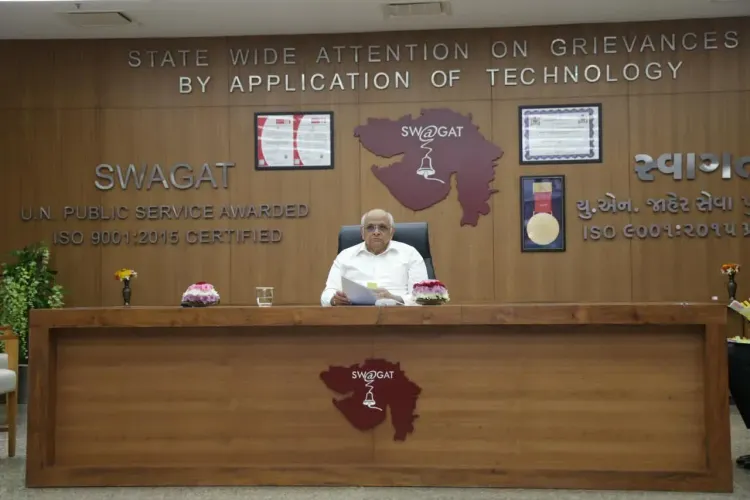
Gujarat CM Bhupendrabhai Patel chaired a SWAGAT Online Programme session in Gandhinagar on 24 September 2026, hearing citizen grievances and directing district officials to expedite resolutions under the Seva Sankalp Abhiyan campaign.
Key Takeaways
CM Bhupendrabhai Patel personally chaired the SWAGAT Online Programme session in Gandhinagar on 24 September 2026 .
Petitioner citizens presented their grievances directly to the Chief Minister during the session.
District administrators and relevant officers joined the programme online and received direct instructions from the CM.
The session was held under the Seva Sankalp Abhiyan , Gujarat's campaign for swift and committed public-service delivery.
SWAGAT was launched in the early 2000s as one of India's pioneering technology-driven grievance redressal systems.
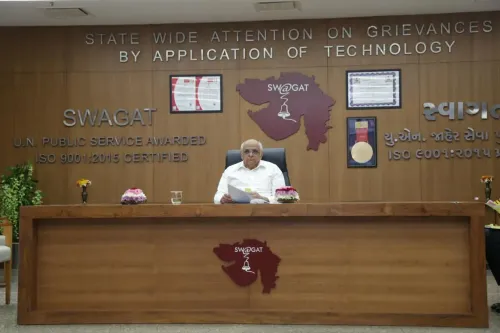
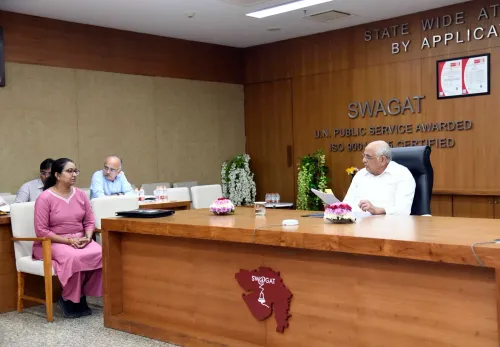
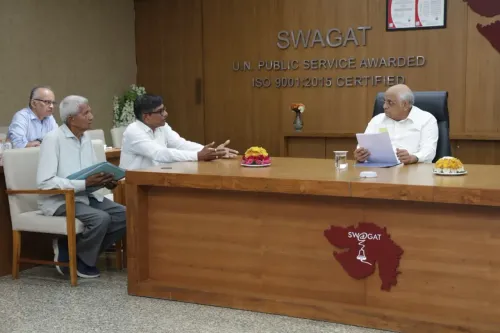
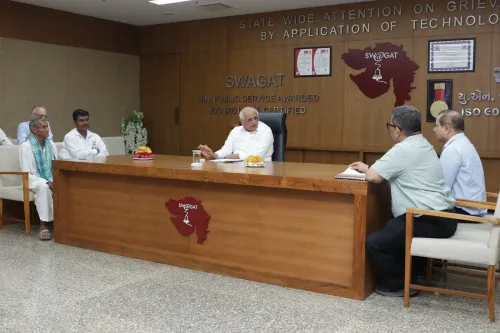
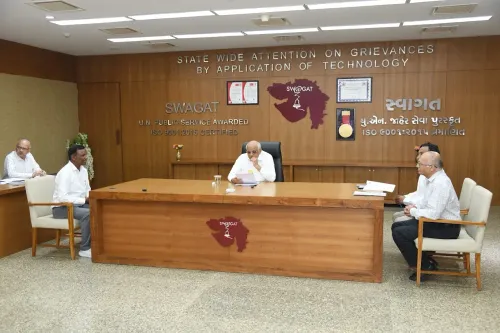
Citizen complaints reached the Chief Minister's desk directly on Thursday, 24 September 2026, as Gujarat Chief Minister Bhupendrabhai Patel chaired a session of the SWAGAT Online Programme in Gandhinagar — listening to petitioners in person while issuing real-time directives to district officials connected via video link to clear the backlog of public grievances.
The Chief Minister's Office confirmed that CM Patel heard representations from applicant citizens and issued necessary instructions to district administrators and concerned officers online, accelerating momentum under the Seva Sankalp Abhiyan — the state's active campaign for swift, committed public-service delivery.
SWAGAT: Gujarat's two-decade-old tech bet on accountable governance
SWAGAT — which stands for State-Wide Attention on Grievances by Application of Technology — was launched in the early 2000s as one of India's earliest and most replicable e-governance experiments. The platform was designed to cut through bureaucratic layers by routing citizen grievances directly to the Chief Minister's level, with district and taluka officers held accountable for resolution on the spot. It earned Gujarat a reputation as a pioneer in technology-driven public administration and has since been studied and adapted by other Indian states.
The session held today reflects the platform's enduring architecture: a CM who listens, district machinery that must answer, and a clock ticking on resolution.
Seva Sankalp Abhiyan: the campaign giving SWAGAT a new urgency
Running alongside the SWAGAT infrastructure is the Seva Sankalp Abhiyan, a dedicated campaign that layers a commitment culture on top of the existing grievance machinery. Where SWAGAT provides the channel, the Abhiyan sets the expectation — that problems will not just be heard, but resolved, within defined timelines. CM Patel used today's session explicitly to 'give further momentum' to the campaign, signalling that disposal speed, not merely intake, is the metric being watched from Gandhinagar.
For citizens in Gujarat's districts, the combination means their applications now travel to the state's highest administrative office and back to local officers within a single sitting — a feedback loop that older, paper-based systems could never close this fast.
Point of View
The CM's office is reinforcing a performance culture around resolution speed, not just intake. This fits a broader pattern in which Gujarat positions its e-governance infrastructure as a competitive governance differentiator. The real test, as analysts note, is in the disposal-rate data that emerges after each session — numbers the state has historically highlighted but which independent verification often lags behind.
NationPress
24 Sept 2026
Frequently Asked Questions
What is the SWAGAT Online Programme in Gujarat?
SWAGAT stands for State-Wide Attention on Grievances by Application of Technology. It is Gujarat's long-running e-governance platform, launched in the early 2000s, that allows citizens to present grievances directly to the Chief Minister's level, with district officers held accountable for on-the-spot resolution.
What is the Seva Sankalp Abhiyan?
Seva Sankalp Abhiyan is a Gujarat government campaign focused on timely and committed resolution of public grievances, running alongside existing platforms like SWAGAT to ensure faster service delivery across the state.
Who is Gujarat's Chief Minister in 2026?
Bhupendrabhai Patel has been Gujarat's Chief Minister since September 2021 and continues to oversee the state administration from Gandhinagar.
How does the SWAGAT session work?
During a SWAGAT session, citizen petitioners present their problems to the Chief Minister in person or via the platform, while district administrators and relevant officers join online. The CM issues direct instructions on the spot, creating an immediate accountability loop between state and district levels.
Why is Gujarat's SWAGAT programme considered significant for Indian governance?
Gujarat's SWAGAT programme is considered one of India's earliest and most influential e-governance grievance models. Launched in the early 2000s, it demonstrated that technology could reduce bureaucratic delay by routing citizen complaints directly to the Chief Minister's desk and has since been studied and adapted by other Indian states.