Kishan Reddy highlights NCL's five eco parks in Singrauli mining belt
Synopsis
Union Coal and Mines Minister G. Kishan Reddy has highlighted Northern Coalfields Limited's five eco parks in the Singrauli mining belt, calling them proof that responsible extraction can integrate ecological conservation and serve local communities alongside India's energy security goals.
Key Takeaways
Union Coal and Mines Minister G.
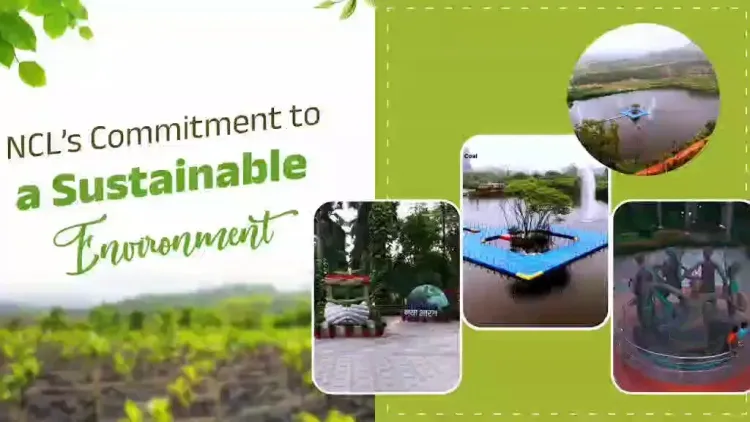
Kishan Reddy highlighted five eco parks developed by Northern Coalfields Limited (NCL) across its Singrauli mining areas.
NCL is a subsidiary of Coal India Limited operating opencast mines in the Singrauli coalfield across Madhya Pradesh and Uttar Pradesh .
The eco parks promote green spaces, recreation and eco-tourism while integrating ecological conservation into active mining operations.
The Ministry of Coal set up a Sustainable Development Cell in 2019-20 to oversee mine reclamation and afforestation across Coal India subsidiaries.
The initiative is framed as part of the Modi government's vision of balancing energy security with environmental stewardship and India's climate commitments.
Future scrutiny will focus on biodiversity metrics at the five eco parks and whether similar standards are applied to new mining leases.
In one of India's most intensively mined landscapes, green lungs are taking shape. Union Coal and Mines Minister G. Kishan Reddy on Tuesday, November 17 spotlighted Northern Coalfields Limited's (NCL) network of five eco parks across its Singrauli mining areas, calling them a model of responsible mining that weaves ecological conservation directly into extraction operations.
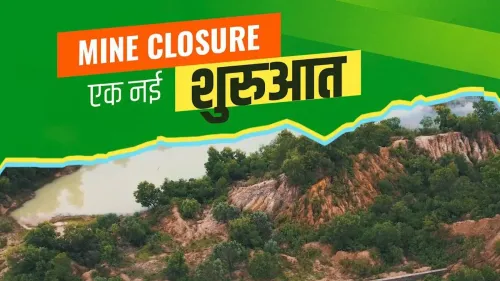
Five green spaces rising from worked-out mines in Singrauli
NCL, a subsidiary of Coal India Limited operating opencast mines in the Singrauli coalfield straddling Madhya Pradesh and Uttar Pradesh, has developed these eco parks to serve local communities with green spaces, recreation and eco-tourism. The minister framed the initiative as proof that energy production and environmental stewardship need not be in conflict — a message that carries real weight in a district long defined by its industrial skyline.
Reddy noted the parks are 'promoting green spaces, recreation and eco-tourism while integrating ecological conservation into mining operations.' The phrasing is deliberate: rather than treating reclamation as a remedial afterthought, NCL is positioning biodiversity restoration as part of the core operating mandate.
The policy track that made this possible
The groundwork was laid in 2019-20, when the Ministry of Coal established a Sustainable Development Cell to oversee mine reclamation, afforestation and eco-park projects across Coal India's subsidiaries. That institutional architecture has since channelled investment toward land restoration at multiple mining clusters. The Singrauli eco parks are among the most visible outputs of that framework.
The broader pattern reflects a tension India has navigated since 2014 — pushing coal output higher to meet surging electricity demand while honouring international climate commitments and domestic afforestation targets. Successive governments have argued that the two goals are reconcilable if reclamation is built into mining leases from the outset, not bolted on at closure.
What communities and conservationists will be watching
For the local communities of Singrauli — where mining has historically displaced populations and stressed water and air quality — functional eco parks represent a tangible quality-of-life return. For environmental regulators, the test will come in the biodiversity and visitor metrics those parks generate over time, and in whether the Ministry of Coal extends similar conditions to future mining leases across other Coal India subsidiaries.
India's coal sector is not retreating; output targets remain ambitious well into the next decade. The question NCL's eco parks implicitly pose is whether large-scale extraction can leave behind landscapes worth inhabiting — and whether that standard can be replicated at every mine closure across the country.
Point of View
Arriving at a moment when India's coal sector faces scrutiny over its climate credentials. By spotlighting NCL's eco parks, the minister is amplifying the institutional logic of the 2019-20 Sustainable Development Cell — signalling that mine reclamation is now policy orthodoxy, not an optional add-on. The Singrauli belt, historically associated with displacement and pollution, is a symbolically loaded backdrop; progress there carries outsized reputational value. Whether the initiative translates into binding environmental standards for future mining leases will determine if this is structural change or curated optics.
NationPress
17 Nov 2026
Frequently Asked Questions
What are NCL's eco parks in Singrauli?
Northern Coalfields Limited has developed five eco parks across its mining areas in the Singrauli coalfield, offering green spaces, recreation and eco-tourism while integrating ecological conservation into ongoing mining operations.
What is the Ministry of Coal's Sustainable Development Cell?
The Ministry of Coal established a Sustainable Development Cell in 2019-20 to oversee mine reclamation, afforestation and eco-park development across Coal India subsidiaries including NCL.
Where is Northern Coalfields Limited located?
NCL operates opencast mines in the Singrauli coalfield, a region that spans parts of Madhya Pradesh and Uttar Pradesh in central India.
What did G. Kishan Reddy say about responsible mining?
Kishan Reddy stated that responsible mining goes beyond coal production and involves protecting the environment and creating sustainable spaces for communities, citing NCL's eco parks as an example.
How does India balance coal production with environmental goals?
India has directed Coal India subsidiaries to reclaim mined land and develop green spaces, with the approach intensifying after 2014 as the country sought to meet rising electricity demand while honouring climate commitments and afforestation targets.