Kishan Reddy fires back at Rahul Gandhi over E20 fuel claim
Synopsis
Union Minister G. Kishan Reddy publicly rebuked Rahul Gandhi on 8 August 2026, pointing out that the vehicle Gandhi used in a post criticising E20 fuel is itself E20-compatible, and defending India's two-decade ethanol blending programme with detailed policy and economic data.
Key Takeaways
Kishan Reddy posted a detailed rebuttal to Rahul Gandhi 's criticism of India's E20 ethanol fuel policy on 8 August 2026 .
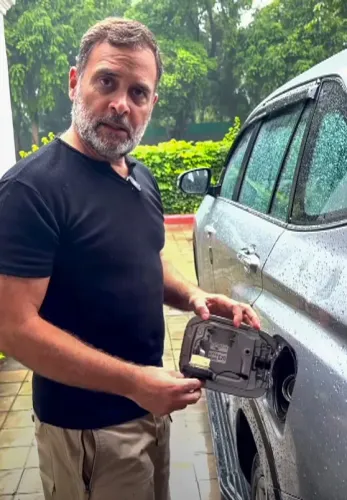
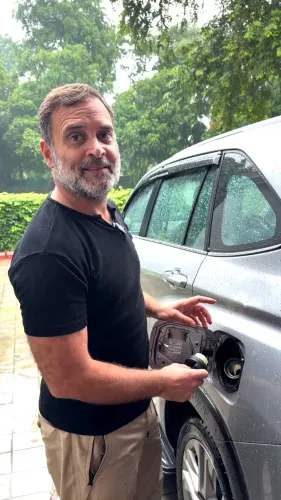
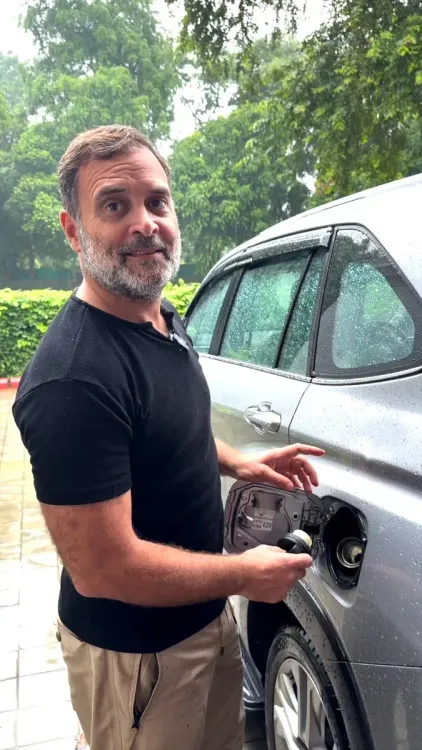
Reddy pointed out that the vehicle featured in Gandhi's own post carries an E20-compatible marking, calling it an irony that undermines Gandhi's argument.
India's ethanol blending programme dates to a pilot in 2001 , a formal announcement in 2004 , and a national E5 rollout in 2006 — spanning multiple governments.
The government claims the programme has delivered more than ₹1.66 lakh crore to farmers and saved over ₹1.97 lakh crore in foreign exchange (figures pending official verification).
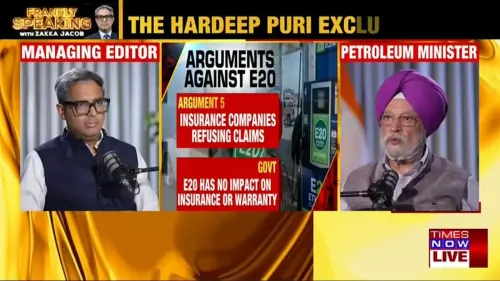
E20 underwent technical validation by ARAI, SIAM, IOCL, IIP and automobile manufacturers before rollout, covering engine durability, emissions and fuel economy.
Reddy framed the programme as Atmanirbhar Bharat in practice, describing farmers as having moved from Annadata to Urjadata — food-givers to energy-givers.
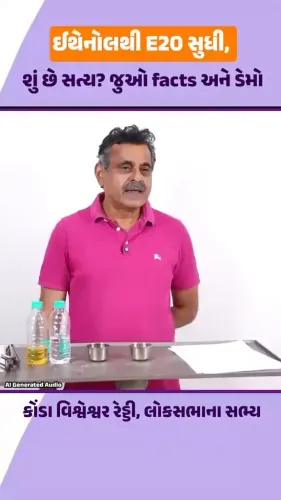
A video meant to attack India's ethanol policy ended up vindicating it. That is the central charge Union Coal and Mines Minister G. Kishan Reddy levelled at Congress leader Rahul Gandhi on Saturday, 8 August 2026, in a detailed rebuttal posted on X — pointing out that the very vehicle featured in Gandhi's anti-E20 post carries an E20-compatible label.
Reddy's opening line set the tone: 'Maybe you and your campaign managers were too busy curating the optics to notice that the very vehicle in your post is E20-compliant.' In Hindi he added, दाल में काला नहीं... आपके ट्वीट में ही तथ्य गायब हैं — ('There is no conspiracy here... the facts are simply missing from your own tweet.')
Twenty-plus years in the making — not an overnight experiment
Reddy traced India's ethanol-blending journey back to a pilot programme in 2001, a formal policy announcement in 2004, and a national E5 rollout in 2006. His argument: the programme pre-dates any single government, and the NDA administration after 2014 inherited a framework that existed even during the UPA era — then scaled it into a national mission by expanding feedstock options, building infrastructure, and pulling farmers into the energy economy.
The technical groundwork for E20, he noted, involved ARAI (Automotive Research Association of India), SIAM, IOCL, IIP, automobile manufacturers and independent experts — covering engine durability, material compatibility, corrosion resistance, drivability, emissions and fuel economy before a single litre reached the pump.
The numbers Gandhi's post did not mention
Reddy cited a set of programme outcomes — flagged here as the government's stated figures, pending official Ministry of Petroleum verification. According to his post, the ethanol blending programme has channelled more than ₹1.66 lakh crore directly to farmers, saved over ₹1.97 lakh crore in foreign exchange, substituted around 316 lakh metric tonnes of crude oil imports, and cut approximately 952 lakh metric tonnes of CO₂ emissions.
These figures, if confirmed, represent one of the more consequential intersections of agricultural policy and energy security in recent Indian economic history. The minister framed it explicitly as Atmanirbhar Bharat in action — Indian farmers' crops displacing imported crude on the fuel forecourt.
Annadata to Urjadata — the political framing
Reddy deployed a phrase that is likely to become a BJP talking point: the Modi Government has helped turn India's Annadata (food-givers) into Urjadata (energy-givers). The formulation links farm income directly to national energy sovereignty — a politically potent combination in a country where both agriculture and fuel prices are electoral flashpoints.
His closing line landed the sharpest blow: 'The E20-compatible vehicle in your own post does a better job of explaining the success of E20 than your political rhetoric does of attacking it.' And in Hindi: काम मोदी सरकार कर रही है, लाभ किसानों और देश को मिल रहा है और आपको फिर भी 'दाल में काला' दिखाई दे रहा है — ('The Modi Government is doing the work, farmers and the country are benefiting, and yet you still see a conspiracy.').
When a politician's own evidence contradicts his argument, the rebuttal practically writes itself — and this time, it came stamped on a fuel-cap label.
Point of View
The minister turns a defensive position into an offensive one, making the Congress leader's communication team the story rather than the policy. The exchange also reveals a broader pattern: as India's ethanol blending programme matures and its metrics become more visible, it is increasingly contested political territory, with both sides claiming credit for the programme's origins. The 'Annadata to Urjadata' framing, if it gains traction, could become a durable BJP slogan linking agriculture and energy security ahead of future election cycles.
NationPress
23 Sept 2026
Frequently Asked Questions
What is E20 fuel and is it safe for all vehicles in India?
E20 is petrol blended with 20 per cent ethanol . It is safe for vehicles certified as E20-compatible by manufacturers and validated by bodies like ARAI ; older, non-compatible vehicles may require assessment before use.
Why did Kishan Reddy criticise Rahul Gandhi over E20?
Reddy pointed out that the vehicle shown in Gandhi's post criticising E20 fuel is itself labelled E20-compatible , arguing that Gandhi's own video contradicts his attack on the policy.
When did India start the ethanol blending programme?
India launched a pilot ethanol blending programme in 2001 , formally announced the policy in 2004 , and rolled out E5 blending nationally in 2006 , with the programme scaling significantly after 2014.
How much money has India's ethanol programme paid to farmers?
The government claims more than ₹1.66 lakh crore has gone directly to farmers under the programme, though these figures are the government's stated numbers and await independent official verification.
What does Atmanirbhar Bharat have to do with ethanol blending?
The government frames ethanol blending as a core pillar of Atmanirbhar Bharat — replacing imported crude oil with domestically produced fuel made from Indian farmers' crops, cutting the foreign exchange outflow on oil imports.