Kishan Reddy: India receives CWG 2030 Flag and Baton
Synopsis
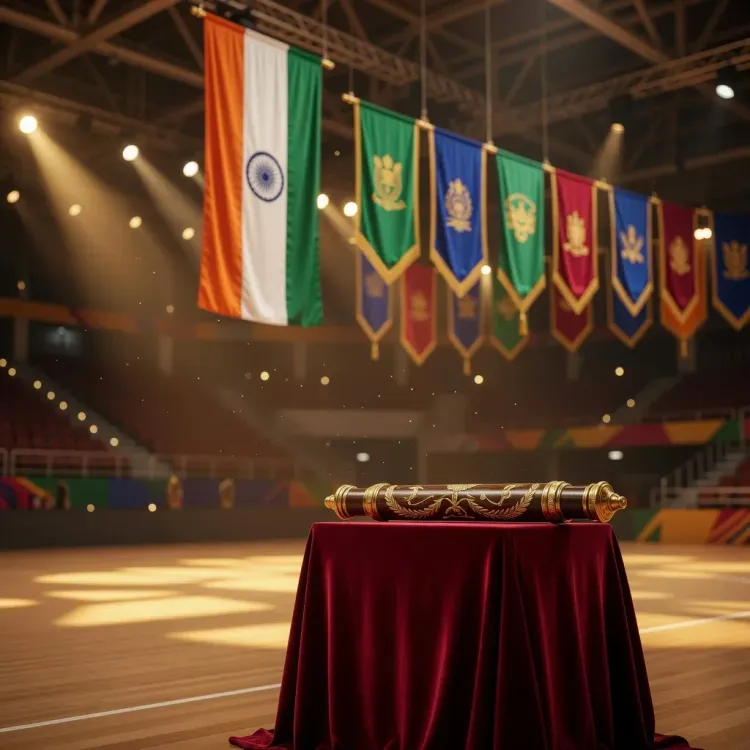
India officially took charge as host of the 2030 Commonwealth Games on 3 August 2026, with Olympic champion Neeraj Chopra, IOA President P.T. Usha, and Gujarat Deputy CM Harsh Sanghavi receiving the Commonwealth Flag and Baton at the formal handover ceremony.
Key Takeaways
India will host the 2030 Commonwealth Games , confirmed by the formal Flag and Baton handover on 3 August 2026 .
Neeraj Chopra (Tokyo 2020 Olympic gold medallist), P.T.
Usha (IOA President), and Gujarat Deputy CM Harsh Sanghavi received the flag on India's behalf.
India previously hosted the Commonwealth Games in New Delhi in 2010 — making 2030 the country's second edition in two decades.
The Khelo India programme , launched in 2017 , forms the grassroots backbone of India's athlete development pipeline leading into 2030.
Kishan Reddy called the handover 'a proud milestone' and cited India's growing stature as a global sporting nation.
Host-city decisions, venue upgrades, and budget provisions for CWG 2030 are expected in forthcoming Union Budgets and sports ministry releases.
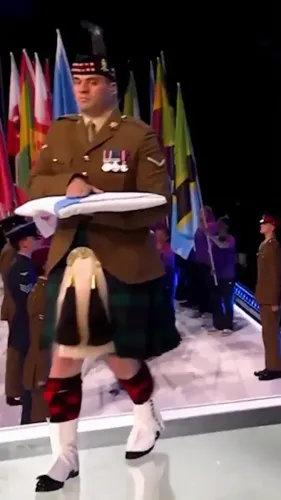
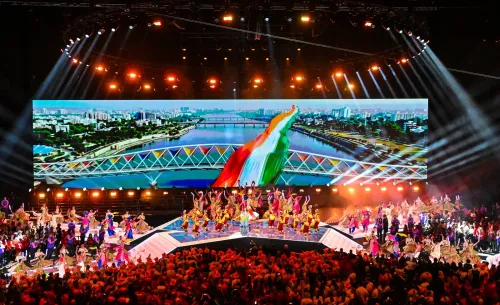
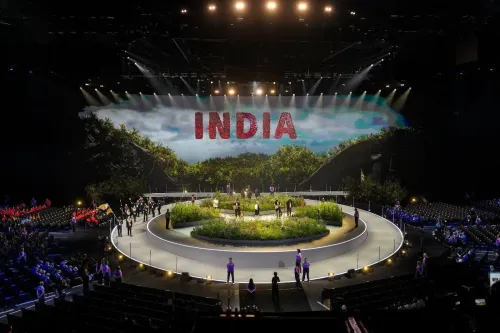
The baton has passed — and India is ready to run with it. On Monday, 3 August 2026, Union Coal and Mines Minister G. Kishan Reddy hailed a landmark moment in Indian sport as the country formally received the Commonwealth Games Flag and Baton, signalling that India will host the 2030 Commonwealth Games.
Chopra, Usha, and Sanghavi carry the flag for India
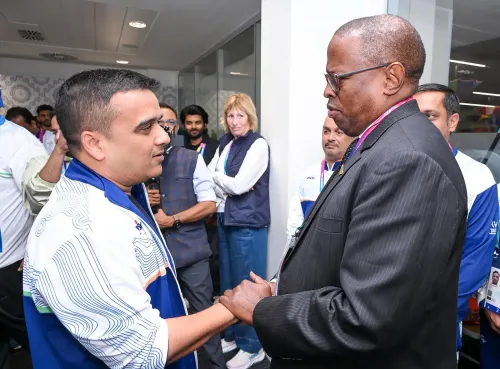
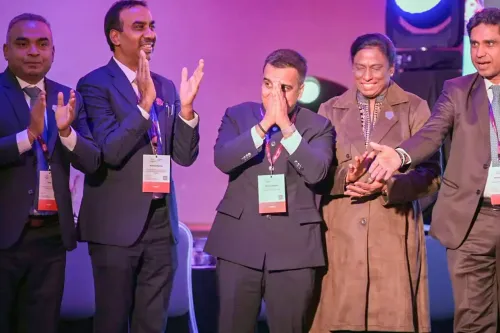
Three names stood at the centre of the handover ceremony. Olympic gold medallist Neeraj Chopra — the javelin champion who electrified the nation at Tokyo 2020 — received the flag alongside Indian Olympic Association President Smt. P.T. Usha, the legendary sprinter who now leads India's Olympic governance. Completing the trio was Gujarat Deputy Chief Minister Shri Harsh Sanghavi, whose presence underscored the state's role in India's sporting ambitions. Together, they accepted host duties as the Commonwealth family officially looked toward Bharat in 2030.
Kishan Reddy described the moment as 'a proud milestone in India's sporting journey and a testament to our growing stature as a global sporting nation.' He added that India 'continues to strengthen its sporting ecosystem and create opportunities for athletes to excel on the world stage' under Prime Minister Narendra Modi.
From Delhi 2010 to 2030 — sixteen years of intent
India last hosted the Commonwealth Games in New Delhi in 2010. The intervening sixteen years have not been idle. The Khelo India programme, launched in 2017, built a grassroots pipeline — identifying talent at the school and university level and funnelling it toward elite competition. That investment is now visible in India's medal tallies and in the confidence with which the country steps up to host again.
Hosting major multi-sport events has become a deliberate pillar of India's soft-power strategy — a way to modernise stadia, attract global attention, and give domestic athletes home-crowd momentum. The 2030 Games will be the next, and largest, expression of that ambition.
What the 2030 hosting means for Indian athletes
For the generation of athletes now in their teens, a home Commonwealth Games in 2030 is a career-defining horizon. Home advantage, familiar conditions, and the roar of a partisan crowd can convert promising performances into podium finishes. Decisions on host cities, venue upgrades, and budget allocations — expected to feature in upcoming Union Budgets and sports ministry announcements — will determine how well that promise is kept.
The Commonwealth family is coming to Bharat. The clock has started.
Point of View
Institutional coordination, and sustained political will, all of which the government has been building through programmes like Khelo India. The choice of Neeraj Chopra as a face of the handover is deliberate: he is India's most recognisable sporting icon post-Tokyo, and his presence signals that the 2030 Games will be marketed around a new generation of elite Indian athletes. For the BJP, a successful 2030 Games would also represent a powerful soft-power dividend — a home-soil showcase of the 'New India' sporting narrative that has been central to the party's governance messaging since 2014.
NationPress
3 Aug 2026
Frequently Asked Questions
When and where will India host the 2030 Commonwealth Games?
India will host the 2030 Commonwealth Games . The formal hosting duties were accepted at the Flag and Baton handover ceremony on 3 August 2026 . Specific host cities and venues have not yet been officially confirmed.
Who received the Commonwealth Games Flag for India at the 2026 ceremony?
Olympic gold medallist Neeraj Chopra , Indian Olympic Association President P.T. Usha , and Gujarat Deputy Chief Minister Harsh Sanghavi received the Commonwealth Games Flag and Baton on India's behalf.
Has India hosted the Commonwealth Games before?
Yes. India previously hosted the Commonwealth Games in New Delhi in 2010 . The 2030 edition will be India's second time hosting the event.
What is the Khelo India programme and how does it relate to CWG 2030?
The Khelo India programme , launched in 2017 , is a government initiative to develop grassroots sports talent across schools and universities. It is a key part of India's athlete development pipeline and is expected to feed talent into the 2030 Commonwealth Games.
What did G. Kishan Reddy say about the Commonwealth Games 2030 handover?
Union Minister G. Kishan Reddy called it 'a proud milestone in India's sporting journey and a testament to our growing stature as a global sporting nation,' and expressed anticipation for 'welcoming the Commonwealth family to Bharat in 2030.'