CM Rekha Gupta Pays Tribute to Rashtra Kavi Maithili Sharan Gupt
Synopsis
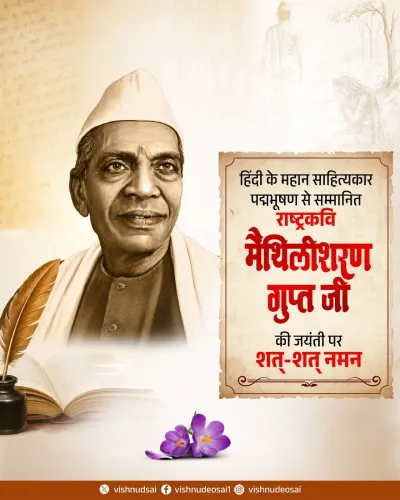
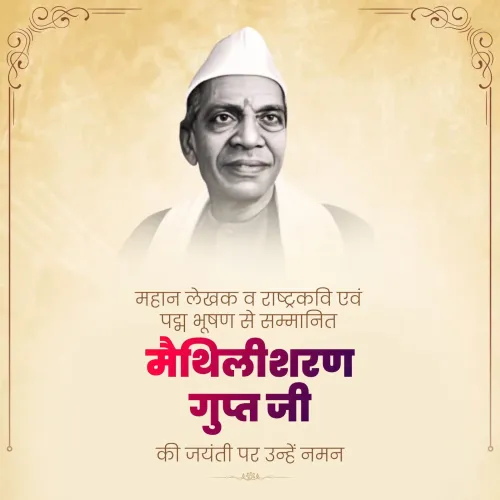
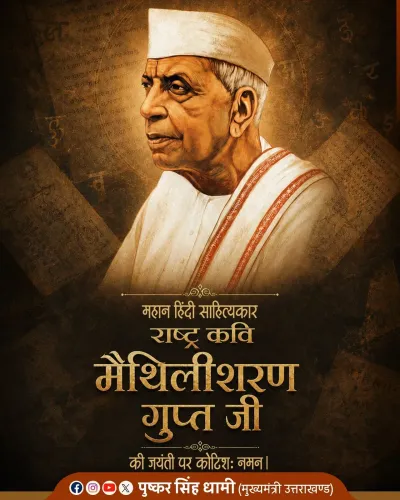
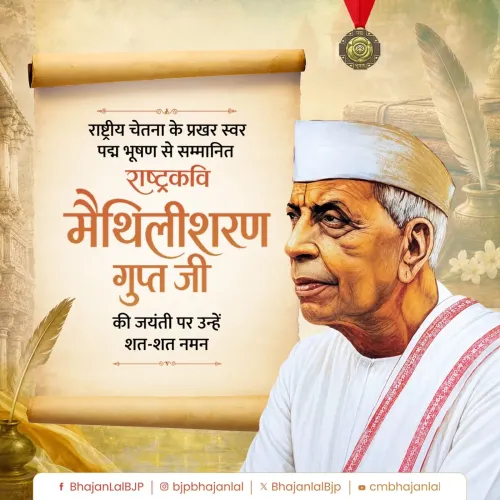
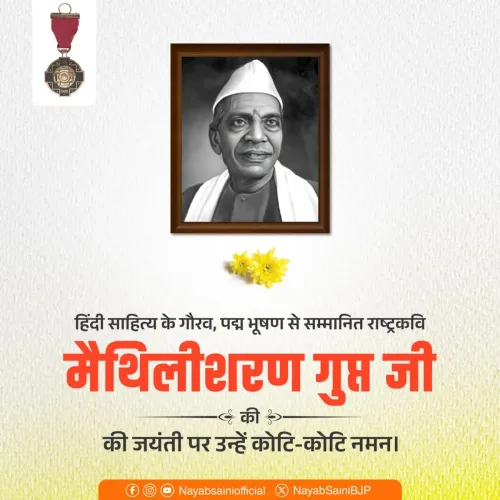
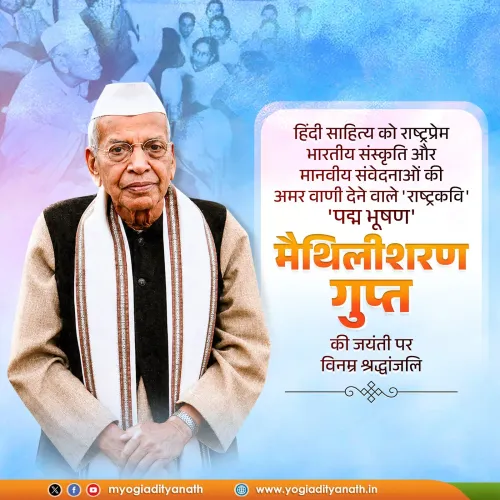
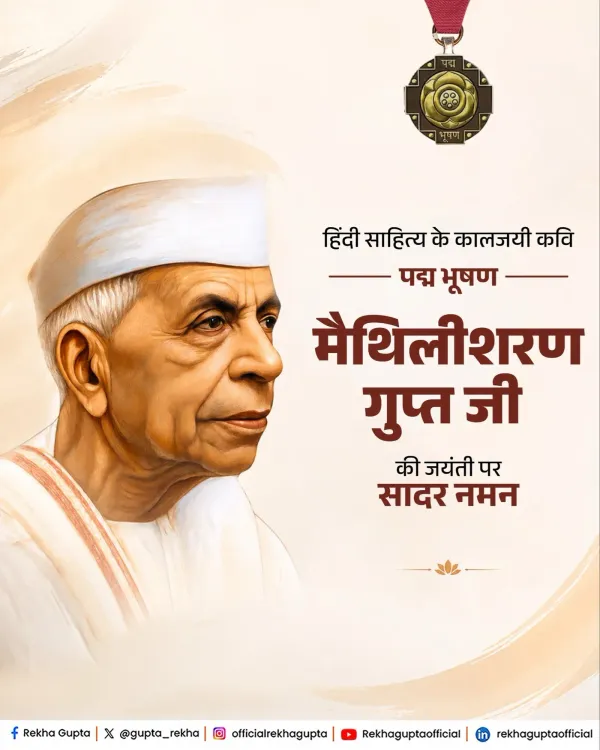
Delhi Chief Minister Rekha Gupta marked the birth anniversary of Rashtra Kavi Maithili Sharan Gupt on August 3, 2026, saluting the Hindi poet whose works on cultural nationalism and patriotism shaped India's freedom movement and continue to inspire national unity.
Key Takeaways
Delhi CM Rekha Gupta paid tribute to Rashtra Kavi Maithili Sharan Gupt on his birth anniversary, August 3, 2026 .
Gupt, born August 3, 1886 in Chirgaon, Uttar Pradesh , is celebrated for his landmark work Bharat Bharati (1912), which fuelled Swadeshi-era cultural pride.
CM Gupta described him as a 'harbinger of national renaissance' whose poetry gave voice to India's 'Sanatan cultural consciousness and patriotism.' The title Rashtra Kavi (National Poet) was conferred on Gupt for his contributions to Hindi literature and the independence movement.
BJP leaders regularly mark anniversaries of pre-independence literary figures linked to cultural nationalism as part of a consistent civilisational-heritage emphasis.
A poet who gave a nation its voice returns to the spotlight — Delhi Chief Minister Rekha Gupta on Monday, August 3, 2026, marked the birth anniversary of Rashtra Kavi Maithili Sharan Gupt, honouring the literary giant whose verses once fused cultural pride with the fire of the freedom movement.
Posting in Hindi, CM Gupta offered what she called kotishaḥ naman — 'a millionfold salute' — to Gupt, describing him as a 'harbinger of national renaissance.' She wrote that through his 'vigorous poetry,' Gupt transformed India's 'Sanatan cultural consciousness, patriotism, and love for the motherland into the voice of the common people,' and that his timeless works continue to inspire dedication to the nation, national unity, and public welfare.
The Poet Who Made Nationalism Lyrical
Born on August 3, 1886, in Chirgaon, Uttar Pradesh, Maithili Sharan Gupt is widely regarded as one of the most consequential voices in modern Hindi literature. His landmark work Bharat Bharati (1912) became a cultural thunderclap during the Swadeshi era — a verse-driven call to reclaim pride in Indian civilisation at a time when colonial rule had dimmed it. The title Rashtra Kavi, or 'National Poet,' was conferred on him in recognition of that contribution, and it stuck across generations. Gupt's poetry drew from classical Sanskrit traditions while speaking in the vernacular pulse of ordinary Indians — a combination that gave the independence movement a literary backbone. His verses on matribhumi (motherland) and swadesh prem (love of one's own land) were recited in schools, at political gatherings, and in homes long after independence.BJP's Consistent Literary Calendar
CM Gupta's tribute fits a deliberate pattern. BJP-led governments and leaders have consistently marked the birth anniversaries of pre-independence literary figures associated with cultural nationalism — positioning such observances as affirmations of India's civilisational continuity. For Delhi's administration, honouring Gupt connects the capital's political leadership to a broader Hindi-belt cultural identity that runs deep in the party's base. Gupt passed away on December 12, 1964, but his place in the national literary canon remains uncontested. His birth anniversary is observed each year by Hindi literary bodies, universities, and, increasingly, by political figures who see in his work a bridge between cultural heritage and contemporary nation-building. The poet gave India its voice when it needed one most. Sixty-two years after his death, that voice is still being invoked — from the highest offices of the land.Point of View
The CM signals alignment between Delhi's administration and a broader cultural-nationalist narrative the party has consistently promoted. For the Hindi-speaking electorate, such tributes carry genuine resonance: Gupt's poetry is part of the school curriculum and collective memory. The move reinforces soft cultural messaging without requiring a policy announcement — effective and low-cost political symbolism.
NationPress
3 Aug 2026
Frequently Asked Questions
Who is Maithili Sharan Gupt?
Maithili Sharan Gupt (1886–1964) was a pioneering Hindi poet from Chirgaon, Uttar Pradesh , conferred the title Rashtra Kavi (National Poet) for his works promoting Indian cultural nationalism and patriotism, most notably Bharat Bharati (1912).
Why is Maithili Sharan Gupt called Rashtra Kavi?
He was titled Rashtra Kavi because his poetry gave powerful expression to love for the motherland, Swadeshi ideals, and India's Sanatan cultural heritage during the freedom movement, making nationalism accessible to ordinary people through Hindi verse.
What did Delhi CM Rekha Gupta say about Maithili Sharan Gupt?
CM Rekha Gupta described Gupt as a 'harbinger of national renaissance' and said his 'vigorous poetry' transformed India's cultural consciousness and patriotism 'into the voice of the common people,' with his works continuing to inspire national unity and dedication to the motherland.
What is Bharat Bharati?
Bharat Bharati (1912) is Maithili Sharan Gupt's most celebrated work — a long poem that stirred cultural pride and Swadeshi sentiment during the colonial era, widely regarded as a literary milestone of the Indian independence movement.
When is Maithili Sharan Gupt's birth anniversary?
Maithili Sharan Gupt was born on August 3, 1886 , and his birth anniversary is observed on August 3 each year by literary bodies, educational institutions, and political leaders across India.