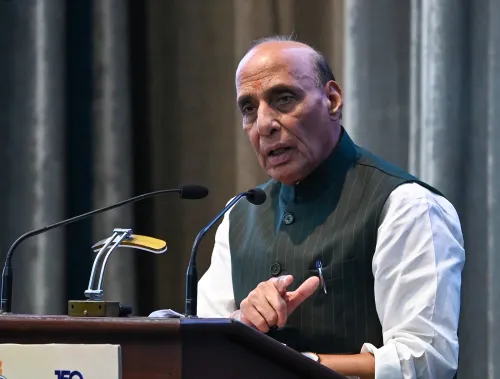
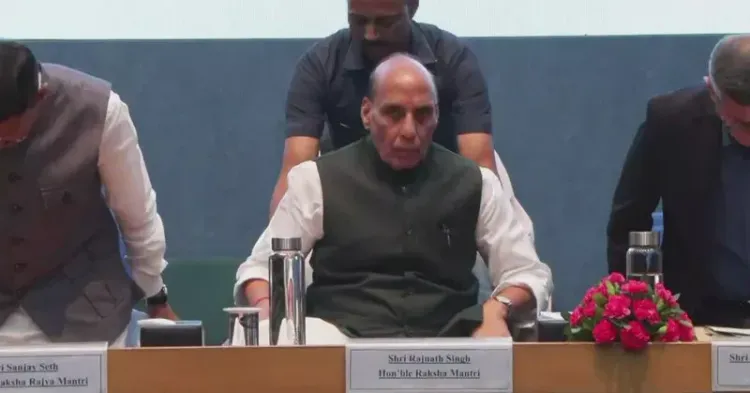
Rajnath Singh addresses AFHQ Civilian Services Day in New Delhi
Synopsis
Union Defence Minister Rajnath Singh addressed AFHQ Civilian Services Day in New Delhi on 3 August 2026, paying tribute to the civilian workforce embedded in India's Armed Forces Headquarters and integrated defence establishments — the administrative and technical backbone behind military planning.
Key Takeaways
Rajnath Singh addressed AFHQ Civilian Services Day in New Delhi on 3 August 2026 .
AFHQ Civilian Services comprise non-uniformed staff supporting India's military headquarters in administrative, technical, and planning roles.
The annual observance is a formal occasion to recognise civilian contributions to national defence that rarely receive public attention.
Defence Ministers routinely participate in service-specific observance days as part of institutional outreach within the defence establishment.
Formal highlights of the address are expected to be released through official defence ministry channels.
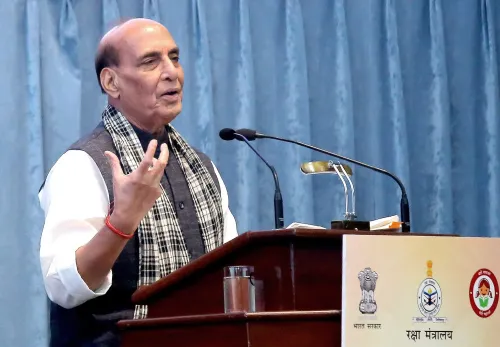
Behind every operational order and strategic plan that moves through India's military headquarters, a corps of civilian professionals keeps the machinery running — and on Monday, 3 August 2026, Union Defence Minister Rajnath Singh stepped before them in New Delhi to mark AFHQ Civilian Services Day, the annual occasion dedicated to honouring that often-unseen workforce.
Who are AFHQ civilians, and why does the day matter?
Armed Forces Headquarters Civilian Services (AFHQ Civilian Services) comprise the non-uniformed staff embedded within the integrated defence establishments and military secretariat structures across India. They handle administrative, technical, logistical, and planning functions that directly support the uniformed chain of command — roles that are indispensable yet rarely in the public spotlight.
The annual observance exists precisely to close that visibility gap, giving the defence establishment a formal moment to acknowledge contributions that do not come with medals or parades.
Rajnath Singh's presence at the podium
Defence Ministers have made it a consistent practice to personally participate in service-specific observance days within the defence establishment, signalling institutional respect for every tier of the organisation. Rajnath Singh — who has also served as Union Home Minister and Chief Minister of Uttar Pradesh — brings considerable weight to such occasions, and his address on Monday continued that tradition of ministerial outreach to support cadres.
The formal text and specific highlights of his remarks are expected to be released through official defence ministry channels and could feature in subsequent parliamentary defence committee discussions.
The civilian backbone of India's defence planning
AFHQ civilians sit at the intersection of bureaucratic process and military urgency. From managing procurement files to coordinating inter-service policy, their work feeds directly into decisions that shape national security. Recognising them publicly — especially at a time when India's defence modernisation agenda is expanding rapidly — reinforces the message that capability-building is a whole-of-organisation effort, not solely a uniformed one.
For a minister who has overseen landmark defence reforms and indigenisation pushes, the choice to address this community in person underscores that the civilian support structure is viewed as a strategic asset, not a back-office afterthought.
Point of View
Acknowledging the civilian secretariat publicly signals that the reform agenda depends on administrative capacity, not just battlefield hardware. For a senior BJP leader with a long record in home and defence portfolios, such engagements also serve to reinforce the party's governance-as-service narrative within the bureaucratic community. The real test of intent will come in whether the address is followed by concrete policy attention — career pathways, service conditions, or recognition frameworks — for AFHQ civilian cadres.
NationPress
17 Sept 2026
Frequently Asked Questions
What is AFHQ Civilian Services Day?
AFHQ Civilian Services Day is an annual observance that recognises the contributions of civilian employees working within India's Armed Forces Headquarters and integrated defence establishments. It highlights the administrative, technical, and planning support these non-uniformed staff provide to the military chain of command.
Who are AFHQ civilians?
AFHQ civilians are non-uniformed government employees embedded in India's Armed Forces Headquarters and related defence secretariat structures. They handle functions such as administration, logistics coordination, procurement processing, and inter-service policy work that directly support uniformed personnel.
Why did Rajnath Singh attend AFHQ Civilian Services Day 2026?
As Union Defence Minister, Rajnath Singh addressed the event to formally honour the civilian workforce of India's defence establishment. Defence Ministers routinely participate in such service-specific observances as part of institutional outreach and to signal respect for every tier of the organisation.
Where was AFHQ Civilian Services Day 2026 held?
The event was held in New Delhi , where India's Armed Forces Headquarters and the Ministry of Defence are based.
What announcements did Rajnath Singh make at AFHQ Civilian Services Day 2026?
The specific content of the Defence Minister's address has not yet been officially released. Formal highlights are expected through official Ministry of Defence channels and may be referenced in subsequent parliamentary defence committee updates.