Rajnath Singh: Make AFHQ Civilians Defence's Strategic Brain
Synopsis
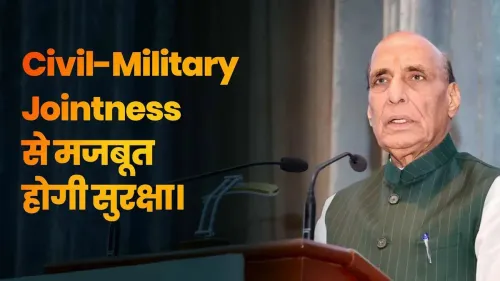
Defence Minister Rajnath Singh has called for transforming AFHQ Civilian Services into a professional defence cadre, describing it as a potential 'Strategic Brain' of India's Defence Management Architecture — a push that follows the 2019 creation of the Chief of Defence Staff and the Department of Military Affairs.
Key Takeaways
Rajnath Singh called for developing AFHQ Civilian Services into a professional defence cadre on 3 August 2026 .
He described the cadre as a potential 'Strategic Brain' of India's Defence Management Architecture .
Singh stressed the need for expertise, capability, and continuous skill upgradation within the cadre.
The call follows the landmark creation of the Chief of Defence Staff and Department of Military Affairs in December 2019 .
AFHQ Civilian Services officers work directly within Armed Forces Headquarters alongside uniformed personnel.
No specific implementation timeline or policy notification has been issued yet.
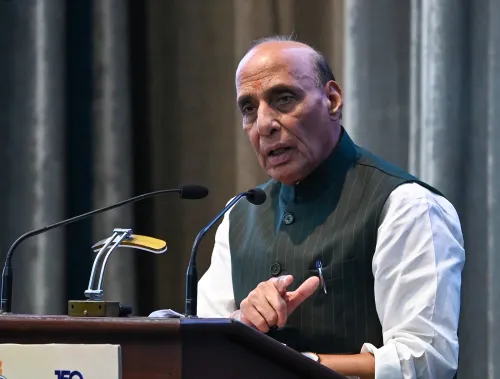
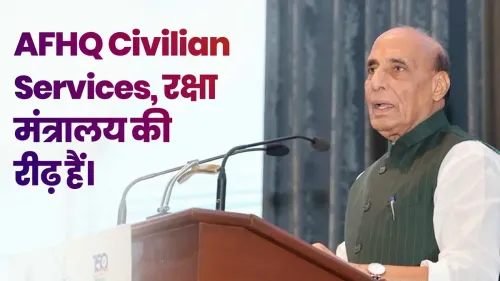
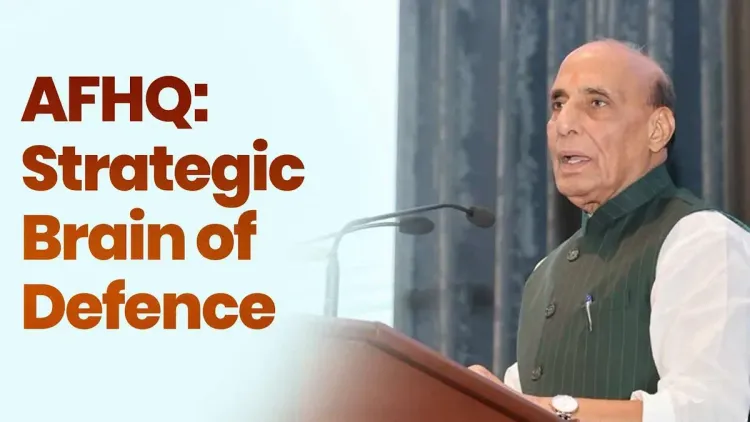
India's defence establishment has long leaned on its uniformed leadership — but Union Defence Minister Rajnath Singh is now making the case that its civilian backbone deserves an equal upgrade. On Monday, 3 August 2026, Singh posted a pointed call to action on X, arguing that the Armed Forces Headquarters Civilian Services (AFHQ Civilian Services) must be developed into a professional defence cadre — and that, with the right expertise and continuous skill development, it can become what he called the 'Strategic Brain' of India's Defence Management Architecture.
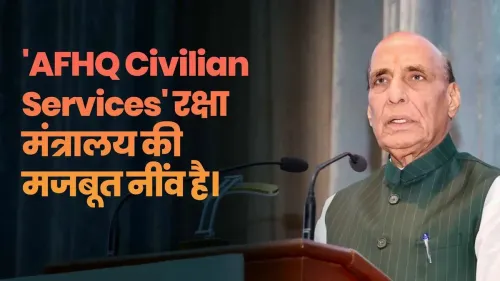
Singh wrote: 'AFHQ Civilian Services ko ek Professional Defence Cadre ke roop mein viksit karna samay ki avashyakta hai.' ('Developing AFHQ Civilian Services as a Professional Defence Cadre is the need of the hour.') He added that with expertise, capability, and continuous skill upgradation, the cadre 'can become the Strategic Brain of India's Defence Management Architecture.'
What AFHQ Civilian Services actually does
The AFHQ Civilian Services is a cadre of civilian officers and staff embedded directly within the Armed Forces Headquarters, handling administrative, logistical, and support functions that keep the military's command structure running. Unlike the broader Ministry of Defence bureaucracy, these officials work shoulder-to-shoulder with uniformed personnel — making their professional calibre a direct input into operational readiness. For years, the cadre has operated in the institutional shadow of the armed forces it serves. Singh's statement signals a shift: civilian expertise is not a support function to be tolerated, but a strategic asset to be built.The CDS moment and the civilian gap it revealed
The creation of the Chief of Defence Staff (CDS) position and the Department of Military Affairs (DMA) in December 2019 — a landmark structural reform under Singh's watch as Defence Minister — brought military-civilian integration to the centre of India's defence architecture. But integration only works when both sides of the equation are equally capable. The DMA reform placed uniformed officers in roles previously held by civilians; the logical complement is to raise civilian professionals to the level where they can genuinely contribute to strategic, not just administrative, outcomes. Singh's post is a direct articulation of that gap — and a signal that cadre reform for AFHQ civilians may be the next item on the agenda.Skill upgradation as a strategic imperative
The Defence Minister's emphasis on 'continuous skill upgradation' points toward a training and capacity-building framework rather than just a structural reshuffle. The implication is clear: India's defence management challenges — from procurement modernisation to joint theatre command planning — demand civilian professionals who can think and act strategically, not merely process files. What that framework looks like in practice — whether through revised recruitment rules, dedicated defence management courses, or cadre review proposals — remains to be formalised in Ministry notifications or budget commitments. But the political signal from the minister is unambiguous. If India's armed forces are the sword, Singh is arguing, its civilian defence professionals must be the mind behind it.Point of View
Long a slow-moving bureaucratic process, may be getting ministerial momentum. The framing of AFHQ civilians as a 'Strategic Brain' is politically significant: it elevates their role from administrative support to strategic partnership, which could reshape recruitment, training, and even pay-commission positioning for the cadre going forward.
NationPress
17 Sept 2026
Frequently Asked Questions
What is AFHQ Civilian Services?
AFHQ Civilian Services is a cadre of civilian officers embedded within the Armed Forces Headquarters under the Ministry of Defence, handling administrative and support functions alongside uniformed military personnel.
What did Rajnath Singh say about AFHQ Civilian Services?
Rajnath Singh said that developing AFHQ Civilian Services as a professional defence cadre is the need of the hour, and that with expertise and continuous skill upgradation, it can become the 'Strategic Brain' of India's Defence Management Architecture.
What is the Department of Military Affairs?
The Department of Military Affairs was created in December 2019 under the Ministry of Defence to improve integration between the armed forces and civilian elements, and is headed by the Chief of Defence Staff.
Why does civilian expertise matter in India's defence setup?
Civilian professionals in defence headquarters handle procurement, administration, and strategic support functions. Raising their professional calibre directly strengthens the overall effectiveness of India's defence management and joint planning processes.
Will there be a formal policy or cadre review for AFHQ civilians?
No formal notification or timeline has been announced yet. Watch for cadre review proposals, training framework announcements, or recruitment rule changes in future Ministry of Defence notifications or defence budget statements.