Kishan Reddy Reviews GSI, HCL Work, Launches Angul Aluminium Park
Synopsis
Union Coal and Mines Minister G. Kishan Reddy spent 29 September 2026 in Kolkata reviewing GSI and HCL operations, launching the Angul Aluminium Park in Odisha, unveiling two GSI commemorative volumes, and meeting the West Bengal Chief Minister on coal and mining priorities.
Key Takeaways
Angul Aluminium Park launched in Angul, Odisha to promote downstream aluminium processing near NALCO's smelter ecosystem.
Minister Reddy reviewed Hindustan Copper Limited (HCL) operations and GSI's exploration work across all six regional offices.
Two commemorative volumes marking GSI's 175-plus year legacy were unveiled during the Kolkata visit.
Reddy met the Chief Minister of West Bengal to discuss coal and mining sector priorities, invoking the 'Double Engine Sarkar' framework for state growth.
The day's agenda reflects the Centre's push to strengthen critical mineral security and reduce import dependence for energy transition sectors.
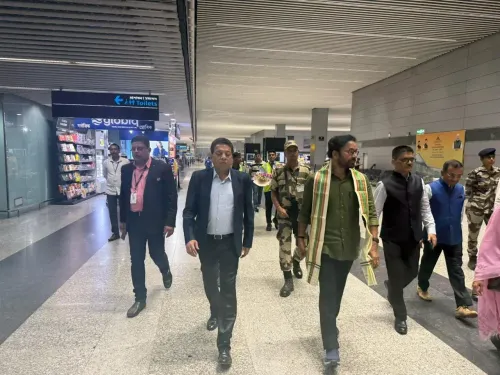
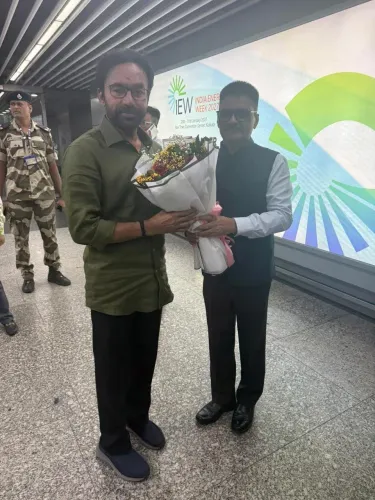
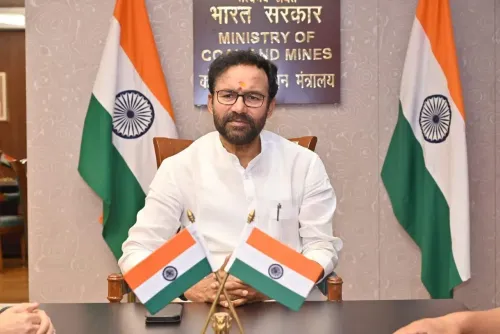
From geological survey rooms to the West Bengal Chief Minister's office, Union Coal and Mines Minister G. Kishan Reddy packed a full day of mineral-sector action in Kolkata on Tuesday, 29 September 2026 — reviewing flagship public sector undertakings, launching a major industrial park, and closing the evening with a state-level political and policy conversation.
GSI's Six Regions Under the Lens
Reddy's first major engagement of the day was a comprehensive review of the Geological Survey of India (GSI), the 175-year-old premier government agency responsible for mapping India's mineral wealth. The minister took stock of exploration pipelines, critical mineral identification, and mineral security priorities across GSI's six regional offices — a sweep that signals the Centre's intent to tighten coordination between field surveys and national supply-chain planning.
Separately, he reviewed operations at Hindustan Copper Limited (HCL), the public sector undertaking that anchors India's domestic copper value chain. With global demand for copper surging on the back of electric vehicles and renewable energy infrastructure, HCL's exploration and production pipeline is increasingly central to India's critical-mineral strategy.
Angul Aluminium Park: Odisha's Downstream Bet
The day's marquee announcement was the launch of the Angul Aluminium Park in Angul, Odisha — an industrial infrastructure project designed to cluster downstream aluminium processing units close to the source of raw material. NALCO (National Aluminium Company Limited), the Navratna PSU that mines bauxite and refines alumina in Odisha, is a key stakeholder in the park's ecosystem. The park is intended to reduce the value-addition gap that has historically seen India export raw aluminium rather than finished products.
India's aluminium sector has long been a case study in unrealised downstream potential. A dedicated industrial park anchored near smelter capacity could change that calculus — attracting fabricators, foil manufacturers, and auto-component suppliers who currently import processed aluminium.
GSI at 175: Two Commemorative Volumes Unveiled
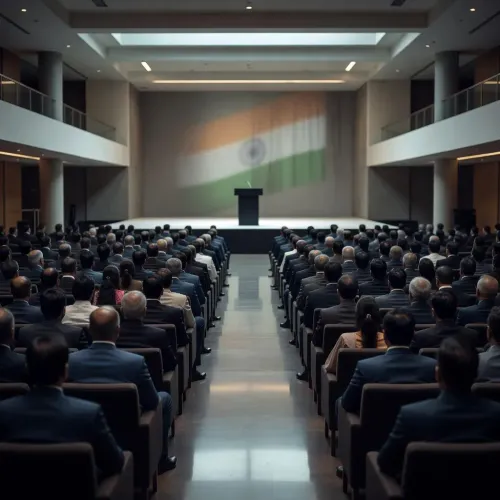
Reddy also unveiled two commemorative volumes marking GSI's 175-plus year legacy, an institution founded in 1851 that predates the Indian republic by nearly a century. The volumes serve as both an institutional archive and a public signal that the government views long-term geological knowledge — not just short-term auction revenues — as the bedrock of mineral security.
West Bengal CM Meeting: Coal, Mining, and the Double Engine Argument
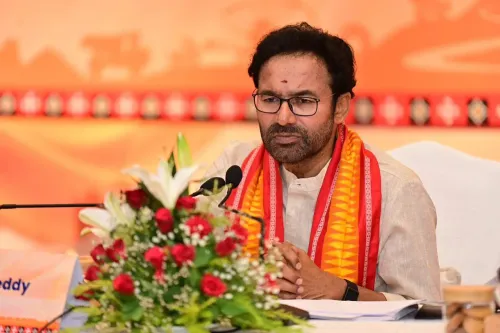
The day concluded with a meeting between Reddy and the Chief Minister of West Bengal, where the minister said discussions centred on 'key priorities in the coal and mining sector.' Reddy invoked the BJP's signature 'Double Engine Sarkar' framing — the argument that states with BJP governments at both the Centre and state level unlock faster project clearances and growth — in the context of West Bengal's economic revival.
West Bengal sits on significant coal reserves, and federal coordination on lease auctions, exploration data sharing, and project execution has been a recurring friction point between the state government and the Union Ministry. The meeting, while described in broad terms, marks a formal channel of engagement between the two administrations.
With critical mineral block auctions accelerating under the amended MMDR Act of 2021 and GSI's regional survey data increasingly feeding into national supply-chain decisions, the day's agenda in Kolkata was less a ceremonial tour and more a working blueprint for India's mineral future. The Angul park's success — and what emerges from the West Bengal coal corridor — will be the real measure.
Point of View
Downstream industrial ambition (the Angul park), and federal political strategy (the West Bengal CM meeting) into a single narrative of mineral self-reliance. The 'Double Engine Sarkar' framing at the CM meeting is as much a political signal ahead of future state elections as it is a policy argument. Critically, the simultaneous focus on copper, aluminium, and critical minerals in one day's agenda underscores that the ministry is no longer treating these as separate silos — it is building an integrated supply-chain doctrine. The real test will be whether the Angul park attracts private downstream investment and whether the West Bengal engagement translates into concrete lease or exploration agreements.
NationPress
29 Sept 2026
Frequently Asked Questions
What is the Angul Aluminium Park and where is it located?
The Angul Aluminium Park is an industrial infrastructure project in Angul, Odisha , designed to cluster downstream aluminium processing units near existing smelter and refining capacity. It was formally launched by Union Mines Minister G. Kishan Reddy on 29 September 2026 .
What is the Geological Survey of India and why is it being celebrated?
GSI is India's premier government agency for geological mapping and mineral exploration, founded in 1851 . In 2026 it crossed 175 years of continuous operation, and two commemorative volumes marking this legacy were unveiled by Minister Reddy during the Kolkata visit.
What did Kishan Reddy discuss with the West Bengal Chief Minister?
According to the minister's post, discussions focused on 'key priorities in the coal and mining sector' and the role of a 'Double Engine Sarkar' in driving West Bengal's growth and revival. Specific outcomes of the meeting have not been officially detailed.
What is the role of Hindustan Copper Limited in India's mining sector?
Hindustan Copper Limited (HCL) is a public sector undertaking under the Ministry of Mines responsible for copper exploration, mining, and production. It is central to India's efforts to build a domestic copper supply chain for electric vehicles and renewable energy infrastructure.
How does India's critical minerals policy connect to the Angul Aluminium Park?
India's push for critical mineral security — accelerated by MMDR Act amendments in 2021 — aims to reduce import dependence for energy transition materials. The Angul park supports this by enabling domestic value addition to aluminium, a key material in EVs and clean energy systems, rather than exporting it as a raw commodity.