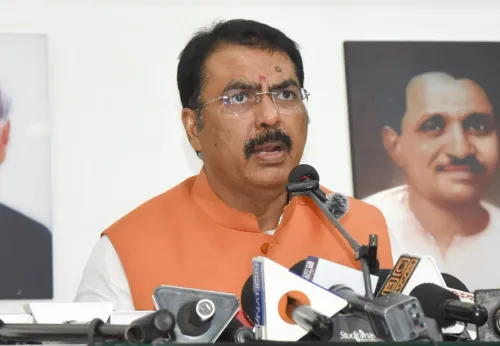
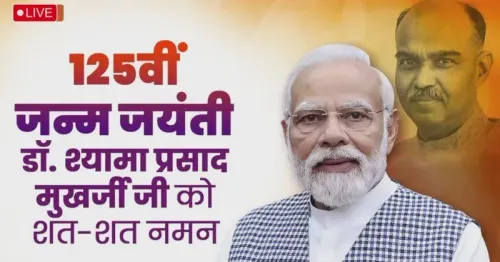
Kishan Reddy marks 75 yrs of BJP's Jana Sangh founding
Synopsis
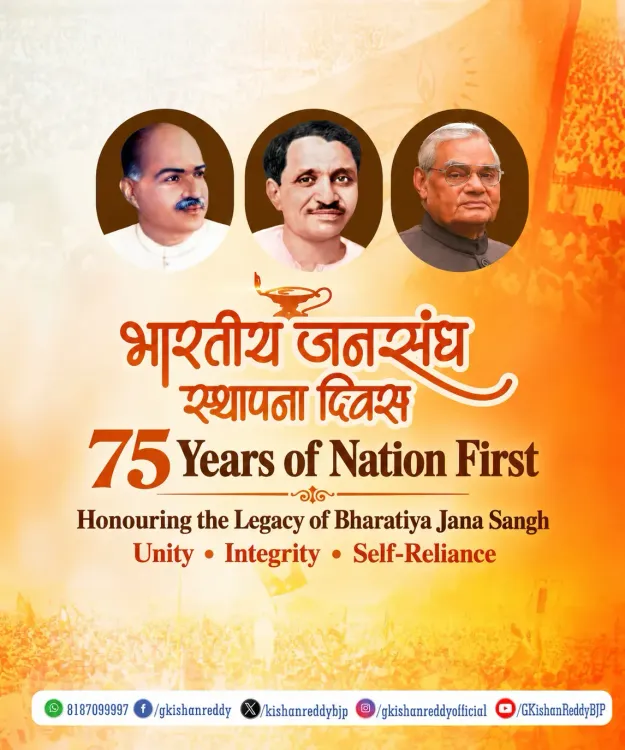
On the 75th anniversary of the Bharatiya Jana Sangh's founding, Union Minister G. Kishan Reddy paid tribute to Dr. Syama Prasad Mookerjee, framing the BJP's 2019 abrogation of Article 370 as the fulfilment of Mookerjee's lifelong demand for Jammu and Kashmir's full integration.
Key Takeaways
The Bharatiya Jana Sangh was founded by Dr.
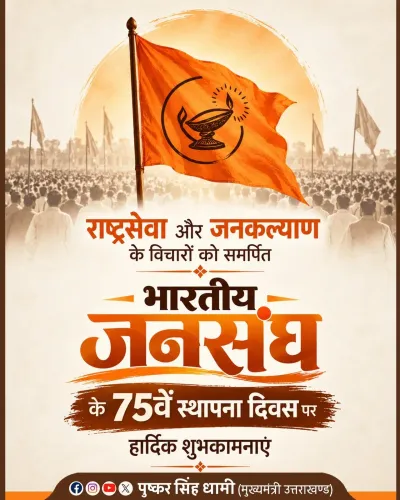
Syama Prasad Mookerjee on 21 October 1951 , marking its 75th anniversary in 2026.
Kishan Reddy posted a tribute on October 21, 2026 connecting the Jana Sangh's founding ideology to the BJP's current governance.
The post highlights Antyodaya and Integral Humanism as the philosophical foundations that continue to guide the BJP.
Reddy describes the August 2019 abrogation of Article 370 as 'a fitting tribute to Dr.
Mookerjee's sacrifice,' fulfilling a demand the Jana Sangh raised from its very inception.
The BJP frames its political lineage as an unbroken continuum — from Mookerjee's Jana Sangh through Upadhyaya's doctrine to PM Modi's government.
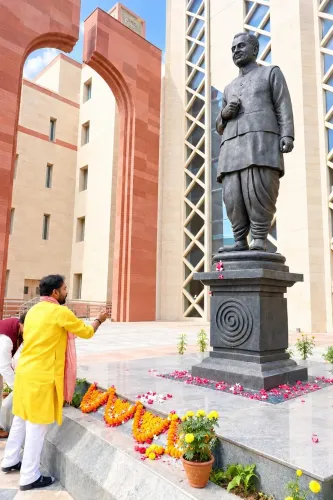
Seventy-five years after Dr. Syama Prasad Mookerjee planted the seed of a nationalist movement, Union Coal and Mines Minister G. Kishan Reddy marked the occasion on Wednesday, October 21, 2026 by tracing a direct line from that founding act to the BJP's governance today — and to the landmark abrogation of Article 370 as its most resonant fulfilment.
The founding moment: October 21, 1951
On 21 October 1951, Dr. Mookerjee established the Bharatiya Jana Sangh in New Delhi, offering a platform rooted in national unity, territorial integrity, and economic self-reliance. The party drew its philosophical spine from two ideas that would define its successors for decades: Antyodaya — uplift of the last person in the social order — and Integral Humanism, the holistic political philosophy later systematised by Deendayal Upadhyaya. Reddy's tribute frames both as living doctrine, not museum exhibits.
From Jana Sangh to BJP: the ideological continuum
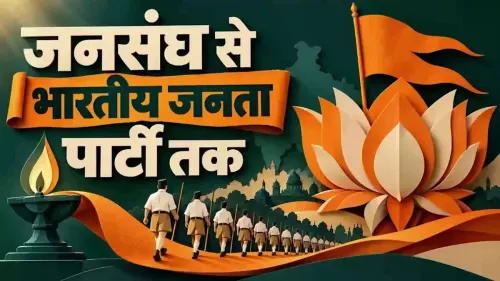
The Bharatiya Jana Sangh merged into the Janata Party in 1977 before its former members regrouped to launch the Bharatiya Janata Party in 1980. The BJP has consistently positioned itself as the Jana Sangh's ideological heir — inheriting its creed of 'Nation First' and its demand for the full constitutional integration of Jammu and Kashmir with the rest of India. That demand had been Dr. Mookerjee's most urgent crusade; he died in detention in 1953 while agitating against the special status framework.
Article 370 abrogation: the tribute Reddy highlights
Reddy's post calls the August 2019 abrogation of Article 370 — passed by Parliament under Prime Minister Narendra Modi's government — 'a fitting tribute to Dr. Mookerjee's sacrifice.' The move revoked Jammu and Kashmir's special constitutional status and reorganised it into two Union Territories, a step the Jana Sangh and later the BJP had demanded for nearly seven decades. In linking the 1951 founding to the 2019 action, Reddy presents the arc as one unbroken political promise finally kept.
The minister's tribute lands on a date the BJP marks annually as a moment of ideological renewal, using it to reinforce the party's self-image as a movement, not merely a machinery of governance.
Seven decades, one creed — and the BJP insists the mission is still unfinished.
Point of View
The party signals that its governance is a completion of historical duty, not mere politics. This framing becomes especially potent on round-number anniversaries, when the party can claim both retrospective vindication and forward momentum. It also subtly reminds the cadre — and rivals — that the BJP's roots predate the republic's own settled constitutional order.
NationPress
21 Oct 2026
Frequently Asked Questions
When was the Bharatiya Jana Sangh founded?
The Bharatiya Jana Sangh was founded on 21 October 1951 by Dr. Syama Prasad Mookerjee in New Delhi as a nationalist political party championing unity, integrity, and self-reliance.
What is the connection between the Jana Sangh and the BJP?
The Bharatiya Jana Sangh merged into the Janata Party in 1977, and its former members went on to establish the Bharatiya Janata Party (BJP) in 1980, which regards itself as the ideological successor to the Jana Sangh's nationalist legacy.
Why does the BJP link Article 370 abrogation to Dr. Mookerjee?
Dr. Mookerjee campaigned actively for the full constitutional integration of Jammu and Kashmir with India — a demand the Jana Sangh and later the BJP carried for decades. The August 2019 abrogation of Article 370 under PM Modi is seen by the party as the fulfilment of that decades-old pledge.
What is Integral Humanism in the context of BJP ideology?
Integral Humanism is a political philosophy associated with Deendayal Upadhyaya , a Jana Sangh ideologue, that emphasises a holistic, culturally rooted approach to governance over purely Western capitalist or socialist models. The BJP adopted it as a formal guiding principle.
What is Antyodaya and why does the BJP invoke it?
Antyodaya — meaning 'uplift of the last person' — is a principle the BJP and Jana Sangh use to frame welfare policy as rooted in indigenous political philosophy rather than imported ideological frameworks.