Kishan Reddy Marks Telangana's Liberation from Nizam Rule
Synopsis
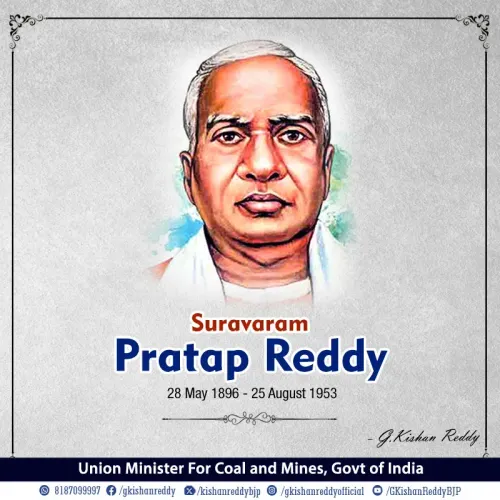
Union Coal and Mines Minister G. Kishan Reddy paid tribute to Telangana's liberation from Nizam rule on 17 September 1948, crediting Sardar Vallabhbhai Patel's resolve for ending 13 months of post-Independence struggle and integrating Hyderabad State into the Indian Union.
Key Takeaways
Kishan Reddy , Union Minister and BJP Telangana president, posted a tribute marking Hyderabad State's liberation on 17 September 1948 .
India became independent on 15 August 1947 , but Hyderabad remained outside the Union for 13 more months under Nizam rule.
Operation Polo (13–18 September 1948), overseen by Sardar Vallabhbhai Patel , ended Nizam rule and integrated Hyderabad into India.
Patel secured accession from 565 princely states between 1947 and 1949, with Hyderabad being the most strategically significant.
Telangana became India's 29th state in 2014 ; the 17 September anniversary remains a key date in its political calendar.
The BJP has consistently used Patel's integration legacy as a central plank of its outreach in Telangana and southern India.
Union Coal and Mines Minister G. Kishan Reddy on Sunday, 19 July 2026, paid tribute to the people of Telangana and invoked the legacy of Sardar Vallabhbhai Patel in commemorating the 17 September 1948 liberation of Hyderabad State from Nizam rule — an event he described as a historic milestone achieved thirteen months after India's own Independence.
In his post, the Minister wrote: '15 अगस्त 1947 को भारत स्वतंत्र हुआ, लेकिन तेलंगाना की जनता को निज़ाम के अत्याचारों से मुक्ति पाने के लिए 13 महीने और संघर्ष करना पड़ा।' ('India became independent on 15 August 1947, but the people of Telangana had to struggle for 13 more months to gain freedom from the atrocities of the Nizam.') He further credited Patel's 'indomitable resolve and firm leadership' for paving the way for Hyderabad's liberation, calling the day an 'immortal symbol of the courage, struggle, and sacrifice of Telangana's heroes.'
Context
When India gained Independence on 15 August 1947, the princely state of Hyderabad — the largest in the subcontinent — did not accede to the Union. Its ruler, the Nizam of Hyderabad, sought to maintain sovereignty and was backed by private paramilitary forces known as the Razakars, who carried out widespread violence against the civilian population.
The standoff lasted over a year. Sardar Vallabhbhai Patel, then India's Deputy Prime Minister and Home Minister, oversaw a military operation — Operation Polo, conducted between 13 and 18 September 1948 — that ended Nizam rule and formally integrated Hyderabad State into the Indian Union. The 17th of September is observed in Telangana as 'Hyderabad Liberation Day.'
Policy Backdrop
Between 1947 and 1949, Sardar Patel secured Instruments of Accession from 565 princely states through a combination of diplomacy and limited military force, completing the territorial consolidation of independent India. His role in the Hyderabad integration is widely regarded as one of the most consequential acts of post-colonial statecraft on the subcontinent.
Telangana itself became India's 29th state on 2 June 2014, carved out of the erstwhile Andhra Pradesh after a prolonged popular agitation. The state's distinct pre-Independence history — including the Nizam era and the armed resistance of local freedom fighters — remains a significant thread in its political and cultural identity.
Stakeholders and Impact
As BJP's Telangana state president, Kishan Reddy's invocation of the 17 September narrative carries clear political resonance. The BJP has consistently elevated Patel's legacy of national integration in its public messaging, particularly in southern states where regional parties often foreground distinct pre-1948 histories.
For Telangana's residents, the liberation anniversary is a matter of lived historical memory. The state government and multiple political parties mark the date with commemorative events, making it a recurring focal point in the state's political calendar. BJP cadres in the state use the occasion to reinforce the party's connect with regional history and sentiment.
What's Next
State-level commemorations around 17 September 2026 are expected to see heightened political activity, with multiple parties staking claim to the liberation legacy. Any parliamentary references during the upcoming winter session that link Hyderabad's historical integration to current federal policy debates on regional autonomy or Centre-state relations will be worth watching.
Kishan Reddy's early invocation of the anniversary — nearly two months ahead of the date — signals that the BJP intends to build a sustained narrative around Telangana's liberation history as part of its broader outreach in the state ahead of future electoral cycles.
Point of View
Posted well before the 17 September anniversary, fits into a deliberate BJP pattern of anchoring its Telangana outreach in the state's pre-1948 liberation history — a narrative that positions the party as a custodian of regional pride rather than an outsider. By centering Sardar Patel, the BJP simultaneously reinforces its national-integration thesis and distinguishes its messaging from that of regional parties. The timing also suggests the party intends to build a sustained commemorative drumbeat through the anniversary, maximising political visibility in a state where it faces stiff competition. This kind of historical memory-making is increasingly central to the BJP's southern strategy.
NationPress
20 Jul 2026
Frequently Asked Questions
When was Telangana liberated from Nizam rule?
17 September 1948 is observed as Telangana's liberation day, marking the end of Nizam rule following Operation Polo conducted by Indian armed forces between 13 and 18 September 1948.
What was Operation Polo?
Operation Polo was the Indian military action carried out from 13 to 18 September 1948 that ended the Nizam of Hyderabad's hold over the princely state and integrated Hyderabad State into the Indian Union.
What role did Sardar Patel play in Hyderabad's accession?
Sardar Vallabhbhai Patel , as India's first Deputy Prime Minister and Home Minister, directed the diplomatic and military effort that brought 565 princely states — including Hyderabad — into the Indian Union between 1947 and 1949.
Why did Hyderabad not join India in 1947?
The Nizam of Hyderabad sought to maintain sovereignty after India's Independence on 15 August 1947 , backed by private paramilitary forces called the Razakars, delaying accession by 13 months until military intervention in September 1948.
Who is G. Kishan Reddy?
G. Kishan Reddy is the Union Minister of Coal and Mines in the Government of India and the BJP's Telangana state president , known for highlighting Telangana's regional historical narratives in his public communications.