Kishan Reddy Honours Tribal Role in India's Freedom Struggle
Synopsis
Union Coal and Mines Minister G. Kishan Reddy on 19 July 2026 paid tribute to India's tribal communities, honouring their documented role in the anti-British independence struggle and resistance against the Nizam's rule in the Hyderabad region, while affirming their continued contribution to nation-building.
Key Takeaways
Kishan Reddy , Union Coal and Mines Minister and BJP Telangana president, paid tribute to tribal communities on 19 July 2026 .
He recognised tribal participation in both the anti-British independence struggle and resistance against the Nizam of Hyderabad's rule before 1948 .
The tribute affirms that tribal society continues to contribute to India's progress and nation-building from villages to cities.
The Scheduled Tribes and Other Traditional Forest Dwellers (Recognition of Forest Rights) Act, 2006 remains a key legislative pillar for tribal land rights in India.
Tribal belts in Telangana , Jharkhand , Chhattisgarh , and Odisha overlap significantly with coal and mineral districts under the Coal Ministry's remit.
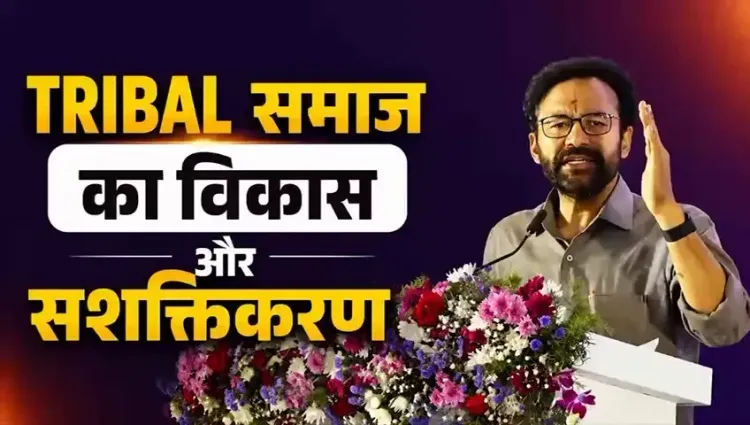
Union Coal and Mines Minister G. Kishan Reddy on Sunday, 19 July 2026, paid tribute to India's tribal communities, recognising their historical contributions to the independence movement against British rule and their resistance against the Nizam's oppression in the Hyderabad region. The BJP Telangana state president underscored that tribal men and women have served on the frontlines of every major struggle for the motherland, from villages to cities, and continue to play a vital role in the nation's progress and development.
Context
In his post, G. Kishan Reddy wrote — 'गांवों से लेकर शहरों तक, जनजातीय समाज आज भी भारत की प्रगति और राष्ट्र निर्माण में महत्वपूर्ण भूमिका निभा रहा है' ('From villages to cities, tribal society continues to play an important role in India's progress and nation-building'). He further noted that whether it was the freedom struggle against the British or the fight against the atrocities of the Nizam, history bears witness that tribal brothers and sisters served the motherland from the front lines with 'indomitable courage, valour, and supreme sacrifice.'
The reference to the Nizam's atrocities carries particular resonance in Telangana, where tribal communities in the region actively participated in resistance movements against the Hyderabad State before its accession to the Indian Union in 1948. Kishan Reddy, as the BJP's Telangana state president, frequently draws on this regional historical memory in his public communications.
Policy Backdrop
India's tribal welfare architecture has been shaped over decades by landmark legislation and institutional creation. The Scheduled Tribes and Other Traditional Forest Dwellers (Recognition of Forest Rights) Act, 2006, granted legal recognition to tribal land and resource claims, a significant step in addressing historical dispossession. The Ministry of Tribal Affairs, established in 1999, coordinates central welfare programmes for Scheduled Tribes across the country.
The BJP has consistently sought to integrate tribal histories of anti-colonial and anti-princely resistance into the mainstream national narrative. This approach is visible in the party's public communications, ceremonial tributes, and policy framing around Adivasi communities, particularly in central and southern India where tribal populations are concentrated.
Stakeholders and Impact
India's Scheduled Tribe population, spread across states including Telangana, Jharkhand, Chhattisgarh, Odisha, and Madhya Pradesh, represents a significant political and demographic constituency. Tribal belts in these states also overlap substantially with coal-bearing and mineral-rich districts that fall under the remit of the Ministry of Coal and Mines, making the minister's dual role particularly relevant to Adivasi communities.
Kishan Reddy's tribute speaks directly to Adivasi populations in Telangana, where memories of resistance against the Nizam remain a living part of local identity. Recognising this history publicly is seen as an effort to strengthen the party's connect with tribal voters in the state.
What's Next
The broader policy question that follows such tributes is whether rhetorical recognition translates into substantive action — particularly on forest rights implementation and the terms of mining leases in tribal districts under the Coal Ministry's oversight. Parliamentary and state-level developments on these fronts will be closely watched by tribal rights groups and Adivasi communities alike.
Point of View
The minister draws on a distinctly Telangana memory that serves both cultural and electoral purposes in the state. As Coal and Mines Minister, his dual role places him at the intersection of tribal welfare rhetoric and resource extraction policy, a tension that tribal rights advocates will continue to scrutinise. Whether such tributes are followed by substantive policy action on forest rights and mining lease terms in tribal districts remains the defining test.
NationPress
18 Oct 2026
Frequently Asked Questions
What did G. Kishan Reddy say about tribal communities?
G. Kishan Reddy stated that tribal communities have played a vital role in India's progress and nation-building, and that they served on the frontlines of the freedom struggle against the British as well as the resistance against the Nizam's oppression, displaying indomitable courage and supreme sacrifice.
Why does Kishan Reddy mention the Nizam when talking about tribal history?
The reference to the Nizam relates to the Hyderabad State, which was under Nizam rule until 1948. Tribal communities in the Telangana region actively participated in resistance movements against the Nizam's rule, and this history is a significant part of local identity in the area Kishan Reddy represents politically as BJP Telangana state president.
What is the government's policy framework for tribal welfare in India?
The key legislation is the Scheduled Tribes and Other Traditional Forest Dwellers (Recognition of Forest Rights) Act, 2006, which grants legal recognition to tribal land and resource claims. The Ministry of Tribal Affairs, created in 1999, coordinates central welfare programmes for Scheduled Tribes across India.
What is G. Kishan Reddy's role in the central government?
G. Kishan Reddy serves as the Union Minister of Coal and Mines in the central government. He is also the BJP's Telangana state president, giving him a significant political role in the state alongside his ministerial responsibilities.
Why are tribal communities significant in the context of India's coal and mining sector?
Tribal belts in states such as Telangana, Jharkhand, Chhattisgarh, Odisha, and Madhya Pradesh overlap substantially with coal-bearing and mineral-rich districts. This makes the Coal and Mines Ministry's policies directly relevant to Adivasi communities living in and around these resource zones.