Kishan Reddy meets Bihar Mines Minister, discusses state mining growth
Synopsis
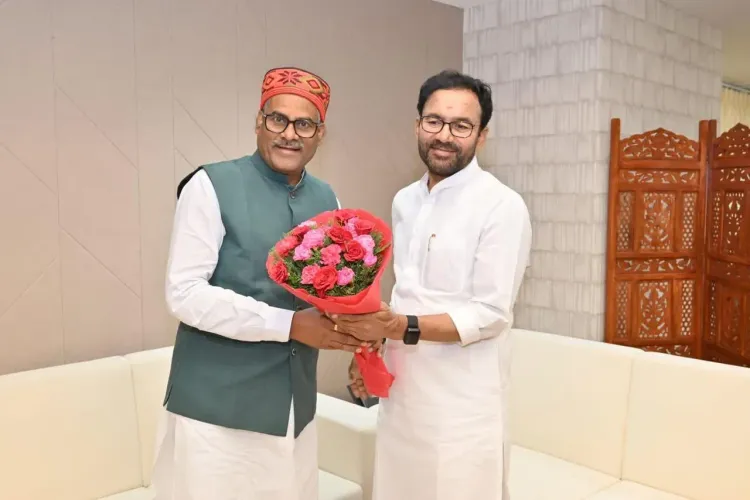
Union Mines Minister G. Kishan Reddy met Bihar's newly appointed Mines Minister Dr Pramod Kumar in New Delhi on 3 July 2026. They discussed leveraging Bihar's mineral resources for state economic growth and advancing the Central government's Viksit Bharat vision by 2047.
Key Takeaways
Kishan Reddy , Union Minister of Coal and Mines, met Bihar Mines Minister Dr Pramod Kumar in New Delhi on 3 July 2026 .
Discussions focused on the mining sector's role in Bihar's economic development and alignment with the Viksit Bharat vision for 2047.
Bihar's mineral profile was significantly reduced after Jharkhand's creation in 2000 ; the state retains deposits including limestone and minor minerals.
The meeting reflects ongoing centre-state coordination under the National Mineral Policy 2019 and the MMDR Amendment Act 2021 .
No formal commitments or outcomes from the meeting have been publicly disclosed.
Potential next steps include joint mineral block auction proposals and Bihar's inclusion in central mineral development fund schemes.
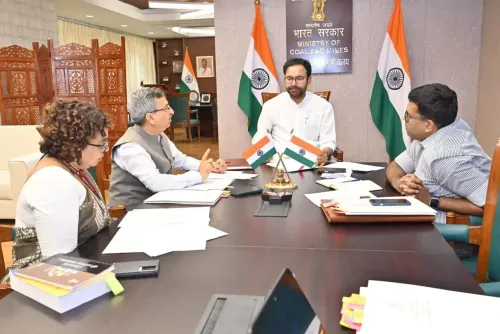
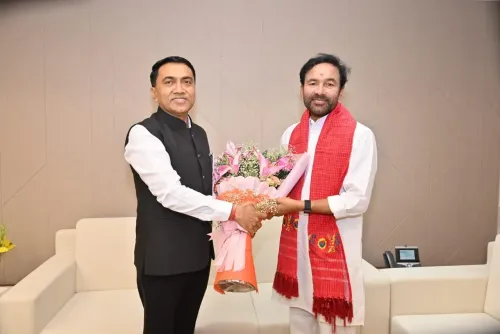
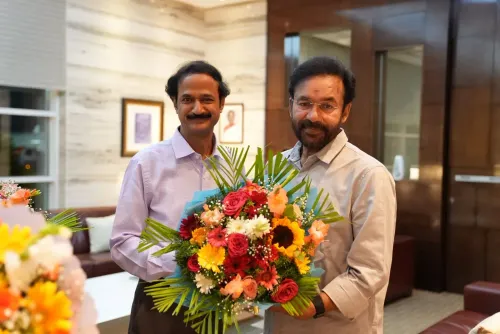
Union Coal and Mines Minister G. Kishan Reddy met Dr Pramod Kumar, the newly appointed Minister for Mines and Art, Culture and Youth Department of the Government of Bihar, in New Delhi on Friday, 3 July 2026. The two ministers held discussions on the mining sector and its potential to drive economic development in Bihar, framing the conversation within the broader national vision of Viksit Bharat.
Context
Kishan Reddy confirmed the meeting on social media, stating that the discussions covered 'matters pertaining to the mining sector and how it can contribute towards the development and economic growth of the state and thereby further the vision of Viksit Bharat.' Dr Pramod Kumar's appointment as Bihar's Mines Minister is recent, making this one of his early engagements with the Union government on sectoral priorities.
The meeting is part of a pattern of centre-state coordination that has intensified under India's federal mineral governance framework, where state governments engage with the Ministry of Mines for technical guidance, policy alignment, and support for mineral block auctions.
Policy Backdrop
Bihar's mineral profile changed significantly after the creation of Jharkhand in 2000, which absorbed a large share of the region's mineral-rich territory. The state's remaining resources — including limestone and minor minerals — have since been the focus of renewed attention under central guidelines for block auctions and development.
The National Mineral Policy 2019 and the Mines and Minerals (Development and Regulation) Amendment Act, 2021 together form the current legislative backbone for mineral governance. The 2021 amendment removed end-use restrictions and enabled seamless transfer of mining leases, making it easier for states like Bihar to attract private investment. The Ministry of Mines has held multiple centre-state coordination meetings since 2019 to align state-level policies with national production targets and reduce India's dependence on mineral imports.
The Viksit Bharat vision — the Central government's roadmap to transform India into a developed economy by 2047 — has placed resource development, including mining, at the centre of its infrastructure and manufacturing push. States are increasingly expected to contribute to this agenda through faster auction cycles and downstream industrial development.
Stakeholders and Impact
The primary stakeholders in this engagement are the Bihar government, existing and prospective mining lease holders in the state, and downstream industries that depend on locally sourced minerals such as limestone for cement production. A more active mining sector in Bihar could generate employment and boost state revenues through royalties and auction premiums.
For the Union Ministry of Mines, such bilateral meetings serve as a channel to push adoption of the 2019-2021 reform framework at the state level and to identify blocks that can be fast-tracked for auction. Bihar's participation in central mineral development fund schemes could also unlock additional infrastructure support for the sector.
What's Next
The immediate outcome of the 3 July 2026 meeting has not been disclosed publicly. Possible follow-up steps include joint proposals for new mineral block auctions in Bihar, inclusion of state projects under the central mineral development fund, or technical assistance missions from the Ministry of Mines to assess Bihar's resource inventory.
Any formal memorandum of understanding between the Centre and Bihar on mining targets, or a parliamentary reference to Bihar-specific mineral output goals, would signal concrete follow-through from this initial engagement. The trajectory of Bihar's mineral auctions in the coming months will be a key indicator of whether this meeting translates into on-ground activity.
Point of View
Signalling that the Ministry of Mines is actively working to bring lagging states like Bihar into the national auction and production framework. For Bihar's new Mines Minister, an early meeting in New Delhi serves a dual purpose: building political rapport with a key Union counterpart and signalling administrative intent to investors watching state-level mineral governance. The invocation of Viksit Bharat is notable — it frames what is essentially a routine bilateral as part of a larger national economic narrative, a rhetorical pattern common to BJP-aligned governments at both levels. Whether the meeting produces actionable outcomes will depend on Bihar's capacity to move pending auction processes and the Centre's willingness to prioritise smaller mineral economies alongside larger producing states.
NationPress
3 Jul 2026
Frequently Asked Questions
Why did G. Kishan Reddy meet Bihar's Mines Minister?
Union Mines Minister G. Kishan Reddy met Bihar's newly appointed Mines Minister Dr Pramod Kumar in New Delhi on 3 July 2026 to discuss how Bihar's mining sector can contribute to the state's economic growth and support the Central government's Viksit Bharat vision.
Who is Dr Pramod Kumar, Bihar's Mines Minister?
Dr Pramod Kumar is the newly appointed Minister for Mines and Art, Culture and Youth Department in the Government of Bihar. He met Union Minister G. Kishan Reddy shortly after assuming office as part of early centre-state coordination on the mining sector.
What minerals does Bihar have after Jharkhand was carved out?
After Jharkhand was created in 2000, Bihar lost a significant portion of its mineral-rich territory. The state retains deposits of limestone and various minor minerals, which are the focus of ongoing auction and development efforts under central guidelines.
What is Viksit Bharat and how does mining relate to it?
Viksit Bharat is the Central government's vision to transform India into a developed economy by 2047 through infrastructure, manufacturing, and resource development. Mining is a key component, as domestic mineral production reduces import dependence and supports industrial growth.
What could be the outcome of the Kishan Reddy-Bihar Mines Minister meeting?
No formal commitments have been announced. Possible outcomes include joint proposals for mineral block auctions in Bihar, inclusion of state projects in the central mineral development fund, or technical assistance from the Ministry of Mines to assess and develop Bihar's mineral resources.