Kishan Reddy Directs Mining Bodies to Fast-Track Viksit Bharat Projects
Synopsis
Union Coal and Mines Minister G. Kishan Reddy has directed the Geological Survey of India, the Ministry of Coal, and the Ministry of Mines to fast-track critical projects and strengthen on-ground execution in pursuit of the Viksit Bharat 2047 national development vision.
Key Takeaways
Kishan Reddy , Union Minister of Coal and Mines, issued a directive on 24 May 2026 to fast-track critical projects under his ministries.
The directive covered three organisations: Geological Survey of India , Ministry of Coal , and Ministry of Mines .
The push is explicitly framed around the Viksit Bharat 2047 vision of Prime Minister Narendra Modi .
The directive emphasises 'mission-driven' on-ground execution, consistent with the Atmanirbhar Bharat framework.
Key downstream sectors impacted include power generation , electric vehicles , renewables , and defence manufacturing .
Upcoming quarterly reviews of Coal India and NMDC will be the next checkpoint for measuring execution progress.
Union Coal and Mines Minister G. Kishan Reddy on Sunday, 24 May 2026, directed key organisations under his ministries to fast-track critical projects, strengthen on-ground execution, and adopt a mission-driven approach aligned with the Viksit Bharat 2047 vision of Prime Minister Narendra Modi. The directive was addressed to the Geological Survey of India, the Ministry of Coal, and the Ministry of Mines.
Context
In his post, Kishan Reddy stated he had directed the organisations to 'fast-track critical projects, strengthen on-ground execution, and work in a mission-driven manner towards the vision of Viksit Bharat 2047, in line with the guidance and vision of Hon'ble Prime Minister Shri Narendra Modi.' The communication was directed at three handles: @GeologyIndia (Geological Survey of India), @CoalMinistry, and @MinesMinIndia, signalling a coordinated push across both ministries.
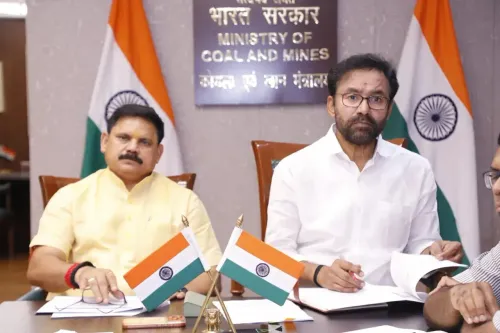
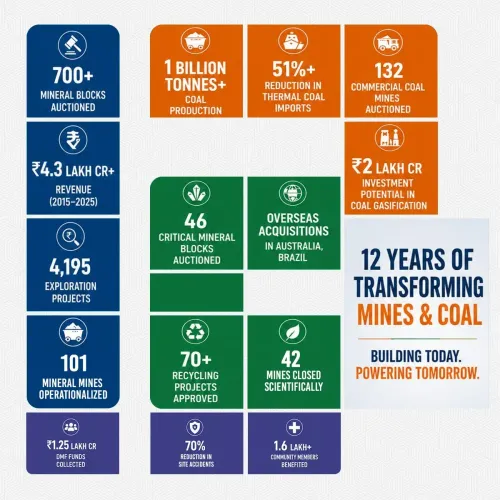
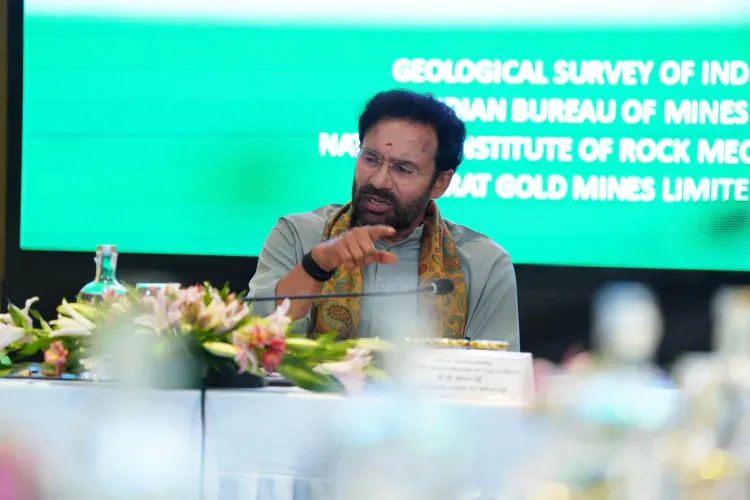
The post was accompanied by four images, suggesting the directive may have followed a formal review meeting or internal consultation, though the specific nature of the gathering has not been officially detailed.
Policy Backdrop
Viksit Bharat 2047 is the national development roadmap articulated by Prime Minister Modi, first outlined in his Independence Day address in 2022, with the goal of transforming India into a fully developed economy by the centenary of independence. Energy security and mineral self-reliance are central pillars of this framework.
The National Mineral Policy 2019 and subsequent amendments to the Mines and Minerals (Development and Regulation) Act laid the legislative groundwork for accelerating exploration and production of critical minerals. These reforms were designed to reduce India's dependence on mineral imports and scale up domestic output across coal and non-coal sectors alike.
The current push also aligns with the broader Atmanirbhar Bharat framework, which emphasises faster project clearances, technology adoption, and time-bound delivery in natural-resource sectors. Coal India Ltd and NMDC — the two largest public-sector undertakings under these ministries — are key vehicles for translating such directives into measurable output targets.
Stakeholders and Impact
The directive directly concerns coal public-sector undertakings, private mining companies, and state geology departments that coordinate with the Geological Survey of India on exploration activities. Faster project execution in the coal sector has downstream implications for power generation capacity and industrial energy costs across the country.
For the minerals sector, accelerating critical mineral projects is seen as essential to India's ambitions in electric vehicle manufacturing, renewable energy infrastructure, and defence production — all of which depend on reliable domestic supply chains for lithium, cobalt, and other strategic materials.
What's Next
Observers will watch for the next quarterly review meetings of Coal India and NMDC on project milestones, where the impact of this directive on on-ground execution timelines is likely to be assessed. Any legislative amendments to the MMDR Act in the upcoming monsoon session of Parliament could further signal the government's intent to accelerate the reforms agenda.
With 2047 as the long horizon and annual output targets growing more ambitious, the pressure on ministry-linked organisations to demonstrate measurable progress on critical projects is set to intensify in the months ahead.
Point of View
Reinforcing that the Viksit Bharat 2047 timeline is being treated as an operational deadline rather than an aspirational slogan. By naming all three organisations simultaneously, the minister is also establishing a unified accountability chain across coal and mineral functions that have historically operated in silos. This move fits a wider pattern in which senior ministers use public communications to create visible pressure on PSUs and technical bodies ahead of parliamentary reviews. The real test will come at the next project-milestone reviews, where on-ground delivery numbers will either validate or challenge the mission-driven rhetoric.
NationPress
10 Oct 2026
Frequently Asked Questions
What did Kishan Reddy direct the Coal and Mines ministries to do?
G. Kishan Reddy directed the Geological Survey of India , Ministry of Coal , and Ministry of Mines to fast-track critical projects, strengthen on-ground execution, and work in a mission-driven manner aligned with the Viksit Bharat 2047 vision.
What is Viksit Bharat 2047?
Viksit Bharat 2047 is Prime Minister Narendra Modi 's national development roadmap to transform India into a fully developed economy by 2047 , the centenary of independence. It encompasses energy security, infrastructure, and mineral self-reliance.
Which organisations were included in Kishan Reddy's directive?
The directive was addressed to the Geological Survey of India , the Ministry of Coal , and the Ministry of Mines — the principal technical and administrative bodies under G. Kishan Reddy 's charge.
How does this directive relate to India's mineral policy?
The directive builds on the National Mineral Policy 2019 and amendments to the MMDR Act , which were designed to accelerate exploration and domestic production of critical minerals, reducing India's import dependence in line with the Atmanirbhar Bharat framework.
What should we watch for after this directive?
Key indicators to watch include the next quarterly project-milestone reviews of Coal India and NMDC , and any potential amendments to the MMDR Act in the upcoming monsoon session of Parliament.