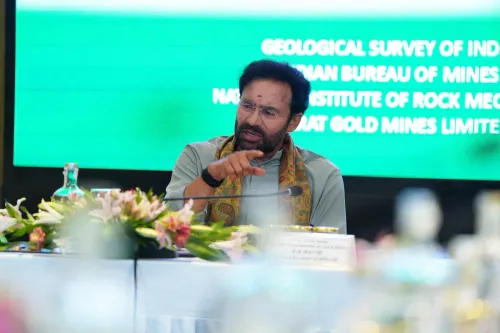
Kishan Reddy: Coal Ministry pushing sustainable mining for Viksit Bharat
Synopsis
Union Coal and Mines Minister G. Kishan Reddy has reaffirmed the Ministry of Coal's commitment to sustainability across the full mine life cycle, tying sector reforms and public-private partnerships to PM Modi's Viksit Bharat 2047 vision of developed-nation status by India's centenary year.
Key Takeaways
Kishan Reddy , Union Minister of Coal and Mines, pledged on 23 May 2026 to carry out all mining activities sustainably, from exploration to closure.
The ministry's agenda is explicitly linked to PM Modi's Viksit Bharat 2047 vision of developed-nation status by India's centenary of independence.
The Sustainable Development Cell , set up in 2020 , is the institutional vehicle for embedding environmental safeguards across the mining life cycle.
Commercial coal mining was opened to private players via the Mineral Laws (Amendment) Act 2020 , with public-private partnerships central to the ministry's strategy.
The next round of commercial coal-block auctions is expected in 2026-27 , with revised mine-closure guidelines under watch.
India's broader goal of net-zero emissions by 2070 underpins the ministry's dual track of expanding output while tightening environmental norms.
Union Coal and Mines Minister G. Kishan Reddy on Saturday, 23 May 2026 reaffirmed the Ministry of Coal's commitment to environmentally responsible mining across every stage of the mine life cycle, framing the sector's reform agenda squarely within Prime Minister Narendra Modi's Viksit Bharat 2047 vision.
Context
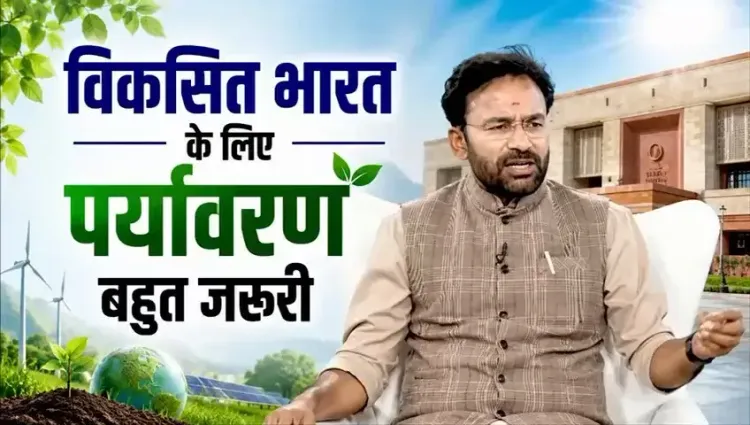
Posting on X alongside a video aired on Sansad TV, Reddy stated: 'To advance economically and realise the Hon'ble Prime Minister's vision of Viksit Bharat 2047, we must remain environmentally conscious.' He added that the ministry is 'committed to carrying out every activity sustainably — from mine exploration to mine closure.'
The statement positions environmental stewardship not as a constraint on growth but as an integral component of India's development roadmap to 2047, the centenary of independence.
Policy Backdrop
The Ministry of Coal established a Sustainable Development Cell in 2020 to embed environmental safeguards across the full mining life cycle — from exploration and extraction through to post-closure land rehabilitation. That same year, the Mineral Laws (Amendment) Act 2020 opened commercial coal mining to private players, triggering successive rounds of block auctions.
This dual track — expanding domestic coal output to meet energy demand while tightening environmental norms — reflects India's broader balancing act: fuelling economic growth targets while honouring its international commitment to net-zero emissions by 2070. Reddy's reference to 'strong public-private partnerships' signals continued reliance on this model to fund both production and sustainability investments.
Stakeholders and Impact
Coal mining firms, both public-sector undertakings and private entrants, are the primary actors who must translate ministry policy into on-ground practice — covering dust suppression, water management, biodiversity offsets, and eventual mine-closure compliance. Mining-affected communities, particularly in states such as Jharkhand, Chhattisgarh, and Odisha, stand to benefit most directly from improved environmental standards and reclaimed land after mine closure.
For Telangana, where Reddy also serves as BJP state president, the ministry's sustainability push carries added political resonance given the state's own coal-bearing districts and the communities dependent on them.
What's Next
The next round of commercial coal-block auctions is expected in 2026-27, and implementation reports on revised mine-closure guidelines will serve as a key benchmark for whether the ministry's sustainability commitments translate into enforceable outcomes. Observers will watch whether upcoming auction conditions carry stronger environmental conditionalities tied to the Viksit Bharat framework.
As India calibrates its coal dependency against clean-energy transition timelines, the ministry's stated 'purpose and responsibility' approach will face its clearest test in how swiftly and rigorously mine-closure and reclamation norms are applied to both legacy and newly auctioned blocks.
Point of View
Neutralising green-transition critiques by embedding sustainability language within the government's own growth framework. The Sansad TV platform amplifies this as official government communication rather than partisan messaging. The timing, ahead of anticipated coal-block auctions in 2026-27, suggests the ministry is building a public-trust architecture to ease private-sector entry and community acceptance. Whether the rhetoric is matched by enforceable mine-closure and environmental conditionalities in auction terms will be the real measure of this commitment.
NationPress
7 Oct 2026
Frequently Asked Questions
What is Viksit Bharat 2047 and how does coal mining relate to it?
Viksit Bharat 2047 is the Indian government's vision to achieve developed-nation status by 2047, the centenary of independence. The Coal Ministry is linking its sustainability and reform agenda to this vision, arguing that responsible mining supports long-term economic growth without compromising environmental goals.
What did Coal Minister G. Kishan Reddy say about sustainable mining?
Kishan Reddy stated that the Ministry of Coal is committed to carrying out every activity sustainably, from mine exploration to mine closure, and that reforms and public-private partnerships are driving the sector forward with 'purpose and responsibility.'
What is the Coal Ministry's Sustainable Development Cell?
The Sustainable Development Cell was set up by the Ministry of Coal in 2020 to mainstream environmental safeguards — including land reclamation, water management, and biodiversity protection — across all stages of the coal mining life cycle.
How has private sector participation in coal mining changed in India?
The Mineral Laws (Amendment) Act 2020 opened commercial coal mining to private companies for the first time, ending the sector's state monopoly. Since then, multiple rounds of coal-block auctions have been held, with another round expected in 2026-27.
What are India's environmental commitments related to coal?
India has committed to achieving net-zero emissions by 2070. The government's stated approach is to expand domestic coal production to meet near-term energy demand while simultaneously tightening mine-closure rules and environmental norms to align with long-term climate obligations.