Kishan Reddy Meets Foreign Secy on Coal, Critical Minerals
Synopsis
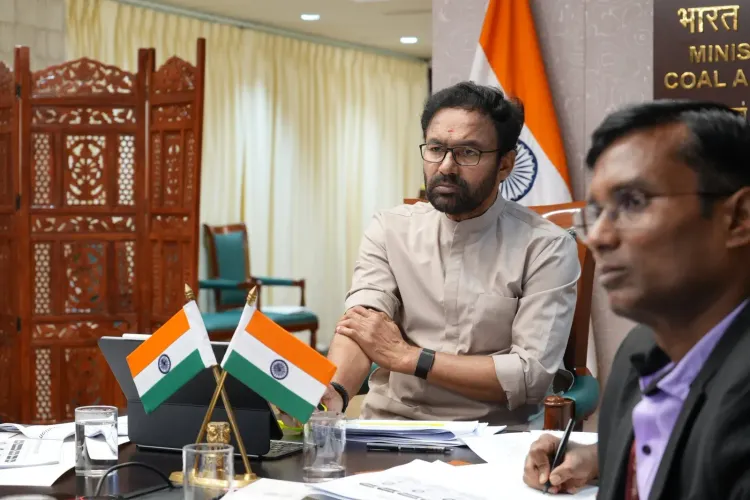
Union Minister G. Kishan Reddy held a 'Whole of Government' meeting with Foreign Secretary Vikram Misri and ministry secretaries on 20 November 2026, aligning coal gasification targets and critical minerals diplomacy under the Atmanirbhar Bharat resource security framework.
Key Takeaways
Kishan Reddy met Foreign Secretary Vikram Misri alongside Coal and Mines secretaries on 20 November 2026 to coordinate India's resource security strategy.
The 'Whole of Government' approach formally integrates the Ministry of External Affairs into domestic coal and minerals policy execution.
India's National Mission on Coal Gasification targets 100 million tonnes of capacity by 2030 , with diplomatic support now enlisted to secure technology and financing partnerships.
Khanij Bidesh India Ltd , incorporated in 2019 , is the government vehicle for overseas acquisition of strategic minerals including lithium and cobalt.
The MMDR Amendment Act, 2023 opened critical mineral exploration to private players to accelerate domestic supply.
Reddy alluded to foreign export controls on critical minerals as a threat India is countering through PM Modi's bilateral partnerships.
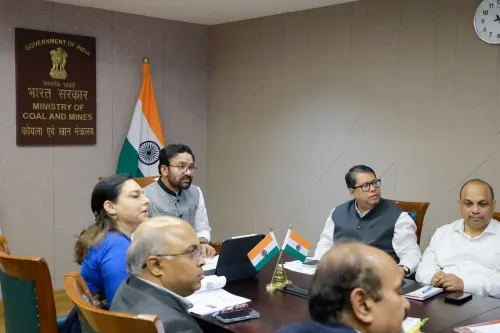
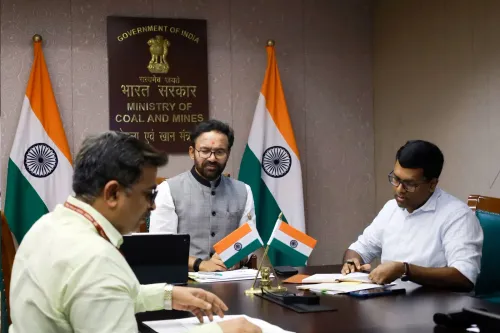
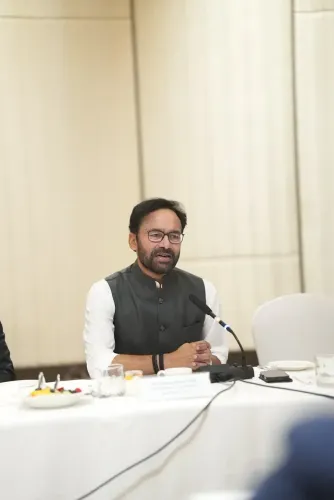
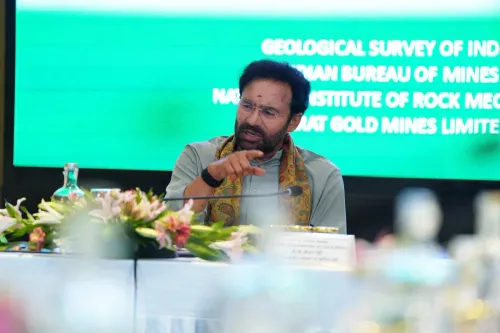
India's resource-security push just got a whole-of-government upgrade. Union Coal and Mines Minister G. Kishan Reddy met Foreign Secretary Vikram Misri on Friday, 20 November 2026, alongside the secretaries of the Coal and Mines ministries, to sharpen India's diplomatic and domestic strategy on coal gasification and critical minerals.
Three ministries, one table — and why that matters
The meeting brought together the Ministry of Coal, the Ministry of Mines, and the Ministry of External Affairs under what Reddy described as a 'Whole of Government' effort. That framing is deliberate. For years, India's resource diplomacy operated in silos — line ministries chased domestic targets while the foreign ministry ran parallel bilateral tracks. Pulling all three secretaries into the same room signals a structural shift: diplomatic outreach and domestic policy are now expected to move in lockstep.
Reddy was direct about the stakes: 'As India's economy grows, so does our need for reliable access to critical minerals and cleaner use of our coal reserves.' The clean use of coal is a pointed phrase — it points squarely at gasification, the process of converting coal into syngas to substitute for imported natural gas and reduce direct combustion emissions.
India's coal gasification ambition and the 2030 target
India approved a National Mission on Coal Gasification in 2020, targeting 100 million tonnes of gasification capacity by 2030. That target remains ambitious; pilot projects are still in early stages. Friday's high-level coordination meeting suggests the government is pushing to accelerate implementation by aligning diplomatic channels — securing technology partnerships and financing — with the Coal Ministry's domestic rollout plans.
India holds the world's fourth-largest coal reserves. Converting even a fraction of that into syngas could reduce reliance on liquefied natural gas imports, cutting both the import bill and foreign-exchange pressure.
Critical minerals: the geopolitical edge India is racing to build
The critical minerals conversation is arguably the more urgent one. Reddy acknowledged the elephant in the room: 'Even as some countries weaponise access to resources by tightening export controls on critical minerals, the trusted partnerships PM Modi has built with nations over the years are opening new avenues for India.' He stopped short of naming any country, but the reference to export-control weaponisation echoes a pattern seen globally — restrictions on lithium, cobalt, graphite, and rare earths that have rattled supply chains for electric vehicles, defence electronics, and clean-energy infrastructure.
India has moved on multiple fronts. The Mines and Minerals (Development and Regulation) Amendment Act, 2023, opened critical mineral exploration to private players and fast-tracked licensing. Khanij Bidesh India Ltd, incorporated in 2019, is the government's overseas acquisition arm, hunting for lithium, cobalt, and other strategic assets in resource-rich nations. The MEA's involvement now formalises what has often been informal coordination — embassy networks, bilateral summits, and state visits are being leveraged as mineral-diplomacy tools.
Atmanirbhar Bharat's resource spine
Both coal gasification and critical mineral security sit within the broader Atmanirbhar Bharat framework — Prime Minister Modi's self-reliance doctrine that has increasingly shaped industrial and energy policy since 2020. The logic is consistent: build domestic capacity, diversify international supply chains, and reduce any single point of vulnerability. What Friday's meeting adds is an institutional mechanism to ensure the MEA is not just a diplomatic facilitator but an active partner in resource acquisition strategy.
The minister's closing message was unambiguous: India's growth will not be held hostage to resource scarcity, whether from depleted domestic reserves or hostile export regimes abroad. With the economy expanding and clean-energy targets binding, the pressure to deliver on that promise is only rising.
The next concrete test: watch for new bilateral mineral exploration or offtake agreements announced through MEA channels, and progress updates on the flagship coal gasification pilots that are meant to prove the 100-million-tonne mission is more than a number on paper.
Point of View
Not just a talking-shop — it institutionalises MEA as a resource-security actor alongside line ministries, a gap that has historically slowed India's overseas mineral acquisition. The timing is significant: global critical mineral supply chains are fracturing along geopolitical lines, and India's window to lock in long-term offtake agreements at favourable terms is narrowing. The explicit reference to countries 'weaponising' export controls, without naming them, reflects a calibrated diplomatic posture — assertive on intent, restrained on provocation. If the 'Whole of Government' coordination translates into signed bilateral agreements and gasification project financial closures within the next 12-18 months, it will represent a genuine step-change in India's energy and resource autonomy; if it stays at the meeting level, the rhetoric will outrun the results.
NationPress
20 Nov 2026
Frequently Asked Questions
What is coal gasification and why is India pursuing it?
Coal gasification converts solid coal into syngas, a mixture of hydrogen and carbon monoxide that can substitute for natural gas in industry and power generation. India is pursuing it to make cleaner use of its vast domestic coal reserves and reduce expensive LNG imports. The government set a target of 100 million tonnes of gasification capacity by 2030 under the National Mission on Coal Gasification approved in 2020.
What are critical minerals and why does India need them?
Critical minerals — lithium, cobalt, nickel, rare earths, graphite and others — are essential for electric vehicle batteries, defence electronics, solar panels, and clean-energy infrastructure. India has limited domestic deposits and relies heavily on imports, making supply-chain security a strategic priority as the economy and clean-energy sector expand.
What is Khanij Bidesh India Ltd?
Khanij Bidesh India Ltd (KABIL) is a joint venture of three central public sector enterprises incorporated in 2019 to identify, acquire, and develop strategic mineral assets overseas, particularly lithium and cobalt, to secure India's long-term supply of battery and technology materials.
What does 'Whole of Government' approach mean in the context of resource security?
The 'Whole of Government' approach means that multiple ministries — Coal, Mines, and External Affairs — coordinate policy and action on a shared objective rather than working independently. In resource security, it means diplomatic channels actively support mineral acquisition and energy partnerships, not just domestic production policy.
Which countries are restricting critical mineral exports and how does it affect India?
Several major mineral-producing and processing nations have tightened export controls on critical minerals including lithium, cobalt, graphite and rare earths in recent years, disrupting global supply chains. While Minister Reddy did not name specific countries, India is responding by diversifying import sources through bilateral agreements and accelerating domestic exploration under the MMDR Amendment Act, 2023.