Centre pushes states on coal gasification and critical minerals at Goa meet
Synopsis
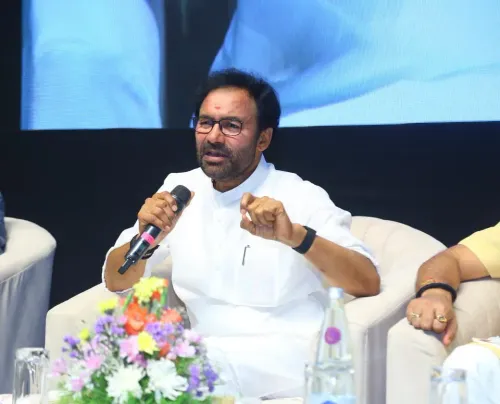
India's coal output has crossed one billion tonnes for the second year running — but the Centre wants more. At the 4th Mining Ministers' Conference in Goa, Union Minister G. Kishan Reddy framed coal gasification and critical mineral self-reliance not just as industrial targets, but as strategic imperatives in a shifting global order. The real pressure now falls on states to deliver on mine auctions and infrastructure.
Key Takeaways
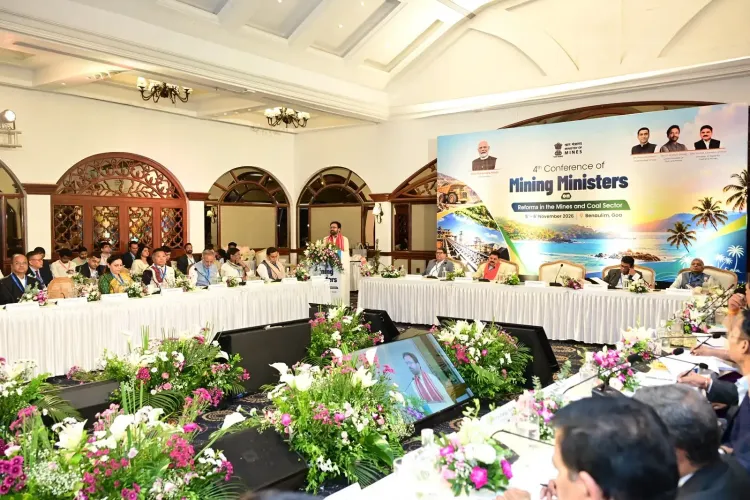
Kishan Reddy addressed the 4th Conference of Mining Ministers in Goa on 5 November 2026 , urging states to accelerate coal gasification and critical mineral mining.
India's domestic coal production crossed one billion tonnes for the second consecutive year , according to Coal Secretary Vikram Dev Dutt .
The Centre called for a full domestic ecosystem covering exploration, processing, refining, and recycling of critical minerals to cut import dependence.
States were urged to expedite operationalisation of auctioned mines, auction new blocks, and adopt AI and digitalisation in mine operations.
The two-day conference, organised by the Union Ministry of Mines , continues on 6 November and aims to build a shared Centre-State roadmap for the mining sector.
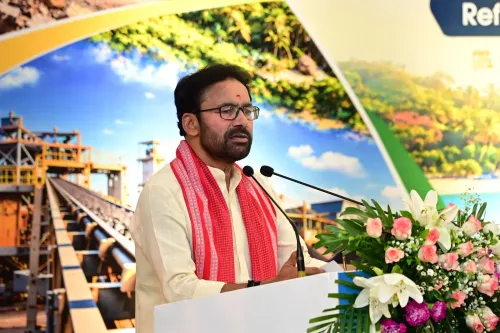
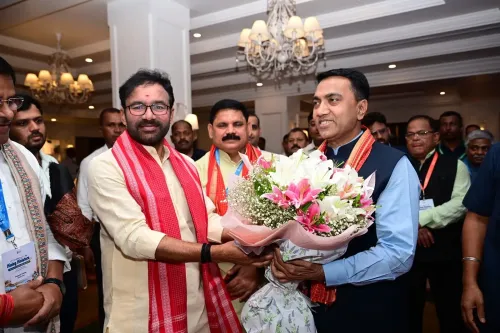
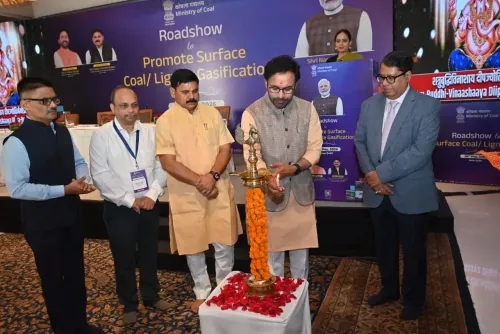
Union Coal and Mines Minister G. Kishan Reddy on Thursday, 5 November 2026, called on coal-bearing states to urgently accelerate coal gasification projects and ramp up domestic exploration of critical minerals, warning that India's strategic and economic resilience depends on reducing import dependence. The minister was addressing the 4th Conference of Mining Ministers, a two-day gathering organised by the Union Ministry of Mines in Goa on 5 and 6 November, bringing together mining ministers and senior officials from states and the Centre.
The Case for Coal Gasification
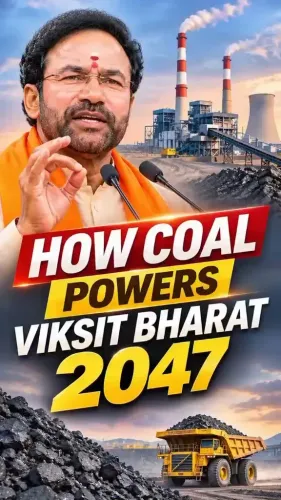
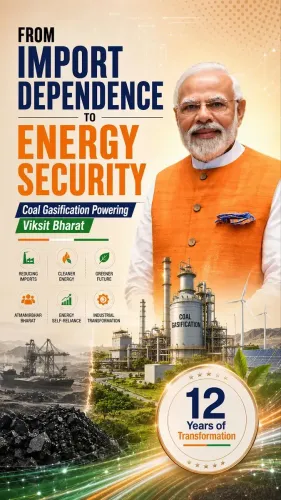
Minister Reddy argued that coal gasification represents the most viable pathway to unlocking the economic value of India's vast coal reserves. He said the technology would drive industrial diversification, generate employment, and anchor the country's long-term energy security. Notably, domestic coal production has already surpassed one billion tonnes for the second consecutive year — a milestone flagged by Coal Secretary Vikram Dev Dutt as evidence of India's accelerating push toward energy self-reliance.
Reddy urged coal-bearing states to actively facilitate investments, support infrastructure development, and expedite the operationalisation of already-auctioned mines. He also called for the accelerated auction of new blocks and an expansion of exploration activities. This comes amid a broader national push to maximise domestic energy resources and limit costly imports of both coal and refined minerals.
Critical Minerals: A Geopolitical Imperative
The minister highlighted the strategic importance of critical minerals in an increasingly contested global geopolitical landscape. He stressed the need to build a full domestic ecosystem — spanning exploration, mining, processing, refining, and recycling — rather than relying on imports that expose India to supply-chain shocks.
Critics and policy analysts have long pointed out that India's dependence on critical minerals such as lithium, cobalt, and rare earth elements poses a structural vulnerability, particularly as the country scales up its electric vehicle and renewable energy sectors. Reddy's remarks signal that the Centre is now explicitly framing mineral security as a matter of national resilience, not just industrial policy.
Technology as the Key Enabler
Reddy called upon state governments to harness Artificial Intelligence (AI), digitalisation, and advanced technological solutions across exploration, mine operations, and mineral recovery. He argued that technology-driven practices would improve productivity, operational efficiency, and sustainability across both the mining and coal sectors — areas where India has historically lagged global benchmarks.
Coal Secretary Vikram Dev Dutt echoed this view, stressing the importance of efficient logistics and sustainable mining practices alongside technology adoption. He called for stronger Centre-State collaboration to convert India's mineral endowment into economic output at scale.
What the Conference Is Designed to Achieve
The 4th Mining Ministers' Conference serves as a formal platform for the Centre to align state-level policy and execution with the national mining reform agenda. The minister acknowledged that mining sector reforms have already strengthened state economies, attracted investments, and generated employment in mining-affected regions. He called for a shared roadmap between the Centre and states to take India's mining and coal sectors to 'new heights.'
The outcomes of this conference — including any new state commitments on mine auctions, gasification projects, or critical mineral exploration targets — will be closely watched by industry bodies and energy sector investors.
Point of View
Reflecting how supply-chain vulnerabilities exposed by global disruptions have reshaped policymaking. Yet the gap between conference declarations and state-level execution has historically been wide: mine auctions stall, infrastructure lags, and processing capacity stays underdeveloped. Coal gasification, in particular, has been flagged as an opportunity for years without producing commercially significant output at scale. The real test of this conference will be whether specific, time-bound state commitments emerge — or whether it ends, as many such conclaves do, with a communiqué and little follow-through.
NationPress
5 Nov 2026
Frequently Asked Questions
What is coal gasification and why is India pushing it?
Coal gasification is a process that converts coal into synthetic gas (syngas), which can be used as an industrial feedstock or fuel. India is pushing it to extract greater economic value from its abundant domestic coal reserves, reduce dependence on imported petroleum products, and support industrial diversification and job creation.
What was discussed at the 4th Mining Ministers' Conference in Goa?
The conference, held on 5 and 6 November in Goa and organised by the Union Ministry of Mines, focused on accelerating coal gasification, strengthening critical mineral ecosystems, adopting AI and digital technologies in mining, and improving Centre-State coordination on mine auctions and exploration.
Why are critical minerals considered strategically important for India?
Critical minerals such as lithium, cobalt, and rare earth elements are essential inputs for electric vehicles, renewable energy systems, and defence technologies. India currently depends heavily on imports, leaving it vulnerable to supply-chain disruptions and geopolitical pressures — a risk the Centre is now explicitly seeking to reduce.
How much coal is India producing domestically?
According to Coal Secretary Vikram Dev Dutt, India's domestic coal production has surpassed one billion tonnes for the second consecutive year, marking a significant milestone in the country's push toward energy self-reliance and reduced import dependence.
What actions did Minister Kishan Reddy ask states to take?
Reddy urged coal-bearing states to facilitate investments, support infrastructure development, expedite operationalisation of auctioned mines, accelerate new block auctions, expand exploration activities, and adopt AI and digitalisation across mine operations and mineral recovery.