Kishan Reddy Meets NSW Minister at IMARC 2026 on Critical Minerals
Synopsis
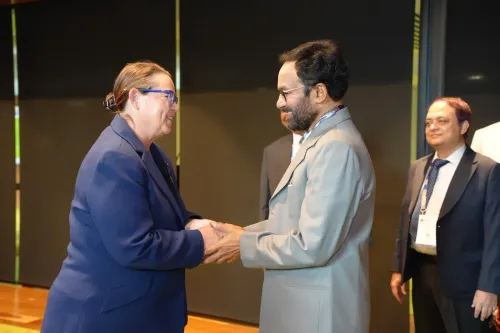
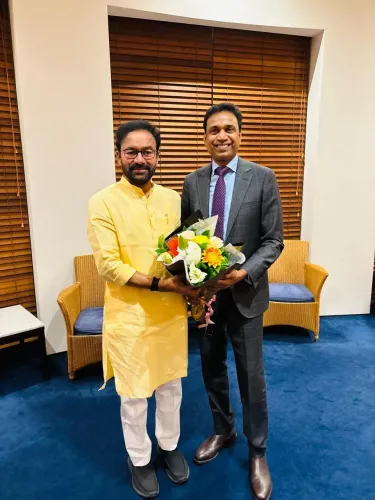
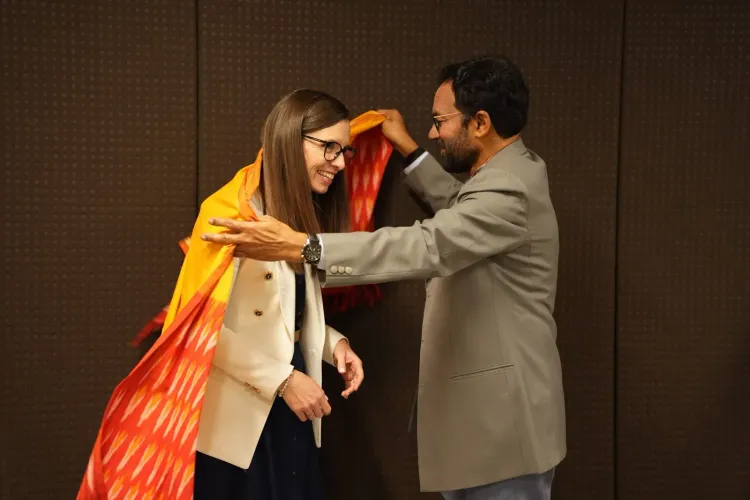
Union Coal and Mines Minister G. Kishan Reddy met New South Wales Minister Courtney Houssos at IMARC 2026 on 27 October, exchanging views on critical minerals cooperation, mining technologies and manufacturing partnerships, building on the 2023 India-Australia Critical Minerals Partnership framework.
Key Takeaways
Kishan Reddy held a bilateral meeting with NSW Minister Courtney Houssos at IMARC 2026 on 27 October 2026 .
Talks covered critical minerals cooperation , advanced mining technologies , and manufacturing partnerships .
The meeting builds on the India-Australia Critical Minerals Partnership established in 2023 for lithium, cobalt and rare earth supply chains.
The bilateral also draws on the India-Australia ECTA signed in 2022 , which included resources cooperation provisions.
India's push for mineral diplomacy is driven by demand from PLI schemes in EVs, batteries and electronics manufacturing.
Possible follow-up outcomes include MoUs or a dedicated bilateral resources working group.
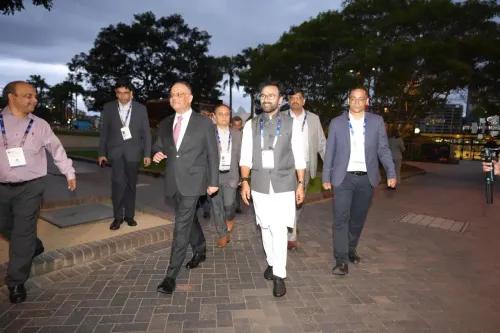
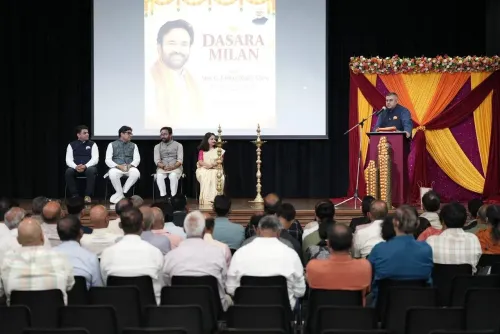
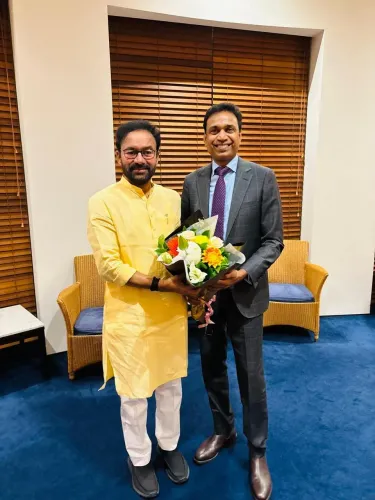
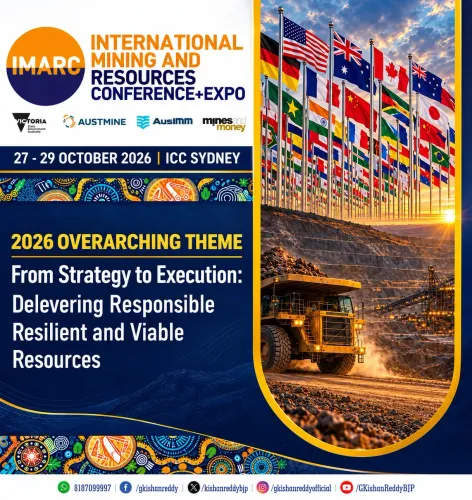
On the sidelines of the world's premier mining industry gathering, Union Coal and Mines Minister G. Kishan Reddy sat down with New South Wales Finance and Natural Resources Minister Courtney Houssos at IMARC 2026 on Tuesday, 27 October — a meeting that plugs directly into India's most urgent industrial ambition: securing the minerals that power the clean-energy future.
What was on the table at IMARC 2026
Reddy described the bilateral exchange as 'constructive,' covering three specific fronts: cooperation in critical minerals, the advancement of mining technologies, and new opportunities for manufacturing partnerships. The framing was deliberate — this was not a courtesy call but a structured conversation between two resource-sector principals at a conference that draws the global mining industry to one room each year.
Both sides acknowledged a natural fit. India brings fast-scaling industrial demand and competitive manufacturing capacity; New South Wales brings deep operational expertise in resources extraction and processing — including deposits of the minerals modern industry cannot do without.
The India-Australia critical minerals track record
This meeting does not emerge from a vacuum. India and Australia signed the Economic Cooperation and Trade Agreement (ECTA) in 2022, which embedded minerals and resources cooperation into the bilateral relationship. A year later, in 2023, the two countries formalised a Critical Minerals Partnership framework aimed specifically at securing supply chains for lithium, cobalt and rare earths — the backbone inputs for electric vehicles, renewable energy systems and consumer electronics.
The NSW state-level engagement at IMARC layers directly on top of that federal architecture. State governments in Australia control significant portions of land access and mining approvals, making a minister like Houssos a consequential interlocutor — not just a ceremonial one.
Why India is moving fast on mineral diplomacy
India's push is structural. The country's production-linked incentive (PLI) schemes for electric vehicles, advanced chemistry cells and electronics manufacturing have created a domestic industrial base that is hungry for guaranteed mineral inputs. Concentration risk — the world's dependence on a handful of suppliers for critical minerals — has made diversification a national-security priority as much as an economic one.
Reddy noted that 'India's growing capabilities and NSW's expertise in the resources sector offer significant potential to deepen collaboration, build resilient supply chains, and foster mutually beneficial partnerships.' The language of supply chain resilience is the language of strategic planning, not just trade promotion.
The IMARC platform gives both sides a rare window: technical experts, corporate deal-makers and government officials in the same building. Whether this conversation at IMARC 2026 converts into a formal working group, an MoU, or a dedicated bilateral resources dialogue is the live question. Reddy said he looks 'forward to building on this engagement' — the next move is to watch.
Point of View
India gains direct access to a government that controls land and approvals for Australian mineral assets, complementing the federal Critical Minerals Partnership signed in 2023. The emphasis on 'resilient supply chains' signals that New Delhi views this relationship through a strategic-industrial lens, not merely a trade one. If working groups or MoUs follow, IMARC 2026 will mark a meaningful acceleration of India's diversification away from concentrated mineral suppliers.
NationPress
27 Oct 2026
Frequently Asked Questions
What did Kishan Reddy discuss with the NSW minister at IMARC 2026?
Kishan Reddy and NSW Minister Courtney Houssos discussed strengthening cooperation in critical minerals, advancing mining technologies, and exploring manufacturing partnership opportunities between India and New South Wales.
What is the India-Australia Critical Minerals Partnership?
India and Australia established a Critical Minerals Partnership framework in 2023 to secure supply chains for key materials including lithium, cobalt and rare earths, which are essential for electric vehicles, renewables and electronics.
Why is India focused on critical minerals diplomacy?
India's production-linked incentive schemes in electric vehicles, advanced battery cells and electronics have created strong domestic demand for critical mineral inputs, making supply chain diversification a strategic and economic priority.
What could come next from the Kishan Reddy-NSW meeting?
Possible follow-up outcomes include formal memoranda of understanding, dedicated bilateral working groups on critical minerals, or expanded cooperation announced at future India-Australia resources dialogues or IMARC editions.