Kishan Reddy: Red Corridor Now History Under Modi's Leadership
Synopsis
Union Coal and Mines Minister G. Kishan Reddy declared on 19 July 2026 that India's Red Corridor is now history under PM Modi's zero-tolerance policy, highlighting a shift from weapons to laptops and medals in tribal communities once ravaged by Naxalite violence.
Key Takeaways
Kishan Reddy declared on 19 July 2026 that the 'Red Corridor' has become history under PM Modi 's leadership.
The minister highlighted that tribal communities who once bore the worst of Naxalite violence now hold laptops, books, and sports medals.
India's SAMADHAN doctrine , introduced in 2017 , combined security operations with development and rehabilitation in LWE-affected areas.
The government declared 44 districts Naxal-free between 2020 and 2023 following sustained operations and surrender programmes.
The Red Corridor once spanned over 90 districts across Chhattisgarh, Jharkhand, Odisha, Maharashtra and neighbouring states.
Updated MHA LWE violence statistics and further district delistings are anticipated as the next measurable milestones.
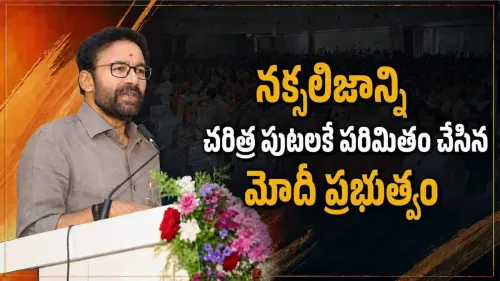
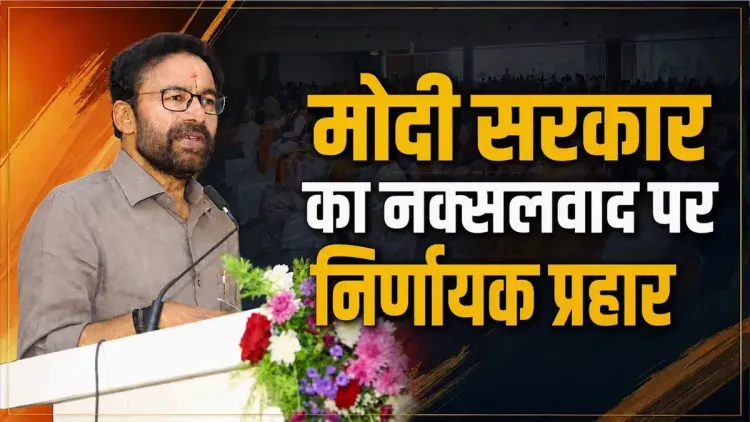
Union Coal and Mines Minister G. Kishan Reddy on Sunday, 19 July 2026, declared that the once-dreaded 'Red Corridor' has become a thing of the past, crediting Prime Minister Narendra Modi's zero-tolerance policy against Left-Wing Extremism (LWE) for the transformation of tribal heartlands across central and eastern India.
Context
Posting in Hindi on X, Kishan Reddy wrote that tribal communities — janjatiya bhai-behnon (tribal brothers and sisters) — had endured the worst of Naxalite violence for decades. He noted a striking symbolic shift: 'The hands that were once forced to pick up weapons out of compulsion today hold laptops, books, notebooks, and sports medals.' The minister affirmed that India is now firmly advancing on a policy of 'Zero Tolerance' toward terrorism, violence, and Naxalism.
The post accompanies a video and comes amid a sustained government narrative of victory over Left-Wing Extremism, a theme that has gained momentum in BJP political communication through 2025–2026.
Policy Backdrop
The term 'Red Corridor' entered mainstream usage in the late 2000s to describe a contiguous belt of over 90 districts across Chhattisgarh, Jharkhand, Odisha, Maharashtra and neighbouring states where Naxalite-Maoist groups exercised significant influence. Successive governments pursued a twin-track approach of security operations alongside development programmes, but the post-2014 administration under Modi formalised this as the SAMADHAN doctrine, introduced by the Ministry of Home Affairs in 2017.
SAMADHAN — an acronym covering smart leadership, aggressive strategy, motivation, actionable intelligence, dashboard-based key performance indicators, harnessing technology, action plan for each theatre, and no access to financing — combined kinetic operations with road connectivity, school construction, and financial inclusion drives in tribal belts. Between 2020 and 2023, the government formally declared 44 districts free of Naxalite influence following sustained security operations and surrender programmes. Official data from the Ministry of Home Affairs have shown a steady decline in LWE-related incidents and fatalities since the mid-2010s, though residual violence has persisted in a shrinking core area.
Stakeholders and Impact
Adivasi (tribal) communities in LWE-affected districts have historically faced a double burden — caught between Maoist cadres who recruited or coerced locals, and security operations that disrupted daily life. Government rehabilitation and surrender programmes have sought to reintegrate former cadres, while flagship welfare schemes targeting education, digital access, and sports infrastructure have been extended to these regions.
Kishan Reddy's imagery of laptops and sports medals is consistent with the Centre's emphasis on schemes such as PM-JANMAN (for particularly vulnerable tribal groups) and the Eklavya Model Residential Schools network, which together aim to bring mainstream development to the most remote tribal pockets. Security forces — including the Central Reserve Police Force and state police — have also been central stakeholders, with significant personnel losses recorded over decades of operations.
What's Next
The Ministry of Home Affairs is expected to release updated annual LWE violence statistics that will either substantiate or qualify the government's claim that the Red Corridor has effectively ceased to exist. Further district delistings from the official LWE-affected list are also anticipated, which would carry administrative and funding implications for those regions.
Kishan Reddy's post signals that the BJP intends to keep the Naxalism narrative prominent in political messaging — particularly relevant in Telangana, where the party is seeking to consolidate its position, and in the broader tribal-belt states ahead of any future electoral cycles. The transformation of former conflict zones into development success stories is increasingly central to the government's governance record.
Point of View
The messaging attempts to neutralise a historically sensitive political terrain. The symbolic contrast — weapons replaced by laptops and medals — is crafted for broad emotional appeal and is consistent with the government's wider 'Viksit Bharat' development narrative. However, the claim that the Red Corridor is entirely 'history' will face scrutiny when the Ministry of Home Affairs releases its next annual LWE incident data, making those figures politically consequential.
NationPress
18 Oct 2026
Frequently Asked Questions
What is the Red Corridor in India?
The Red Corridor refers to a belt of districts across central and eastern India — including parts of Chhattisgarh, Jharkhand, Odisha and Maharashtra — where Naxalite-Maoist groups historically exercised significant influence, once covering over 90 districts.
Has the Naxal problem in India been solved?
The government has declared 44 districts Naxal-free between 2020 and 2023, and official data show a steady decline in LWE-related incidents, but security agencies acknowledge that residual violence persists in a shrinking core area.
What is the SAMADHAN doctrine against Naxalism?
SAMADHAN is a multi-pronged strategy introduced by the Ministry of Home Affairs in 2017 that combines security operations, development programmes, surrender and rehabilitation schemes, and technology-driven intelligence to counter Left-Wing Extremism.
What did G. Kishan Reddy say about Naxalism?
On 19 July 2026, Union Minister G. Kishan Reddy posted that the Red Corridor has become history under PM Modi's leadership, and that tribal communities who once bore the brunt of Naxalite violence now hold laptops, books, and sports medals.
Which tribal schemes has the government launched in LWE areas?
Key initiatives include PM-JANMAN for particularly vulnerable tribal groups and the Eklavya Model Residential Schools network, both aimed at extending education, digital access, and welfare to remote tribal pockets in former LWE-affected regions.