Kishan Reddy: Red Corridor Now Confined to History Books
Synopsis
Union Minister G. Kishan Reddy on 19 July 2026 declared the Red Corridor a thing of the past, crediting PM Modi's leadership for turning tribal youth away from insurgency toward education and digital opportunity — a claim rooted in over a decade of combined security and development policy.
Key Takeaways
Kishan Reddy declared on 19 July 2026 that the 'Red Corridor' is now confined to history books, crediting PM Narendra Modi's leadership.
The minister described tribal youth in former Naxal areas as having moved from holding weapons to holding laptops and books.
The Red Corridor historically spanned tribal belts of Chhattisgarh, Jharkhand, Odisha and Bihar , where Naxalite-Maoist groups operated for decades.
Government policy since 2009 has combined security offensives with development schemes such as the Integrated Action Plan for LWE districts and the Road Connectivity Project for LWE Areas .
From 2014 onward, the Ministry of Home Affairs progressively reduced the official count of LWE-affected districts.
Tribal communities and youth in former insurgency zones remain the key stakeholders as the government pushes education and digital access in these regions.
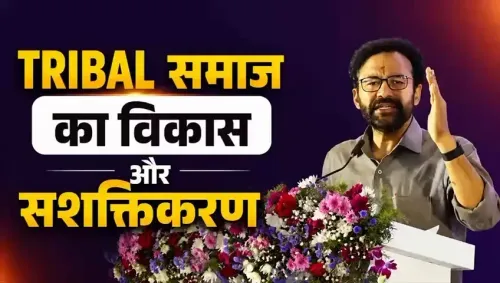
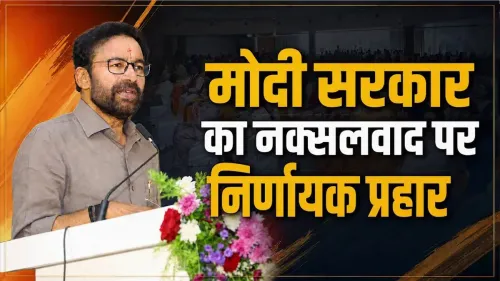
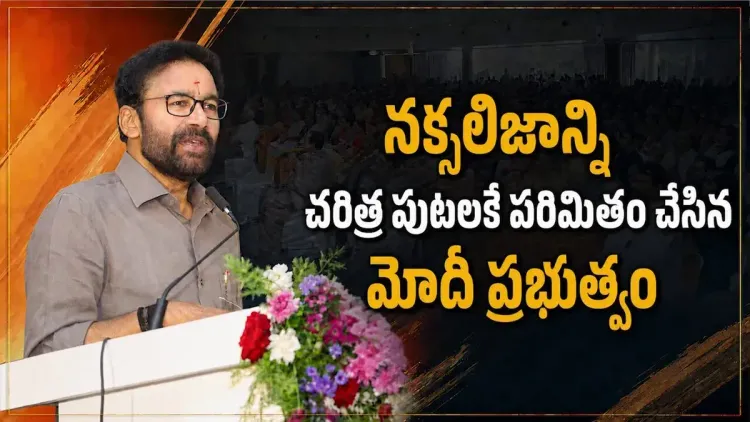
Union Coal and Mines Minister and BJP Telangana president G. Kishan Reddy on Sunday, 19 July 2026, credited Prime Minister Narendra Modi's leadership for ending decades of Naxalite violence in tribal India, declaring that the once-feared 'Red Corridor' now belongs to history. In a post on X, Reddy described a generational transformation — tribal youth who once took up arms are today holding laptops and books, writing a new future for themselves.
Context
Writing in Telugu, Reddy's post captured a striking image of change: 'ఒకప్పుడు పరిస్థితుల ప్రభావంతో ఆయుధాలు పట్టిన చేతులు... ఈరోజు ల్యాప్టాప్లు, పుస్తకాలు పట్టి సరికొత్త భవిష్యత్తును లిఖిస్తున్నాయి' ('Hands that once took up weapons under the force of circumstances... today hold laptops and books, writing a brand-new future'). The minister framed tribal communities as the primary victims of 'the darkness created by decades of Naxalism,' and positioned the current moment as one of irreversible transformation.
The Red Corridor — a swath of central and eastern India historically dominated by Naxalite-Maoist groups — has for decades been associated with displacement, violence and stunted development in predominantly tribal districts spanning Chhattisgarh, Jharkhand, Odisha and Bihar.
Policy Backdrop
The central government's dual-track approach — security operations paired with development investment — stretches back over fifteen years. The Integrated Action Plan for Left Wing Extremism districts, launched in 2010, channelled funds for roads, schools and connectivity into the worst-affected areas. From 2014 onward, the Ministry of Home Affairs progressively trimmed the official list of LWE-affected districts as security conditions improved.
Earlier, Operation Green Hunt, launched in 2009, marked the first large-scale coordinated security offensive across multiple states. The current government has built on those foundations, coupling counter-insurgency gains with schemes targeting digital access, road connectivity and livelihood creation in former insurgency zones. The Road Connectivity Project for LWE Areas remains one of the flagship infrastructure interventions in this effort.
Stakeholders and Impact
Tribal communities in the former Red Corridor districts are the central stakeholders in this narrative. For decades, Naxalite violence disrupted schooling, healthcare and economic activity, leaving generations with limited access to mainstream development. The minister's imagery — weapons replaced by laptops and books — speaks directly to the aspiration of integrating these communities into India's digital and educational mainstream.
Youth in former LWE-affected districts stand to benefit most if security gains translate into sustained investment in education and skill development. Civil society groups working in these regions have long argued that durable peace depends on addressing the underlying tribal grievances over land rights and resource access that historically fuelled the insurgency.
What's Next
The Ministry of Home Affairs annual report on LWE-affected districts will be a key indicator of whether the territorial shrinkage of Naxal influence continues. Any new phase of the Road Connectivity Project for LWE Areas or expansion of digital-access schemes to tribal belts will signal the pace of the development push. Reddy's post, timed on a Sunday evening, also carries political resonance in Telangana, where the BJP is seeking to consolidate its base among tribal voters ahead of future electoral cycles.
Point of View
The BJP is attempting to convert a security success into a social-development story, which is harder to contest politically. The timing in Telangana — a state with significant tribal populations and a BJP in opposition — suggests the message is aimed as much at domestic state politics as at national audiences. Whether the on-ground reality in former Red Corridor districts matches the rhetorical arc will ultimately be tested by independent assessments of education, livelihood and land-rights outcomes in those areas.
NationPress
18 Oct 2026
Frequently Asked Questions
What is the Red Corridor in India?
The Red Corridor refers to a belt of central and eastern Indian states — including Chhattisgarh, Jharkhand, Odisha and Bihar — that were historically affected by Naxalite-Maoist insurgency, violence and underdevelopment, particularly in tribal areas.
What did G. Kishan Reddy say about Naxalism in his 19 July 2026 post?
Kishan Reddy said that the darkness created by decades of Naxalism had severely harmed tribal communities, but that under PM Modi's leadership the Red Corridor now belongs to history, with tribal youth today holding laptops and books instead of weapons.
What government policies addressed Naxalism in tribal India?
Key policies include Operation Green Hunt (2009), the Integrated Action Plan for LWE districts (2010), and the Road Connectivity Project for LWE Areas. From 2014, the Ministry of Home Affairs progressively reduced the number of officially LWE-affected districts.
Who are the tribal communities affected by Naxalism?
Tribal communities living in forest and mineral-rich districts of Chhattisgarh, Jharkhand, Odisha and Bihar were most affected, facing displacement, limited schooling and disrupted livelihoods due to decades of Naxalite violence and state counter-operations.
Is the Red Corridor completely eliminated in 2026?
The government's position, as reflected in Kishan Reddy's post, is that Naxal influence has been decisively rolled back. However, the precise territorial status of remaining Naxal activity in 2026 has not been independently verified and the Ministry of Home Affairs annual report remains the authoritative source.