Kishan Reddy Remembers Satish Dhawan on Birth Anniversary
Synopsis
Union Minister G. Kishan Reddy marked the birth anniversary of Prof. Satish Dhawan on 25 September 2026, honouring the aerospace pioneer who led ISRO from 1972 to 1984 and built the foundation for India's sovereign space capability including the SLV-3 launch vehicle.
Key Takeaways
Kishan Reddy posted a tribute to Prof.
Satish Dhawan on his birth anniversary on 25 September 2026 .
Dhawan served as ISRO chairman from 1972 to 1984 , taking over after Vikram Sarabhai's death in 1971.
Under Dhawan, ISRO developed the SLV-3 , India's first indigenous satellite launch vehicle.
Dhawan also headed the Indian Institute of Science , cementing his role as a nation-building institution builder.
His legacy of mentoring young scientists is seen as a direct precursor to present-day missions including the Gaganyaan human spaceflight programme.
The architect of modern India's launch capability deserves more than a footnote — and on Friday, 25 September 2026, Union Coal and Mines Minister G. Kishan Reddy paused to mark the birth anniversary of Professor Satish Dhawan, the aerospace visionary who transformed ISRO from a fledgling agency into a sovereign space power.
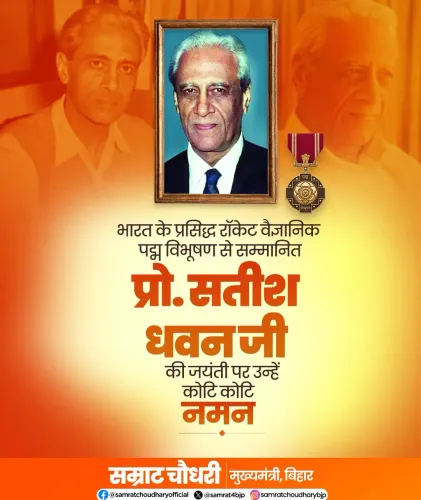
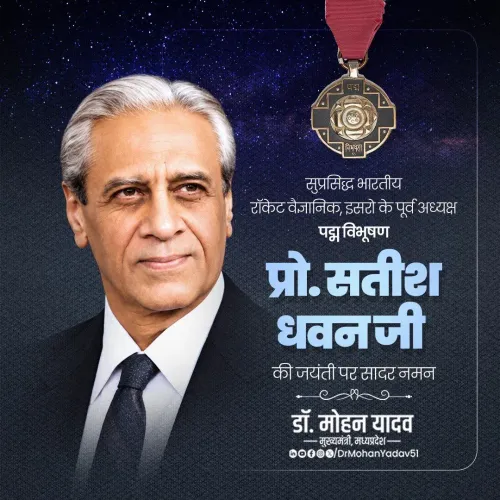
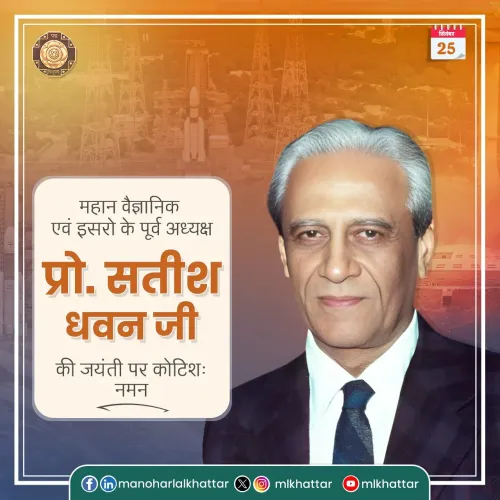
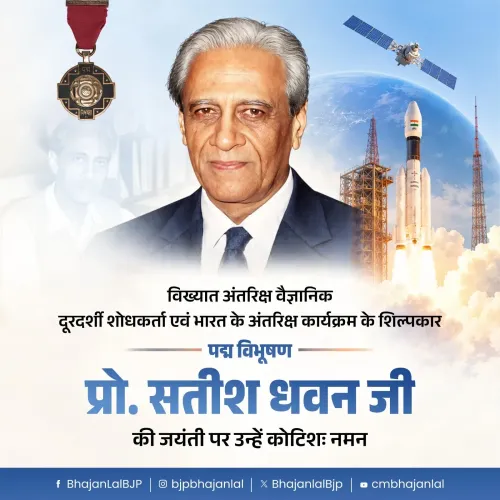
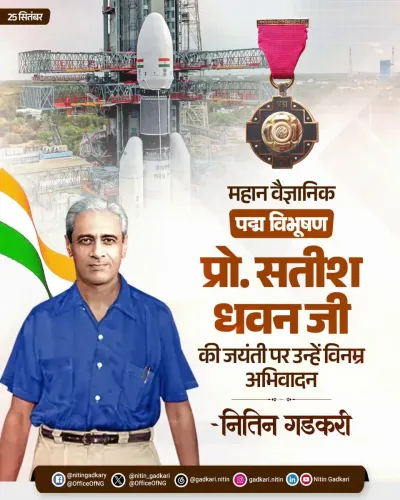
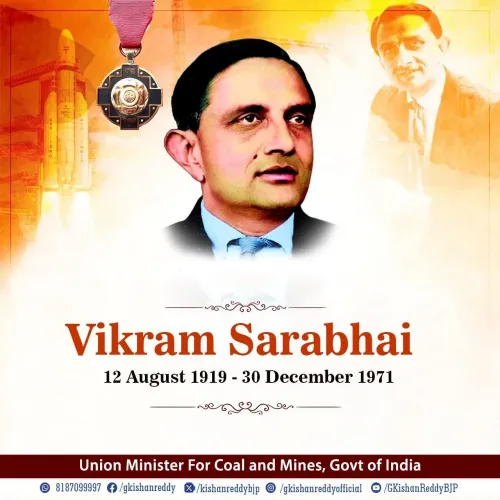
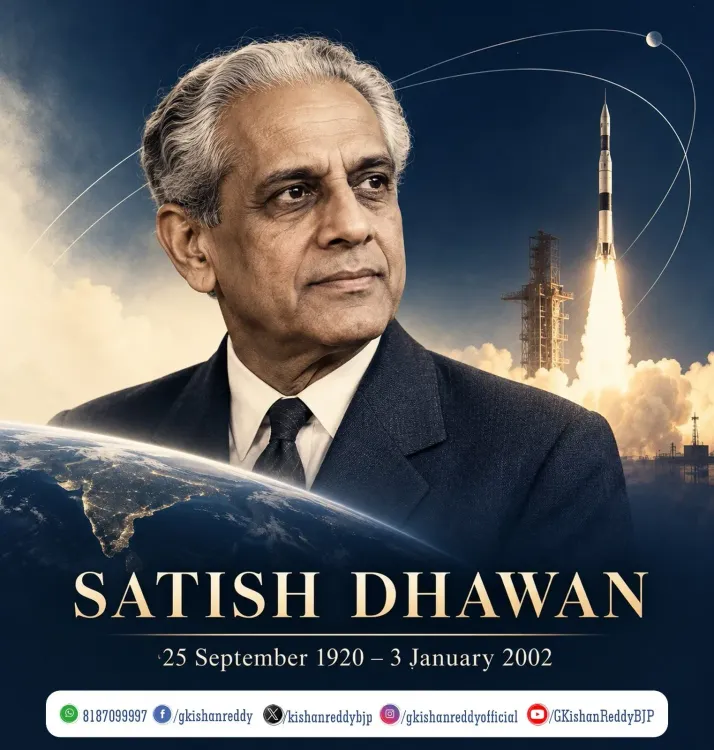
Reddy's tribute called Dhawan 'a pioneering aerospace scientist and visionary institution-builder' whose 'contributions to India's space programme, scientific leadership, and commitment to nurturing young talent laid a strong foundation for India's journey in space.' The post was accompanied by an image marking the occasion.
From Sarabhai's Chair to Sovereign Launch Vehicles
When Vikram Sarabhai passed away in 1971, India's space dream stood at a crossroads. The appointment of Satish Dhawan as ISRO chairman in 1972 ensured that momentum did not stall. Over the next twelve years — a tenure that ran until 1984 — Dhawan oversaw the development of the SLV-3, India's first indigenous satellite launch vehicle, and shepherded early satellite programmes that would eventually underpin telecommunications, weather forecasting, and remote sensing across the subcontinent.
Dhawan was also director of the Indian Institute of Science, a dual role that reflected his conviction that institutional rigour and cutting-edge research were inseparable. The scientists he mentored went on to lead missions that successive generations of Indians watched on their television screens.
A Legacy That Echoes in Gaganyaan and Beyond
India's space programme has since evolved from sounding-rocket experiments on the Kerala coast to commercial satellite launches and a human spaceflight mission — Gaganyaan — now in its final preparatory stages. The institutional culture Dhawan embedded at ISRO, one that prized indigenous capability and groomed young engineers rather than importing expertise, is the direct ancestor of that ambition.
Successive governments have consistently invoked foundational scientists like Dhawan on birth anniversaries, using such tributes to signal continuity in state support for space research even as ISRO's mandate expands into commercial and deep-space frontiers. Reddy's post fits that pattern — a brief but pointed reminder that today's launchpads stand on yesterday's choices.
The scientists who trained under Dhawan's watch are now training the generation that will fly India's first astronauts. That chain of mentorship is, arguably, his most durable mission.
Point of View
Lending the gesture a subtle institutional-confidence subtext. The consistent invocation of figures like Dhawan also serves to position space policy as a cross-partisan national project, insulating ISRO's budget from political friction. Whether ceremonial or strategic, such anniversaries keep the foundational narrative of indigenous capability alive in public discourse.
NationPress
25 Sept 2026
Frequently Asked Questions
Who was Satish Dhawan?
Satish Dhawan was a pioneering Indian aerospace engineer who served as chairman of ISRO from 1972 to 1984. He oversaw the development of the SLV-3 launch vehicle and also headed the Indian Institute of Science, shaping generations of scientists.
What did Satish Dhawan contribute to ISRO?
Dhawan led ISRO through a transformative period, developing India's first indigenous satellite launch vehicle, the SLV-3, and establishing early satellite programmes for telecommunications and remote sensing. His leadership ensured continuity after Vikram Sarabhai's death in 1971.
When is Satish Dhawan's birth anniversary?
Satish Dhawan's birth anniversary falls on 25 September. Union Minister G. Kishan Reddy posted a tribute on this date in 2026.
Why did G. Kishan Reddy pay tribute to Satish Dhawan?
Reddy, the Union Minister of Coal and Mines and BJP Telangana president, marked Dhawan's birth anniversary to honour the scientist's foundational contributions to India's space programme and his legacy of mentoring young researchers.
What is India's Gaganyaan mission?
Gaganyaan is India's first human spaceflight mission, being developed by ISRO. It aims to send Indian astronauts to orbit and is considered the direct heir to the institutional capabilities built under leaders like Satish Dhawan.