CM Samrat Choudhary Marks 12 Years of Make in India

Synopsis
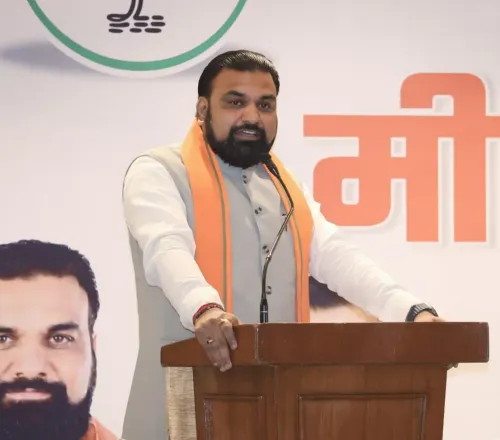
Bihar Chief Minister Samrat Choudhary marked the 12th anniversary of Make in India on September 25, calling the scheme a symbol of India's confidence, innovation, and self-reliance, with the country now manufacturing for global needs, not just its own.
Key Takeaways
Make in India was launched by PM Narendra Modi on 25 September 2014 and completes 12 years in 2026.
Bihar CM Samrat Choudhary described the initiative as India's 'new identity' built on confidence, innovation, and self-reliance.
The scheme has evolved to encompass Atmanirbhar Bharat and multiple Production-Linked Incentive (PLI) sectors over 12 years.
Choudhary's post frames India as now manufacturing for global needs, signalling an export-orientation beyond import-substitution.
The next round of PLI scheme reviews and state investment promotion events is expected in late 2026 .
Twelve years after Prime Minister Narendra Modi launched a single resolute pledge on 25 September 2014, Bihar Chief Minister Samrat Choudhary marked the anniversary with a pointed reminder of how far that pledge has traveled — from a government slogan to what he calls India's new national identity.
The vow that became a movement
Choudhary's post captures the Hindi phrase 'ek sankalp' — 'one resolve' — to frame Make in India not merely as a policy, but as a civilisational shift in ambition. 'A resolve that gave India's manufacturing capacity a new direction,' he wrote, adding that the initiative has today become a new symbol of confidence, innovation, and self-reliance. The framing is deliberate: 12 is a round number, and the BJP uses such anniversaries to consolidate a narrative of continuity and delivery.
From domestic need to global supplier
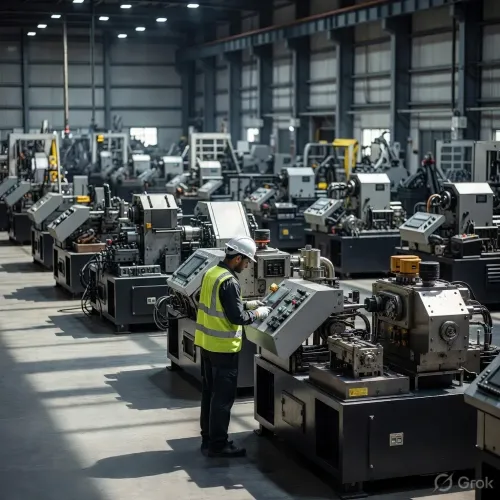
Make in India was launched on 25 September 2014 with a clear structural ambition — raise manufacturing's share in GDP and make India a magnet for foreign direct investment. Over the intervening years, the framework expanded to absorb the Atmanirbhar Bharat push and a wave of Production-Linked Incentive (PLI) schemes spanning sectors from semiconductors to pharmaceuticals. Choudhary's post echoes that evolution: 'India today is not only meeting its own needs but manufacturing for the needs of the world.' That shift — from import-substitution to export-orientation — is the core thesis the BJP has built its economic communication around.
Bihar's stake in the manufacturing story
For a Bihar Chief Minister to amplify a central manufacturing narrative is itself significant. Bihar has historically lagged in industrial investment compared to western and southern states, making state-level endorsement of Make in India milestones part of a broader effort to attract investor attention ahead of state investment summits. The next round of PLI scheme reviews and state investment promotion events is scheduled for late 2026, giving anniversary messaging an immediate forward context beyond ceremony.
Twelve years in, the resolve has outlasted multiple budget cycles, a pandemic, and a global supply-chain reset. The question the next twelve will answer is whether the manufacturing share in GDP moves decisively — or whether the ambition remains the story.
Point of View
Historically under-industrialised, endorsing Make in India is also a signal to investors that the state is open for business. The timing, as PLI reviews loom in late 2026, suggests anniversary messaging is doing double duty: celebrating the past and priming for the next policy cycle. The broader pattern is clear — every Make in India anniversary is as much a forward pitch as it is a retrospective.
NationPress
25 Sept 2026
Frequently Asked Questions
When was Make in India launched?
Make in India was launched by Prime Minister Narendra Modi on 25 September 2014 to position India as a global manufacturing hub and attract foreign direct investment.
Why is Bihar CM Samrat Choudhary talking about Make in India?
Bihar CM Samrat Choudhary posted to mark the scheme's 12th anniversary on 25 September 2026 , framing it as a symbol of India's confidence, innovation, and self-reliance — and signalling Bihar's alignment with the central government's manufacturing push.
What is the connection between Make in India and Atmanirbhar Bharat?
Atmanirbhar Bharat , launched in 2020, built directly on Make in India 's objectives, extending the framework to include Production-Linked Incentive (PLI) schemes across sectors to boost domestic manufacturing and reduce import dependence.
What are PLI schemes and how do they relate to Make in India?
Production-Linked Incentive (PLI) schemes are central government programmes that offer financial incentives to manufacturers in targeted sectors. They are the primary policy tool through which Make in India 's manufacturing goals have been operationalised since 2020.
What is coming up for Make in India in late 2026?
The next round of PLI scheme reviews and state-level investment promotion events is scheduled for late 2026 , making anniversary messaging particularly relevant as states compete to attract manufacturing investment.