Kishan Reddy: Wangchuk ends fast after ministers' assurance
Synopsis
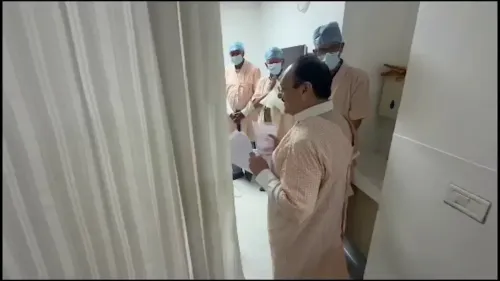
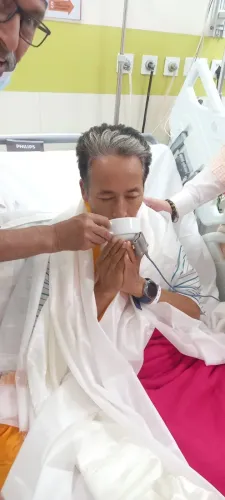
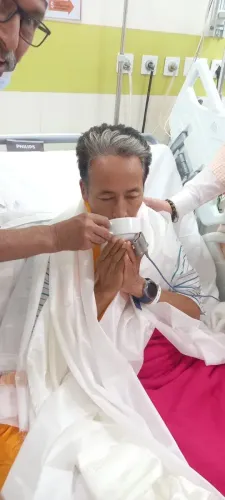
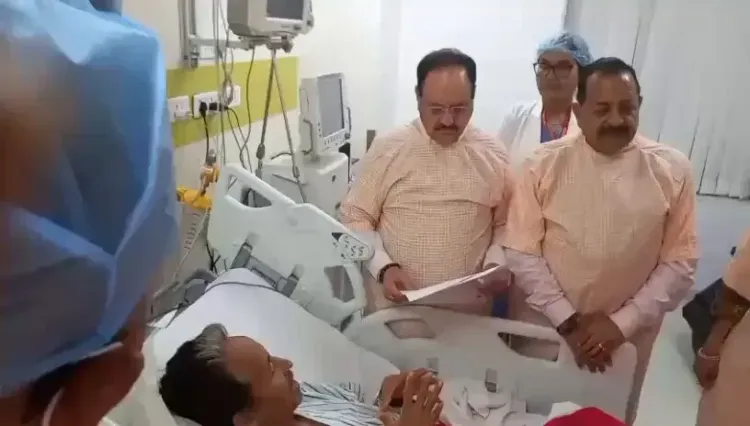
Ladakhi activist Sonam Wangchuk ended his fast after Union Ministers J.P. Nadda and Dr. Jitendra Singh visited him at Medanta Hospital, Gurugram. Coal Minister Kishan Reddy welcomed the development, reaffirming the Modi government's commitment to examination reforms and strict action against those who undermine student futures.
Key Takeaways
Sonam Wangchuk ended his fast after Union Ministers J.P.
Jitendra Singh met him at Medanta Hospital, Gurugram .
The ministers assured Wangchuk of the government's commitment to addressing concerns raised about student and youth welfare.
Kishan Reddy described the development as reflecting faith in the Modi government's sincerity on examination reforms.
The government reiterated 'strict action' against those who seek to compromise the futures of students — language consistent with its earlier stance on paper-leak controversies.
The episode is framed within the Viksit Bharat 2047 vision, with youth aspirations cited as central to national development goals.
The National Testing Agency (NTA) , established in 2017 , and the National Education Policy 2020 form the policy backdrop to the government's examination reform agenda.
Union Coal and Mines Minister G. Kishan Reddy on Friday, 25 July 2026, welcomed the decision by Ladakhi activist Sonam Wangchuk to end his fast, citing an assurance given by Union Ministers J.P. Nadda and Dr. Jitendra Singh who met Wangchuk at Medanta Hospital, Gurugram.
Context
Sonam Wangchuk, the Ladakhi engineer, innovator and education activist known for founding the Himalayan Institute of Alternatives, had been on a fast raising concerns related to student and youth welfare. His fast drew national attention and prompted a direct ministerial intervention. According to Kishan Reddy's post, the two Union Ministers visited Wangchuk at Medanta Hospital in Gurugram and conveyed the government's commitment to addressing his concerns.
Kishan Reddy described Wangchuk's decision to end the fast as reflecting 'faith in the Modi Government's sincere commitment to safeguarding the interests of students and the youth.' The minister framed the development as evidence of the government's responsiveness to civil society voices on education.
Policy Backdrop
The statement comes against the backdrop of sustained scrutiny of India's centralised examination architecture. The National Testing Agency (NTA), established in 2017 to standardise entrance examinations nationwide, has faced recurring criticism over alleged paper leaks and administrative lapses. These controversies intensified public debate about the integrity of high-stakes tests that determine the futures of millions of students each year.
The government's broader framework for education reform is anchored in the National Education Policy 2020, which introduced structural changes to curriculum design and assessment systems. Kishan Reddy's post explicitly invoked 'examination reforms' as a government priority under Prime Minister Narendra Modi, signalling that the issue remains a live policy concern at the highest levels.
The minister also issued a pointed warning: 'Those who seek to compromise their future will face strict action.' This language mirrors the government's earlier public positions on examination malpractice and paper-leak incidents, indicating a dual-track approach — dialogue with activists on one hand, and enforcement against wrongdoers on the other.
Stakeholders and Impact
The primary stakeholders in this episode are India's students and youth, who bear the direct consequences of any failures in the examination system. Wangchuk's fast amplified their concerns at the national level, compelling senior ministers to engage personally. The involvement of J.P. Nadda, a senior BJP leader and Union Minister, and Dr. Jitendra Singh, who handles personnel and public grievances, underscores the political weight the government has attached to resolving this standoff.
For Ladakh specifically, Wangchuk's activism has historically carried significance beyond education, encompassing issues of regional identity, statehood aspirations and sustainable development. His willingness to end the fast on the basis of ministerial assurances may be read as a partial de-escalation, though the specific commitments made by the ministers have not been publicly detailed.
What's Next
Attention will now shift to whether the government translates its stated commitment into concrete policy action — particularly on examination reform and the functioning of the NTA. Parliamentary discussions on related legislation and any formal announcements on restructuring examination oversight bodies will be closely watched. Kishan Reddy's post, framed within the Viksit Bharat 2047 vision, suggests the government intends to keep youth aspirations and examination integrity at the centre of its political messaging in the months ahead.
Point of View
And a broader public anxious about examination integrity. By positioning ministerial dialogue as the resolution mechanism, the government signals that it treats protest as a legitimate pressure valve while retaining control of the policy outcome. The invocation of 'Viksit Bharat' ties a specific episode of activist pressure to the government's long-term developmental narrative, elevating what could be seen as a crisis-management moment into a statement of ideological commitment. The warning of 'strict action' against those compromising student futures is a recurring rhetorical device that keeps the government's enforcement posture visible without committing to specific institutional changes.
NationPress
24 Jul 2026
Frequently Asked Questions
Why did Sonam Wangchuk go on a fast?
Sonam Wangchuk undertook a fast to raise concerns related to student and youth welfare, prompting a direct response from the central government through senior Union Ministers.
Who met Sonam Wangchuk at Medanta Hospital?
Union Ministers J.P. Nadda and Dr. Jitendra Singh met Sonam Wangchuk at Medanta Hospital in Gurugram and assured him of the government's commitment to addressing his concerns.
What did the government promise Sonam Wangchuk?
According to Union Minister G. Kishan Reddy's statement, the government assured Wangchuk of its commitment to addressing the concerns raised and to strengthening examination reforms, though specific details of the assurances have not been publicly disclosed.
What is the government's position on examination reform in India?
The Modi government has cited the National Education Policy 2020 and the National Testing Agency as pillars of its examination reform agenda, and has repeatedly stated it will take strict action against those who compromise the integrity of student examinations.
Who is Sonam Wangchuk?
Sonam Wangchuk is a Ladakhi engineer, innovator and education activist, best known for founding the Himalayan Institute of Alternatives and for his advocacy on sustainable development and student issues in Ladakh.