Kishan Reddy Warns Public Against E-20 Petrol Misinformation

Synopsis
Union Coal and Mines Minister G. Kishan Reddy on 31 July 2026 warned the public against misinformation surrounding E-20 ethanol-blended petrol, urging citizens to trust science over rumours as India pushes toward its 20% blending target.
Key Takeaways
Kishan Reddy , Union Minister of Coal and Mines, publicly warned against rumours about E-20 petrol on 31 July 2026 .
E-20 is petrol blended with up to 20% ethanol , derived primarily from sugarcane under India's Ethanol Blending Programme.
The National Policy on Biofuels 2018 set the 20% blending target by 2030 ; in 2021 , the deadline was advanced to 2025 .
India has raised ethanol blending from around 5% to roughly 10% in recent years, reducing crude oil imports and supporting farmer incomes.
Misinformation about engine compatibility and mileage is seen as a threat to public confidence in the fuel transition.
E-20 adoption is also linked to modest reductions in vehicular tailpipe emissions as part of India's energy transition goals.
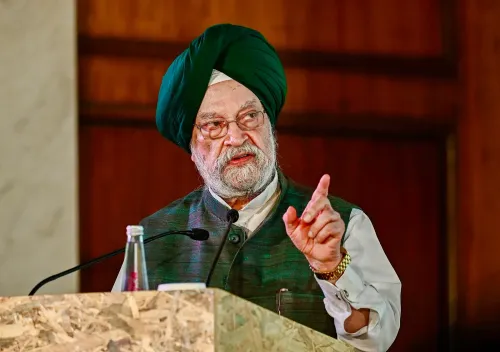
Misinformation travels faster than fuel — and Union Coal and Mines Minister G. Kishan Reddy wants Indians to know it. On Friday, 31 July 2026, the senior BJP leader took to X to caution citizens against the spread of rumours surrounding E-20 petrol, urging the public to trust science and verified facts over unsubstantiated claims.
Posting in Hindi, Reddy wrote: 'E-20 पेट्रोल को लेकर फैलाए जा रहे भ्रम और अफवाहों से सावधान रहें।' — 'Beware of the confusion and rumours being spread about E-20 petrol. Trust science and facts, not unverified claims. Let us share correct information and become aware.'
What E-20 Actually Is — and Why It Matters
E-20 is petrol blended with up to 20% ethanol, the centrepiece of India's accelerated biofuel push. The government's National Policy on Biofuels 2018 originally set a 20% blending target by 2030; in 2021, that deadline was pulled forward to 2025, signalling how seriously New Delhi has bet on this transition.
The programme is not new. India's Ethanol Blending Programme dates back to 2003, drawing ethanol primarily from sugarcane surplus. In recent years, blending levels have climbed from around 5% to roughly 10%, cutting crude oil import bills and providing assured procurement prices to sugarcane farmers — two wins the government frequently highlights.
The Misinformation Problem Around Fuel Transitions
Fuel-transition policies routinely attract public anxiety — questions about engine compatibility, mileage loss, and long-term vehicle damage circulate widely on social media and messaging apps. Reddy's intervention, backed by a video in the post, suggests these concerns have intensified enough around E-20 to warrant a direct ministerial response.
The stakes are real. Oil marketing companies, vehicle owners, and automakers all have skin in the game as E-20-compatible vehicle norms take shape. Misinformation that erodes public confidence could slow adoption at a moment when the government needs momentum to meet its own targets.
India's push toward higher ethanol blending is also tied to modest reductions in vehicular tailpipe emissions — a quieter but consequential piece of the country's broader energy-transition story. Every percentage point of blending displaced is a barrel of crude oil India does not have to import.
Reddy's message is simple: the science exists, the facts are available — choose them. Whether the public does will shape how cleanly India's biofuel ambition lands.
Point of View
Which has staked significant political capital on farmer-income gains from ethanol procurement, any erosion of public trust in E-20 carries electoral as well as economic costs. The real test now is whether a social-media post is enough, or whether a structured public-information campaign becomes necessary.
NationPress
31 Jul 2026
Frequently Asked Questions
What is E-20 petrol?
E-20 is petrol blended with up to 20% ethanol, primarily derived from sugarcane. It is the target blend under India's national biofuel policy, aimed at reducing crude oil imports and cutting vehicular emissions.
Is E-20 petrol safe for my car or bike?
The government maintains that E-20 is safe for E-20-compatible vehicles. Automakers are progressively rolling out compatible models. Older vehicles may require verification of compatibility — the government advises checking manufacturer guidelines rather than relying on social media rumours.
Why is G. Kishan Reddy talking about E-20 petrol?
As a senior Union Minister and BJP leader, Reddy posted on 31 July 2026 to counter misinformation circulating about E-20 petrol, urging citizens to trust science and verified facts instead of unsubstantiated claims.
When will India achieve 20% ethanol blending in petrol?
India's government advanced its 20% ethanol blending target from 2030 to 2025 in 2021. Progress has been steady, with blending levels rising from around 5% to roughly 10% in recent years.
Does E-20 petrol reduce fuel efficiency or damage engines?
These are among the most common concerns circulating online. The government and the Ethanol Blending Programme assert that E-20 performs within acceptable limits for compatible vehicles. Independent verification through official vehicle-manufacturer advisories is recommended.