Karnataka Cabinet opts for ballot paper polls, clears ₹20,000 crore road projects
Synopsis
In a wide-ranging Cabinet session at Vidhana Soudha, Karnataka locked in ballot papers for local body polls — ruling out any reversal — while simultaneously clearing a ₹20,000 crore road infrastructure blitz covering nearly 6,000 km of roads. The session also moved to protect an ancient Buddhist heritage site at Sannati and address a Supreme Court setback for 2011 KPSC recruits.
Key Takeaways
The Karnataka Cabinet on 5 November 2026 confirmed local body elections will be held using ballot papers ; the State Election Commission will decide on electoral rolls.
A ₹20,000 crore road infrastructure package was approved, covering state highways , major district roads , and bridges across the state.
A new ₹6,000 crore project will develop 3,986 km of inter-district and inter-taluk roads; Bengaluru road works revised to ₹3,409.02 crore for 142.27 km .
The Sannati Development Authority Bill, 2026 was approved to develop the ancient Buddhist heritage site in Kalaburagi district .
A review petition is likely following an adverse Supreme Court verdict on the 2011 KPSC batch ; the government pledged justice for affected officers.
The Karnataka Legislature winter session is scheduled for 2–11 December 2026 .
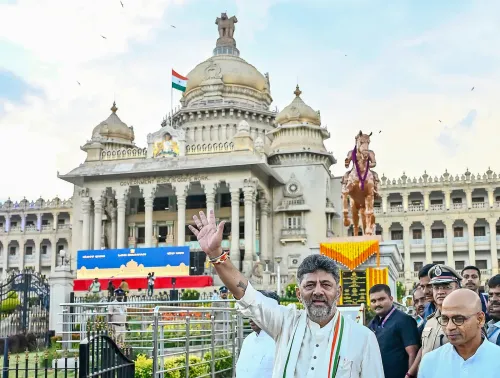
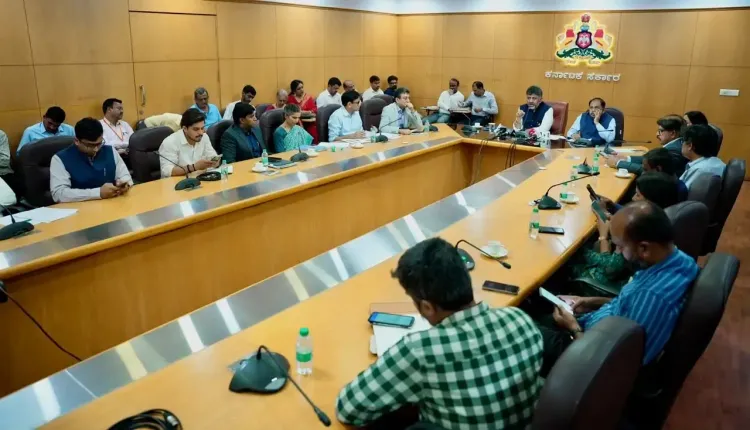
The Karnataka Cabinet on Thursday, 5 November 2026, confirmed it will conduct local body elections using ballot papers, with funds already allocated for purchasing ballot boxes, Rural Development and Panchayat Raj Minister Eshwar Khandre announced after the Cabinet meeting at Vidhana Soudha, Bengaluru. The decision, described as final by Khandre, was accompanied by a sweeping ₹20,000 crore road infrastructure package covering state highways, major district roads, and bridges across Karnataka.
Ballot Paper Decision: What the Government Said
Minister Khandre made clear that the government had already taken a firm call to conduct local body elections through ballot papers, stating there was 'no question of reconsidering the matter.' He clarified, however, that no decision had yet been taken on whether new or old electoral rolls would govern the elections — that determination rests with the State Election Commission, which will act in accordance with the law. The move is notable given the broader national debate over electronic voting machines versus paper-based polling.
₹20,000 Crore Road Infrastructure Push
The Cabinet approved a multi-pronged road development package totalling ₹20,000 crore under various Public Works Department schemes. Under Phase 5, Stage 2 of the State Highway Development Project, roads stretching 1,897 km will be developed. A further ₹6,000 crore has been earmarked under Appendix E for road, bridge, and building construction across Assembly constituencies, alongside an additional grant of ₹3,000 crore for road development works.
A separate new project worth ₹6,000 crore will develop approximately 3,986 km of roads linking district headquarters with each other and with taluk headquarters. The Cabinet also granted administrative approval for a revised expenditure of ₹3,409.02 crore for road works in and around Bengaluru across 10 packages through the Karnataka Road Development Corporation. The project — initially sanctioned in 2017 at ₹2,095 crore under the EPC model for 155 km of roads — has seen 121.78 km completed of a revised length of 142.27 km as of now.
Legislature Session, Land Lease, and KPSC Verdict
The Cabinet confirmed the Karnataka Legislature's winter session will run from 2 to 11 December, with the dates finalised to accommodate convenience despite intervening holidays. On the Bengaluru Turf Club land matter, the Cabinet approved leasing four acres of land to the club for 30 years; the club had sought exactly four acres and will be required to vacate the remaining land, with an approximate one-year window reportedly requested to do so. A heritage building on the premises was noted by Khandre, though he said he was not certain of the lease amount approved.
Regarding officers recruited through the 2011 Karnataka Public Service Commission (KPSC) batch, Khandre said an adverse Supreme Court verdict had been delivered and that a review petition was likely to be filed. The state government, he said, would take steps to ensure justice for affected officers, stressing that no individual had been specifically held responsible for the alleged irregularities.
Sannati Development Authority and Wildlife Conflict Measures
The Cabinet approved the Sannati Development Authority Bill, 2026, proposing to establish a dedicated authority for the development of Sannati in Chittapur taluk, Kalaburagi district — an ancient Buddhist centre of historical and archaeological significance. Inscriptions of Emperor Ashoka and remains from the Buddhist period have been discovered at the site, which draws pilgrims and tourists from across India and abroad. The Bill will be introduced during the upcoming Legislature session.
The Cabinet also reviewed progress on human-wildlife conflict mitigation at the Male Mahadeshwara Wildlife Sanctuary. Projects worth ₹81.75 crore — approved at a Cabinet meeting held at Male Mahadeshwara Hills on 24 April 2025 — are under implementation to protect approximately 2,942 farming families, including through the installation of railway barricades.
State Finances: Government Signals Stability
Khandre also addressed concerns about Karnataka's fiscal health, asserting that the state's finances were strong and that revenue collection through GST and other sources was progressing as budgeted. He said all departments were actively working to improve revenue mobilisation, and that funds for programmes and announcements were being released after Finance Department approvals — signalling, in his words, an absence of financial constraints. This comes amid periodic scrutiny over Karnataka's fiscal position given its ambitious social guarantee schemes.
The decisions taken Thursday reflect a Cabinet session with unusually broad scope — from electoral process and infrastructure to heritage preservation and wildlife management — with implementation timelines extending into the next fiscal year.
Point of View
Without the electoral commission having to take the heat. The ₹20,000 crore road package, meanwhile, looks impressive in headline terms but deserves scrutiny: the Bengaluru project initially approved in 2017 at ₹2,095 crore has since ballooned to ₹3,409 crore with 13 km still incomplete after seven years — a pattern that raises legitimate questions about project discipline. The Sannati Development Authority is a quieter but potentially consequential decision, turning an undervisited Buddhist heritage site into an institutional priority at a time when heritage tourism is a growth lever for state revenues.
NationPress
6 Nov 2026
Frequently Asked Questions
Why has the Karnataka Cabinet decided to use ballot papers for local body elections?
The Karnataka Cabinet has confirmed that local body elections will be held using ballot papers, with funds already allocated for ballot boxes. Minister Eshwar Khandre stated this was a firm government decision with no question of reconsideration, though the State Election Commission will separately determine whether new or old electoral rolls will apply.
What does the ₹20,000 crore Karnataka road project cover?
The ₹20,000 crore package funds development of state highways, major district roads, and bridges. It includes 1,897 km under Phase 5, Stage 2 of the State Highway Development Project, a ₹6,000 crore project for 3,986 km of inter-district and inter-taluk roads, and ₹3,409.02 crore for road works in and around Bengaluru.
What is the Sannati Development Authority Bill, 2026?
The Sannati Development Authority Bill, 2026 proposes a dedicated authority to develop Sannati in Chittapur taluk, Kalaburagi district — an ancient Buddhist site where Emperor Ashoka inscriptions and Buddhist-era remains have been found. The Bill will be tabled during the winter Legislature session beginning 2 December 2026.
What happened with the 2011 KPSC batch Supreme Court case?
The Supreme Court delivered an adverse verdict concerning officers recruited through the 2011 Karnataka Public Service Commission batch. The state government said a review petition is likely to be filed, and that it will take steps to ensure justice for the affected officers, adding that no individual has been held specifically responsible for the alleged irregularities.
When is the Karnataka Legislature winter session scheduled?
The Karnataka Legislature winter session is scheduled from 2 to 11 December 2026. The dates were finalised keeping everyone's convenience in mind, according to Minister Khandre, despite some holidays falling within the period.