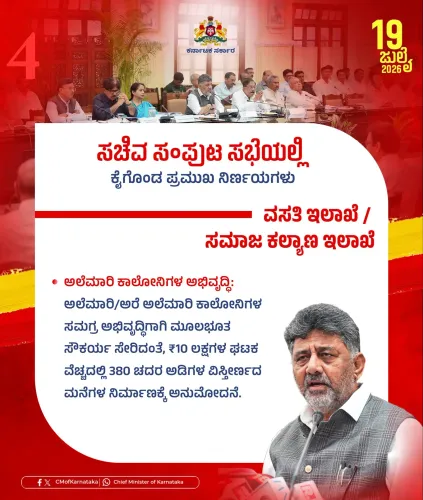
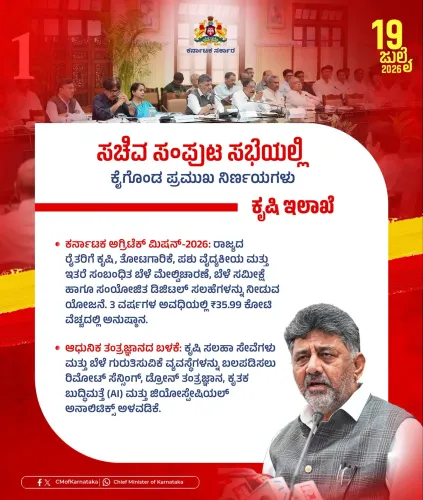
Karnataka CM's Mangaluru Cabinet Clears ₹32,611 Cr Coastal Push
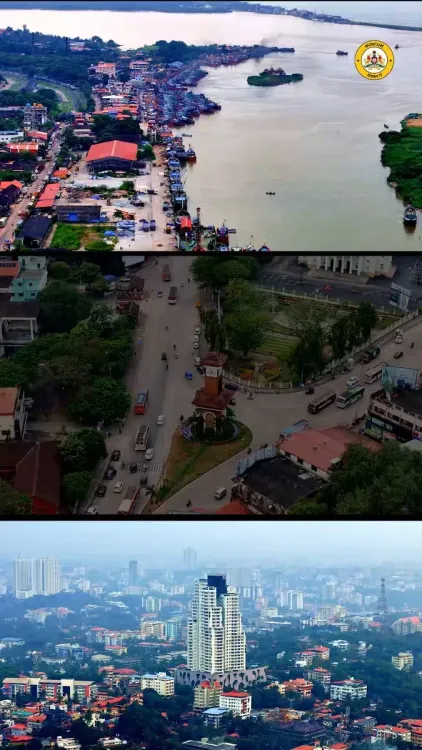
Synopsis
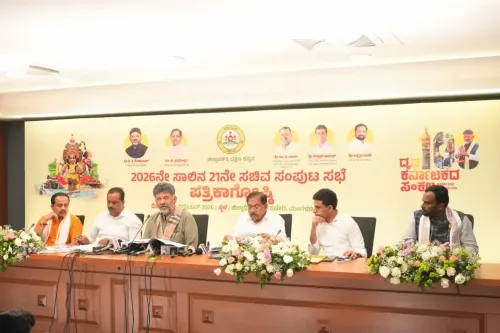
The Karnataka government held a historic cabinet meeting in Mangaluru on 25 September 2026, approving over 50 decisions including ₹32,611 crore in coastal development projects and granting Tulu language its long-demanded status as the second additional official administrative language.
Key Takeaways
The Karnataka cabinet met in Mangaluru on 25 September 2026 — a deliberate out-of-capital session to focus on coastal development.
More than 50 public-welfare decisions were approved in a single sitting.
Projects worth ₹32,611 crore were cleared across infrastructure, health, sports, tourism, education, and religious sectors.
Tulu was recognised as the second additional official administrative language of Karnataka, fulfilling a decades-old demand of coastal communities.
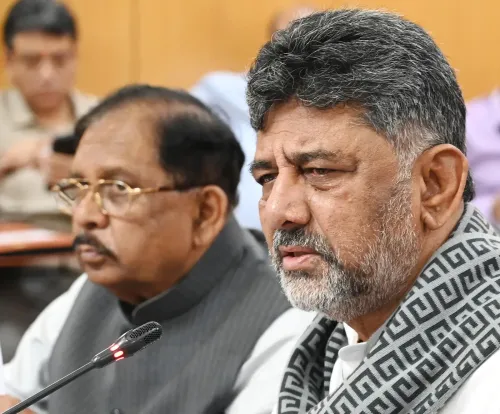
The decisions were taken under the leadership of Chief Minister DK Shivakumar 's Congress-led government.
Implementation timelines and fund releases will be the key metric to watch in upcoming state budget cycles.
A coastal city became the seat of Karnataka's government on Friday, 25 September 2026, as the Chief Minister's Office of Karnataka announced that a historic cabinet meeting held in Mangaluru approved more than 50 public-welfare decisions — including a landmark grant of official language status to Tulu and a sweeping ₹32,611 crore package for coastal development.
₹32,611 Crore and 50+ Decisions in One Sitting
The scale of the Mangaluru cabinet meeting was striking. In a single session, the government cleared projects spanning infrastructure, health, sports, tourism, education, and religious sites — a multi-sector outlay that the Chief Minister's Office described as aimed at transforming the very face of the coastal region. The post read: 'ಮೂಲಸೌಕರ್ಯ, ಆರೋಗ್ಯ, ಕ್ರೀಡೆ, ಪ್ರವಾಸೋದ್ಯಮ, ಶಿಕ್ಷಣ ಹಾಗೂ ಧಾರ್ಮಿಕ ಕ್ಷೇತ್ರಗಳ ಸಮಗ್ರ ಅಭಿವೃದ್ಧಿಗಾಗಿ' — 'for the comprehensive development of infrastructure, health, sports, tourism, education and religious sectors.'
The government is led by Chief Minister DK Shivakumar, whose administration has consistently framed balanced regional development as a cornerstone of its agenda since the Congress party's return to power in the 2023 Karnataka assembly elections. Holding a full cabinet meeting outside the capital, Bengaluru, is itself a signal — a deliberate act of political geography, telling coastal Karnataka that it is not an afterthought.
Tulu Gets Its Long-Demanded Recognition
The single decision that will resonate most with coastal communities is the recognition of Tulu as the second additional official administrative language of Karnataka. It is a demand that speakers of the Dravidian tongue — concentrated in the Dakshina Kannada and Udupi districts — have pressed for decades. One announcement, and a generations-long campaign moves from petition to policy.
Language status decisions in Indian states are never purely administrative. They shape which communities feel seen by the government, which scripts appear on official documents, and which children grow up learning in their mother tongue. For Tulu speakers, this is precisely that moment.
The Pattern Behind Out-of-Capital Cabinets
India's state governments have long used 'travelling cabinet' meetings as a governance tool — and a political one. When a chief minister moves the cabinet to a regional city, the message to local voters is unambiguous: your concerns are cabinet-level concerns. Mangaluru, Karnataka's primary port city and a commercial hub of the Tulu Nadu region, has hosted such meetings before, each time generating a slate of region-specific approvals.
What makes this edition notable is the sheer financial weight behind it. ₹32,611 crore is not a symbolic number — it represents a substantial commitment across six sectors, and the real test will come in the months ahead, when project timelines, fund releases, and implementation machinery are put under scrutiny.
The coastal belt has spoken for years about infrastructure gaps, health facility shortages, and the need for sports and tourism investment to match its natural advantages. The government's bet is that ₹32,611 crore and a cabinet meeting on the coast are the beginning of an answer. Whether the money flows as fast as the announcements is the question Karnataka's coastal communities will be watching most closely.
Point of View
Demonstrating visible attention to a coastal belt that has historically felt peripheral to Bengaluru's policy priorities. Granting Tulu its official language status converts a long-pending identity demand into a concrete Congress achievement ahead of future electoral cycles, while the ₹32,611 crore figure gives the party a tangible development narrative in a region where it faces competition from both regional and national rivals. The size of the outlay, however, places a heavy burden of delivery — large multi-sector approvals in Indian states are often remembered more for their announcement than their execution, and coastal Karnataka will be measuring this government by projects completed, not crores committed.
NationPress
25 Sept 2026
Frequently Asked Questions
What decisions were taken at the Karnataka cabinet meeting in Mangaluru?
The Karnataka cabinet meeting in Mangaluru on 25 September 2026 approved more than 50 public-welfare decisions, including projects worth ₹32,611 crore across infrastructure, health, sports, tourism, education, and religious sectors, and granted Tulu language the status of second additional official administrative language of Karnataka.
What is the significance of Tulu getting official language status in Karnataka?
Tulu being recognised as the second additional official administrative language of Karnataka fulfils a decades-long demand of Tulu-speaking communities concentrated in Dakshina Kannada and Udupi districts, giving the language formal acknowledgement in state administration.
How much money did Karnataka approve for coastal development in 2026?
The Karnataka government approved projects worth ₹32,611 crore at the Mangaluru cabinet meeting on 25 September 2026, covering infrastructure, health, sports, tourism, education, and religious sectors.
Why did the Karnataka cabinet meet in Mangaluru instead of Bengaluru?
State governments in India periodically hold cabinet meetings outside the capital to signal direct attention to specific regions. The Mangaluru session was aimed at addressing the development priorities of Karnataka's coastal belt.
Who is the Chief Minister of Karnataka in 2026?
As per the official Karnataka Chief Minister's Office post, the government that approved the Mangaluru decisions was led by Chief Minister DK Shivakumar of the Congress party, which came to power after the 2023 Karnataka assembly elections.